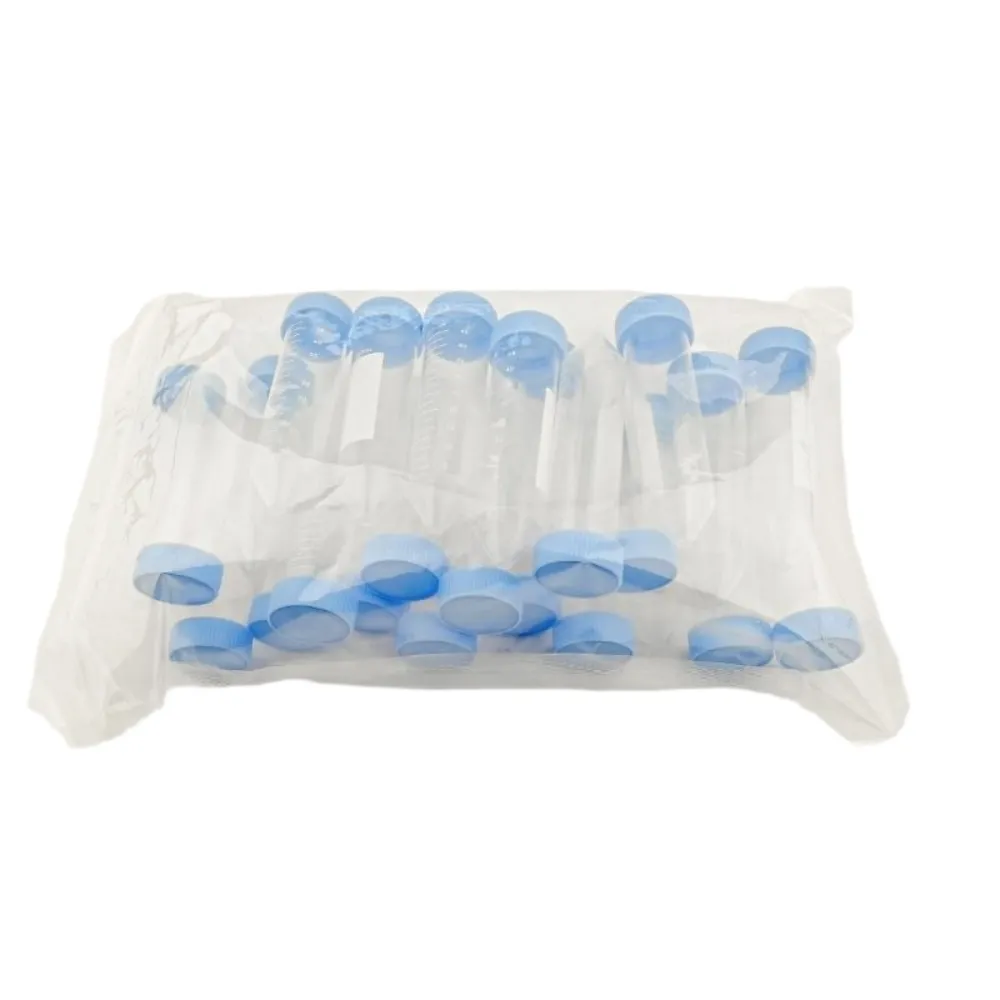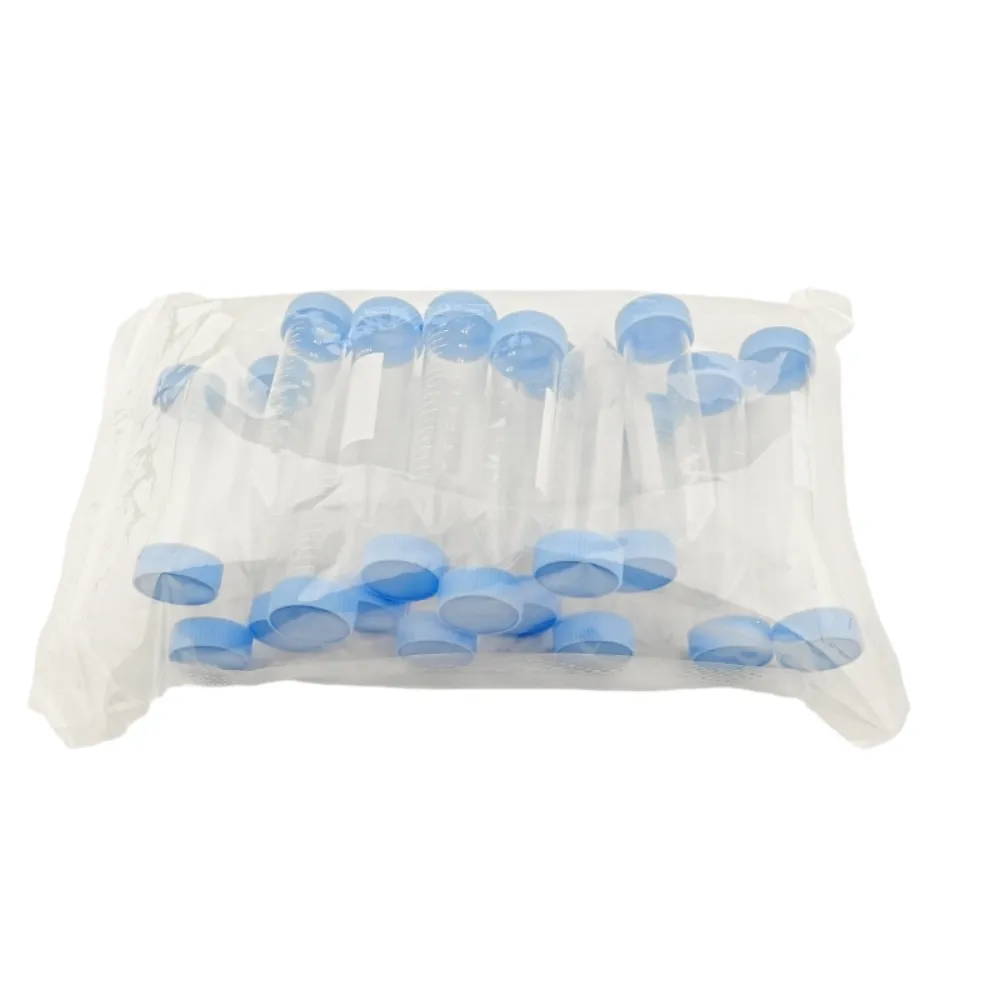
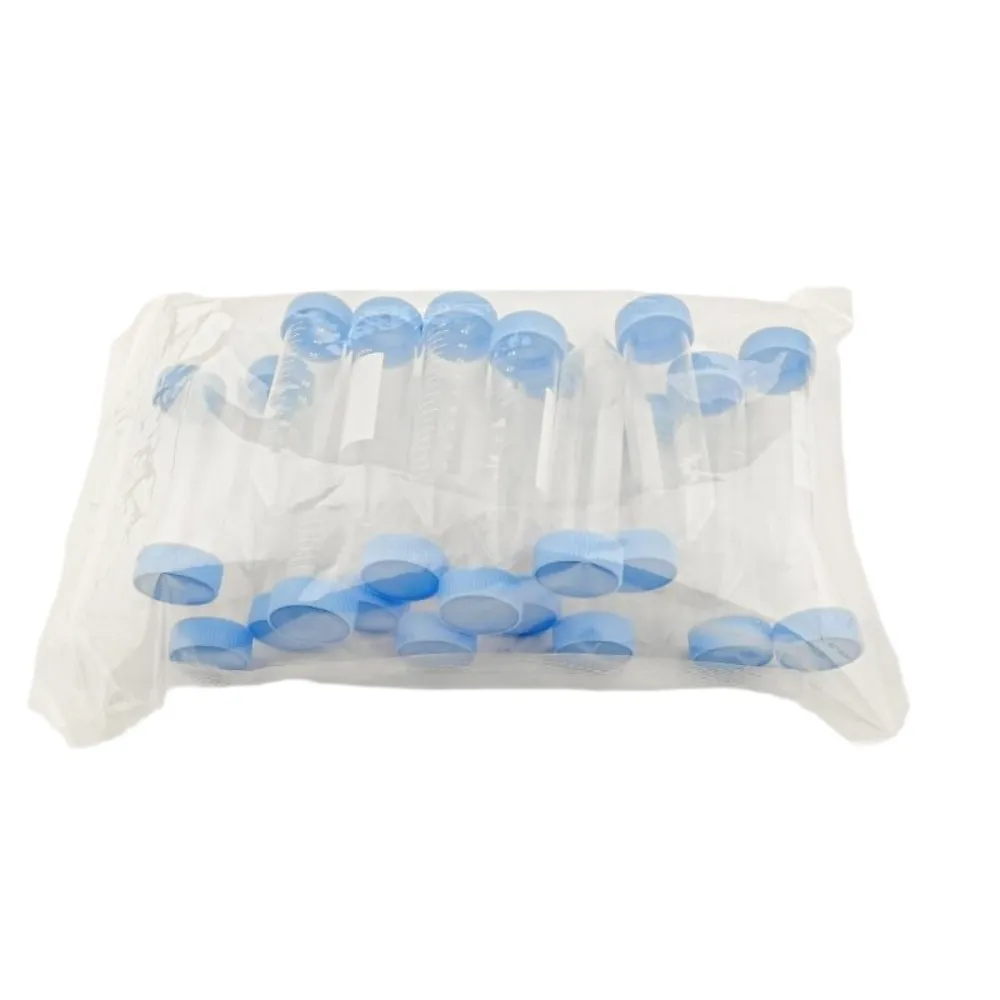
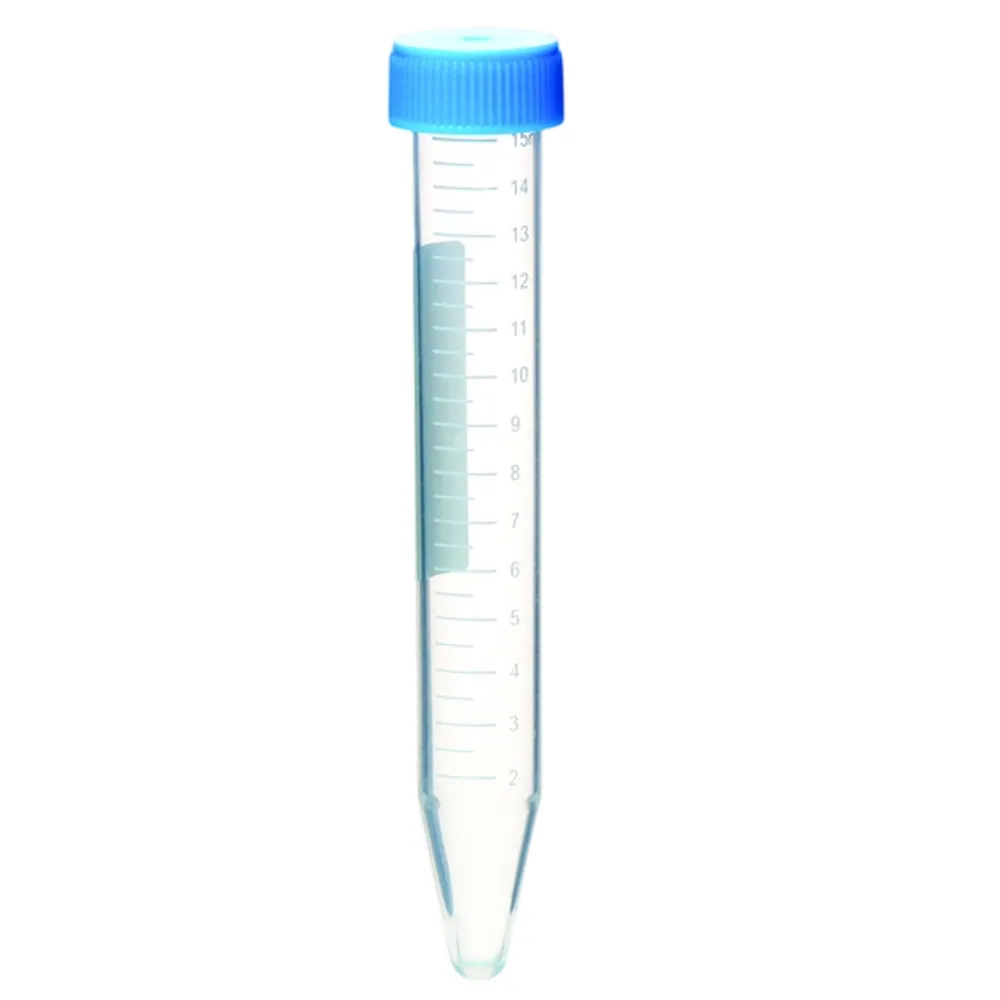
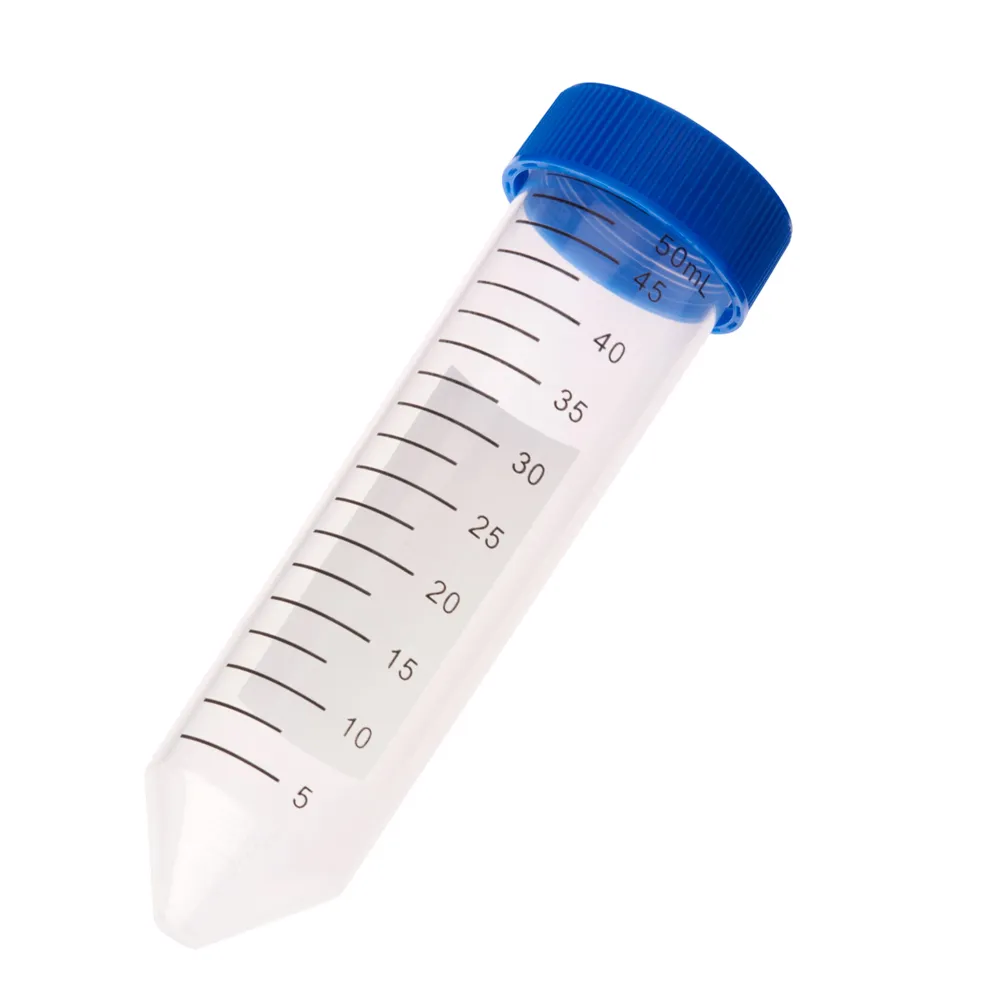
أنبوب طرد مركزي متدرج 15 مل - 50 مل

أنبوب الطرد المركزي المتدرج مناسب لجمع العينات البيولوجية المختلفة، بما في ذلك البكتيريا والخلايا والبروتينات والأحماض النووية، وتعبئتها الفرعية وطردها مركزيًا. وهي مصنوعة من مادة PP المطابقة لـ USP-6، بدون أي أيونات معدنية ثقيلة. الجدار الداخلي أملس لضمان عدم وجود بقايا عينة، ويتمتع بشفافية عالية لسهولة المراقبة. وهي مناسبة لأجهزة الطرد المركزي شائعة الاستخدام في السوق ويمكنها تحمل درجات حرارة تتراوح من -80 درجة مئوية إلى 120 درجة مئوية.

ميزات المنتج لأنبوب الطرد المركزي المتدرج:

1- نطاق مقاومة درجات الحرارة: من -80 درجة مئوية إلى 120 درجة مئوية، مما يدعم التعقيم في درجات الحرارة العالية والضغط العالي.
2. متوسط السرعة القصوى المختبرة: 8500 دورة في الدقيقة (8500 دورة في الدقيقة).
3. اختبار التسرب في درجات الحرارة العالية: لا يوجد تسرب بعد ساعتين من الدوران في درجة حرارة ثابتة عند 65 درجة مئوية.
4. جدار أنبوبي أملس وشفافية عالية، مما يسهل التشغيل التجريبي والمراقبة.
5. تعقيم اختياري بأشعة γ-ray. تشمل المواصفات أنابيب طرد مركزي صغيرة بسعة 1.5 مل/مل/مل/مل أنابيب طرد مركزي بسعة 15 مل/مل/مل. مصنوعة من مادة البولي بروبيلين (PP)، وهي مصنفة إلى قاع مخروطي وقاع حاد.
6. خطوط تدرج واضحة، وأداء ختم جيد، وخالية من الإنزيمات وخالية من البيروجين، ومواصفات كاملة.

مادة المنتج: جسم الأنبوب (بولي بروبيلين)، غطاء الأنبوب (بولي إيثيلين).
استخدام المنتج: حاوية عينة أنبوبية تستخدم مع أجهزة الطرد المركزي، مزودة بغطاء محكم الغلق أو غطاء كبس.

المواصفات القطر (مم) قطر الغطاء (مم) ارتفاع الغطاء (مم) الارتفاع بما في ذلك الغطاء (مم)
15 مل 16 10.6 10.75 120.58
50 مل 28.69 33.88 12.6 116.4
أنبوب طرد مركزي متدرج 15 مل
أنبوب طرد مركزي متدرج 50 مل
أنبوب طرد مركزي 50 مل

أسئلة وأجوبة

Q: What is the use of a graduated centrifuge tube?

A: Centrifuge tubes are vital in separating components in medical labs. In blood samples, they can separate the organelles from the cell and the sedimentation of cells and viruses. Centrifuging is a huge component of DNA or RNA extraction from a cell.

Q: What are the different types of centrifuge tubes?

A: Centrifuge tubes can be categorized by their shape, material, and volume. Common shapes include conical and flat-bottom, and materials include polypropylene and glass. They also vary in size, from small microcentrifuge tubes for tiny samples to larger conical tubes for big volumes.

Q: What is the function of a graduated test tube?

A: Uses of graduated test tubes: Some of their most common uses include: Accurate measurement of liquids and reagents: graduated marks allow specific volumes of substances to be measured, which is crucial in chemical tests and reactions where the exact proportion of each component affects the results.

Q: What is the principle of the centrifuge tube?

A: The centrifuge uses the sedimentation principle. The centrifugation technique works on the principle of separating particles suspended in liquid media using a centrifugal field. These are placed in tubes or bottles in the centrifuge’s rotor.

Q: Why is a centrifuge tube used?

A: Centrifuge tubes are important to prevent laboratory instruments from being clogged. The idea is to use these tubes to keep analytes separate from any potential substances that could interfere with test samples. Bloodwork is probably what comes to mind when discussing centrifuge tubes.

احصل على استشارة مجانية!

اتصل بنا مجاناً! أخبرنا عن أهدافك ودعنا نبدأ المحادثة!
انتقل إلى الأعلى

احصل على استشارة مجانية!