I. Introduction: The Diagnostic Standard
In the diagnosis of hematological disorders such as leukemia, lymphoma, and multiple myeloma, the bone marrow examination remains a definitive diagnostic tool. For healthcare providers, the quality of this diagnosis relies heavily on the quality of the sample obtained. This places immense importance on the specific needle used for bone marrow aspiration and biopsy.
A bone marrow examination is typically a dual procedure:
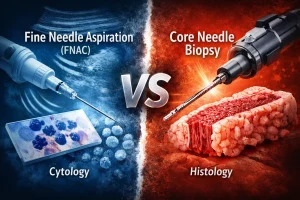
- Aspiration: The withdrawal of liquid marrow for cytological assessment.
- Trephine Biopsy: The extraction of a solid core of bone and marrow for histological structure analysis.
As a manufacturer of high-precision medical consumables, we understand that a bone marrow biopsy needle is not a “one size fits all” instrument. The market offers a range of designs—from the classic Salah bone marrow biopsy needle to the advanced Argon T-Lok bone marrow biopsy needle—each engineered for specific anatomical sites and patient profiles.
This guide provides a detailed breakdown of these types, their mechanisms, and procurement considerations regarding bone marrow biopsy needle price and quality.
II. Classifying Bone Marrow Aspiration Needle Types
While many modern systems allow for both aspiration and biopsy through a single cannula, specific needles are historically and clinically designed purely for aspiration—particularly from the sternum.
A. Classic Sternal Designs: Salah vs. Islam
Sternal puncture requires extreme caution due to the proximity of the heart and major blood vessels. Consequently, needles designed for this site feature adjustable guards to mechanically prevent over-penetration.
- The Salah Bone Marrow Biopsy Needle:
- Design: One of the oldest and most recognizable patterns. It features a simple side-screw guard (depth stop) on the cannula.
- Mechanism: The physician adjusts the guard based on the patient’s estimated subcutaneous fat thickness before insertion.
- Limit: The handle is traditionally small, which can make the rotary pressure required for penetration difficult for the operator.
- The Islam Bone Marrow Biopsy Needle:
- Design: An evolution of the Salah and Klima patterns.
- Key Improvement: It features a distinct name of bone marrow aspiration needle architecture—a dome-shaped or reinforced T-bar handle. This improved ergonomics allows for greater stability and controlled pressure during sternal entry.
- Safety: Like the Salah, it utilizes a rigorous depth-stop mechanism to ensure the needle does not pierce the posterior wall of the sternum.
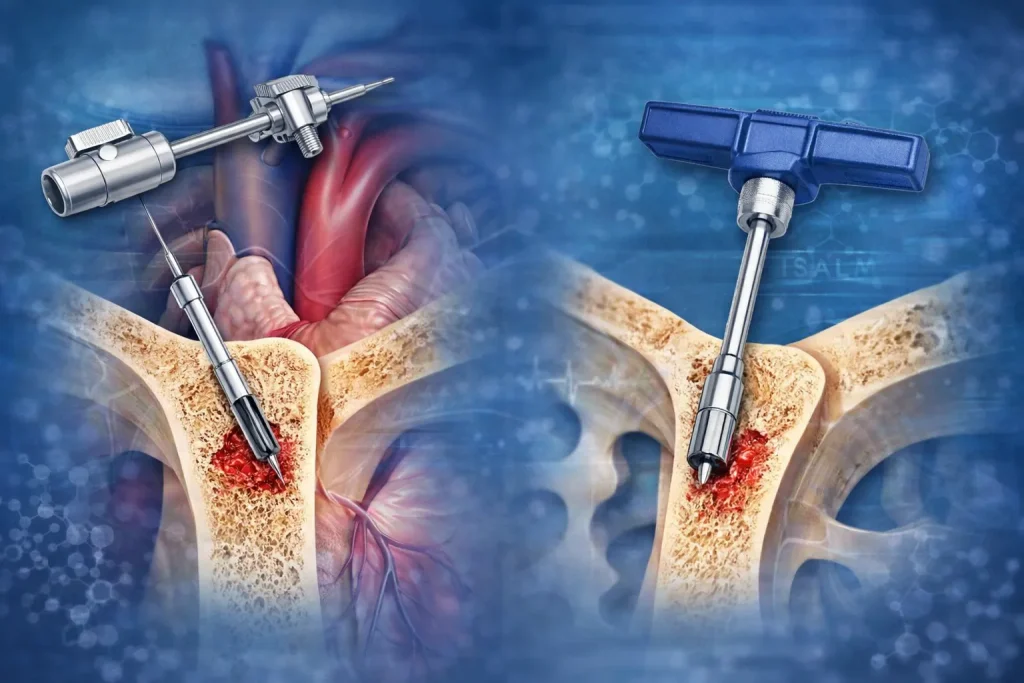
Table 1: Comparison of Aspiration-Specific Needles
| Needle Type | Handle Style | Guard Mechanism | Primary Site |
| Salah | Small/Flat Plate | Side Screw Stop | Sternum / Iliac Crest |
| Islam | Dome/T-Bar | Locking Flange | Sternum |
| Klima | Cross-Bar | Screw Guard | Sternum |
| Rosenthal | Large Thumb Plate | Friction/Screw | Iliac Crest / Tibia |
III. Bone Marrow Biopsy (Core) Needle Designs
For obtaining a solid core (trephine) sample, the needle must be robust enough to penetrate the cortex of the bone and capture the trabecular structure intact.
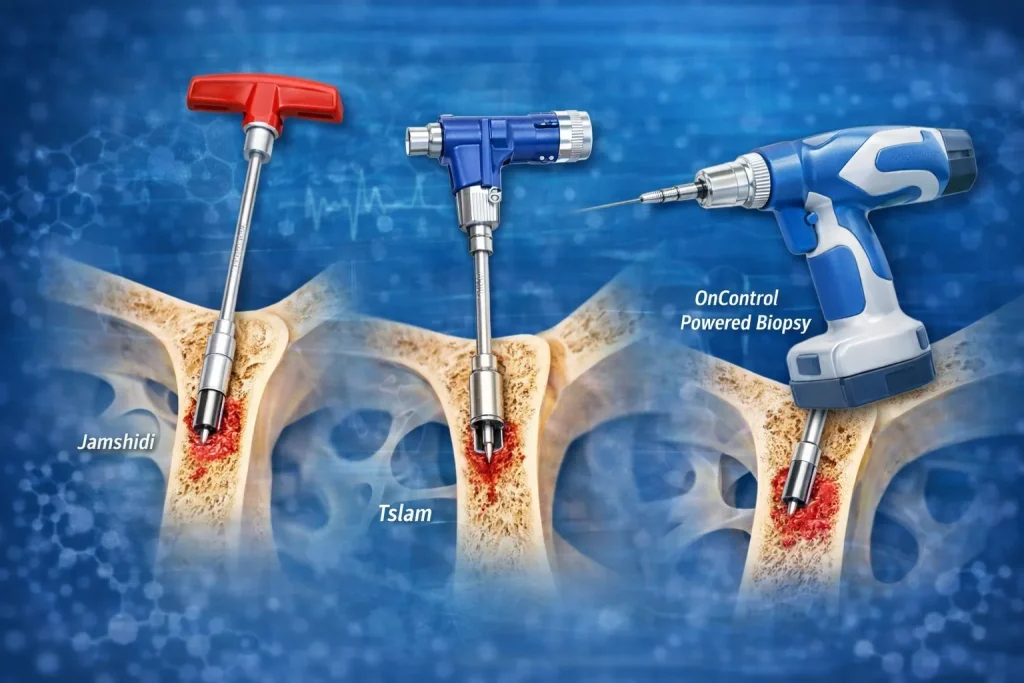
A. The Jamshidi-Style Standard
The “Jamshidi” design (originally developed by Dr. Khosrow Jamshidi) has become the genericized trademark for T-handle biopsy needles.
- Structure: A hollow cannula with a tapered distal tip and a razor-sharp cutting edge.
- The BD Standard: The BD bone marrow biopsy needle is often considered the market benchmark. Its “T-handle” allows the physician to apply significant torque to penetrate the iliac crest.
- Process: Once inside the marrow cavity, the physician removes the stylet, advances the hollow needle to capture the core, and then applies a rocking motion to break the core loose before withdrawal.
B. Advanced Locking Mechanisms (Argon T-Lok)
A common failure in biopsies is the “dry tap” or lost core—where the sample slips out of the needle during withdrawal. To address this, manufacturers such as Argon Medical Devices developed active capture mechanisms.
- Argon Bone Marrow Biopsy Needle: Known for high-quality steel and sharp bevels.
- Argon T Lok Bone Marrow Biopsy Needle: This specific model features a “Trap-Lok” mechanism.
- How it works: After the core is inside the needle, a specific extraction cannula is inserted that mechanically traps the sample.
- Benefit: This eliminates the need for the violent “rocking” motion required to break the core, reducing patient pain and preserving the sample’s architecture (preventing “crush artifact”).
C. Automated Solutions
The most significant recent innovation is the powered bone marrow biopsy needle (e.g., the Arrow OnControl system).
- Mechanism: A battery-powered driver drills the needle into the bone.
- Advantages:
- Speed: Reduces procedure time from minutes to seconds.
- Consistency: Provides a consistent velocity that penetrates hard bone more easily than manual twisting.
- Sample Quality: Studies suggest powered needles often yield longer, less fragmented cores.
IV. Technical Specifications and Sizing
For procurement officers and distributors, understanding the technical specs is vital for ordering the correct SKUs.
A. Understanding Gauge and Length
The bone marrow biopsy needle gauge determines the diameter of the sample.
- Bone Marrow Biopsy Needle 11G: This is the standard size for adult biopsies. An 11G needle (approx. 3mm outer diameter) provides a core sufficient for detailed histological analysis without causing excessive trauma.
- 13G / 15G: Typically used for pediatric patients or adults with smaller bone structures.
- 8G: Rarely used, reserved for special large-core requirements.
B. Length Considerations
- 10 cm (4 inch): Standard length for most adults.
- 15 cm (6 inch): Required for obese patients where the distance to the posterior iliac crest is significant.
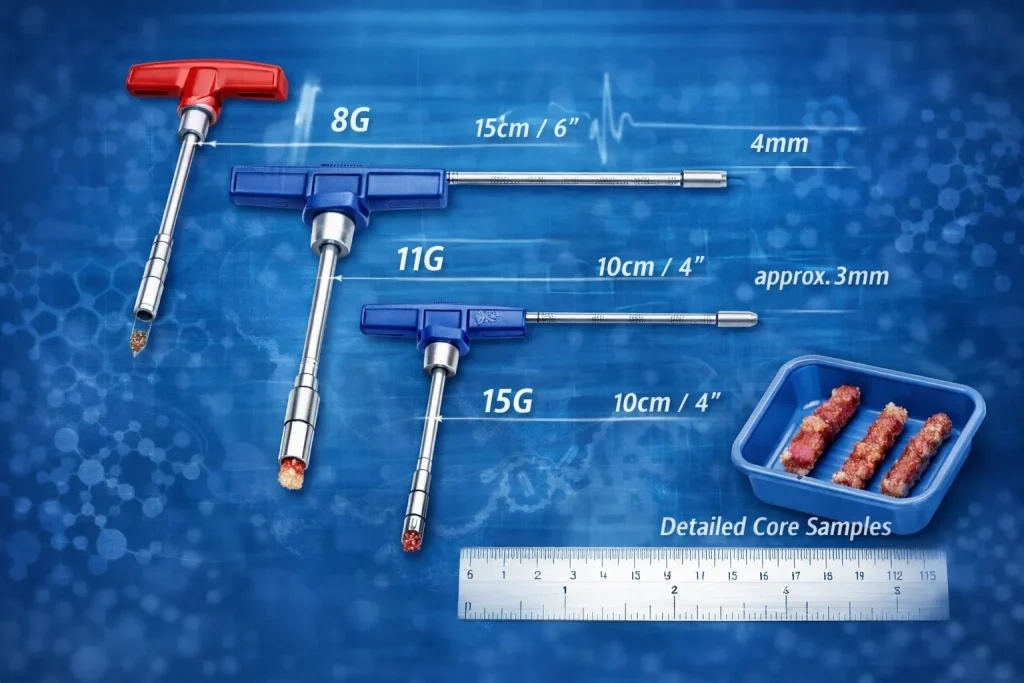
Table 2: Recommended Needle Specifications by Patient Profile
| Patient Category | Recommended Gauge | Recommended Length | Procedure Type |
| Adult (Standard) | 11G | 100mm (4″) | Biopsy & Aspiration |
| Adult (Obese) | 11G | 150mm (6″) | Biopsy & Aspiration |
| Pediatric | 13G | 60mm – 100mm | Biopsy & Aspiration |
| Infant | 15G – 18G | 35mm – 60mm | Aspiration Only |
V. Clinical Application and Site Selection
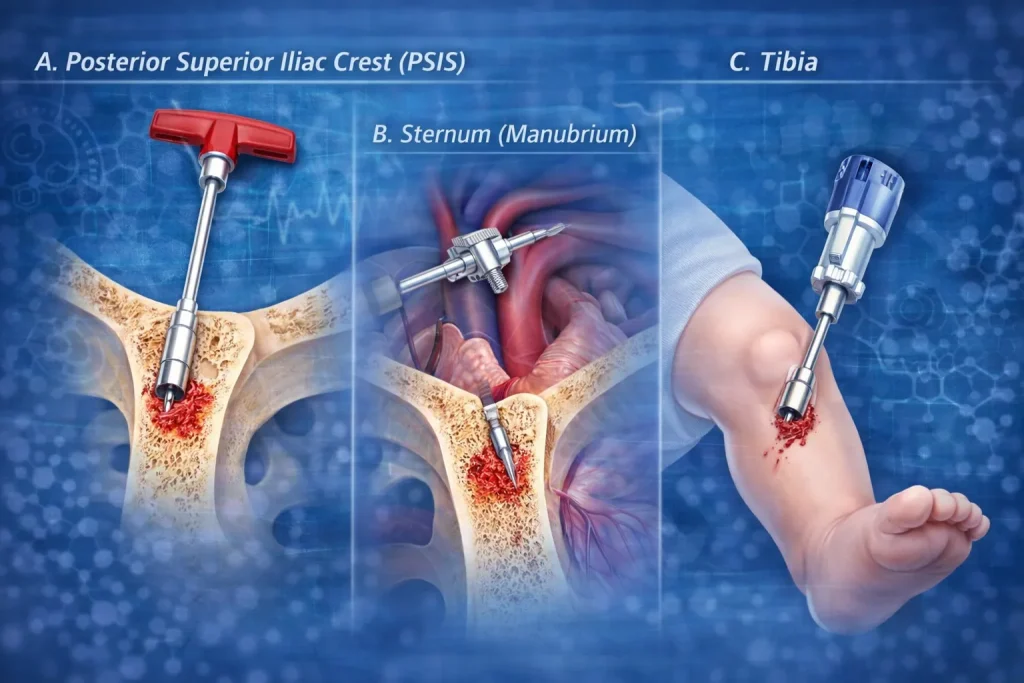
The choice of needle is dictated by the bone marrow aspiration needle site.
A. Posterior Superior Iliac Crest (PSIS)
This is the gold standard site for bone marrow aspiration needle types that perform both aspiration and biopsy.
- Why: It is the safest site (no vital organs nearby) and offers the easiest access to the marrow cavity.
- Needle: Jamshidi-style, Argon T-Lok, or our OEM 11G biopsy needles.
B. Sternum (Manubrium)
- Constraint: Used only for aspiration (liquid). Biopsy cores are never taken from the sternum due to the thinness of the bone and the risk of piercing the heart.
- Needle: Requires a guarded needle, such as the Salah bone marrow biopsy needle or Islam bone marrow biopsy needle.
C. Tibia
- Usage: Primarily used in neonates and infants where the iliac crest is not fully ossified or defined.
- Needle: Short, smaller gauge needles (15G-18G).
VI. Market Factors and Purchasing Guide
A. Cost vs. Quality
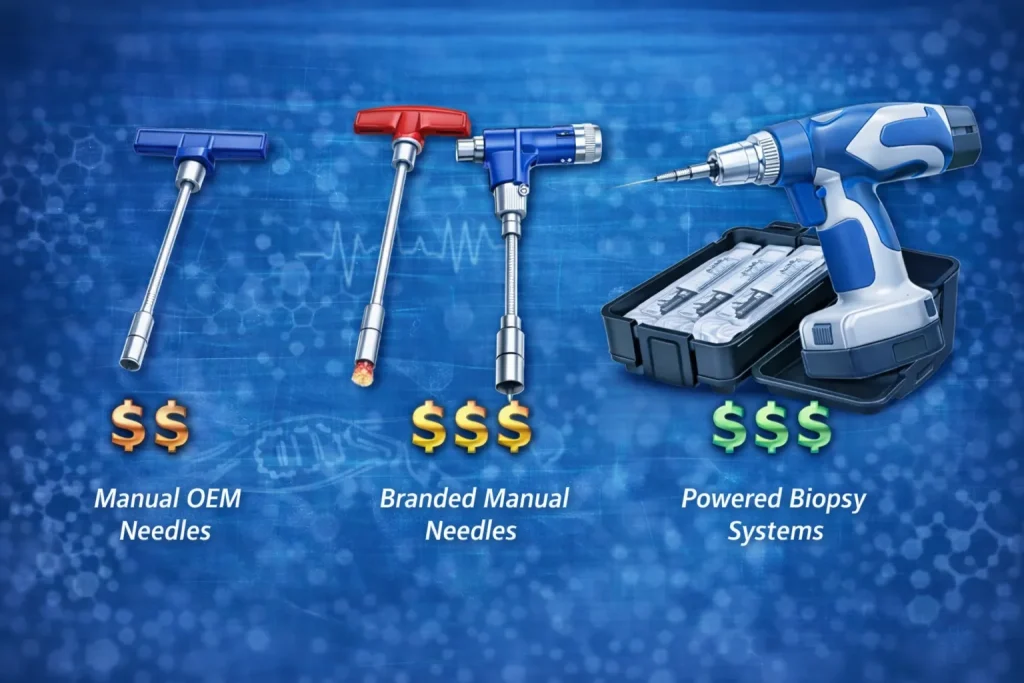
The bone marrow biopsy needle price varies significantly based on technology:
- Basic Manual Needles (OEM/Generic): Most cost-effective. Suitable for routine use in cost-sensitive markets.
- Brand Name Manual (BD/Argon): Mid-range price. Buyers pay for the reliability of the locking mechanism and brand assurance.
- Powered Systems: High capital cost for the driver + expensive disposable needle sets. Justified in high-volume cancer centers where efficiency is paramount.
B. Manufacturing Materials
High-quality needles use medical-grade stainless steel (usually AISI 304 or 316) with electropolished tips. Cheaper alternatives may lack this polish, leading to higher friction and increased patient pain during insertion.
VII. Conclusion
From the safety-guarded Salah bone marrow biopsy needle used for sternal draws to the sophisticated Argon T Lok bone marrow biopsy needle designed to capture pristine cores, the variety of instrumentation reflects the complexity of hematological diagnosis.
As a manufacturer, we supply a range of solutions, including the standard bone marrow biopsy needle 11g that rivals the bd bone marrow biopsy needle in performance but offers a more competitive bone marrow biopsy needle price. Whether your focus is on manual precision or compatible consumables for powered bone marrow biopsy needle systems, choosing the right tool ensures patient safety and diagnostic accuracy.
Next Steps: Contact our sales engineering team to request a sample kit of our 11G Biopsy Needles or to discuss OEM manufacturing opportunities for your specific brand requirements.
Frequently Asked Questions (FAQs)
Both are designed for sternal aspiration with depth guards. The Salah bone marrow biopsy needle typically has a flat plate handle and a side-screw guard. The Islamic bone marrow biopsy needle is an improved design with a dome or T-bar handle for better ergonomic grip and a more secure flange guard to prevent accidental over-penetration.
The bone marrow biopsy needle 11g strikes the perfect balance. It is large enough to extract a core of bone that maintains the structural integrity required for histology, yet small enough to be tolerated by the patient under local anesthesia. Smaller needles (13G+) often fragment the core.
Generally, no. A needle used for bone marrow aspiration (like the Salah) is designed only to suck out liquid. It lacks the cutting edge and the internal diameter required to cut and capture a solid bone core. Biopsy needles (Jamshidi type) can be used for aspiration, but aspiration needles cannot be used for biopsy.
The Argon T Lok bone marrow biopsy needle features a specialized capture device (extraction cannula) that traps the sample inside the needle. This eliminates the need for the physician to “rock” the needle to break the bone core loose, which is often the most painful part of the procedure for the patient.
The sternum is thin, and the heart/aorta lies directly beneath it. The main risk is cardiac tamponade or hemorrhage if the needle penetrates too deeply. This is why guarded needles (Salah/Islam) are mandatory for this bone marrow aspiration needle site.
For high-volume centers, yes. A powered bone marrow biopsy needle drills through hard cortical bone in seconds, reducing procedure time and operator fatigue. It is also beneficial for patients with very hard bones (e.g., young patients or those with osteosclerosis), where manual entry is difficult.
The bone marrow biopsy needle price is driven by the complexity of the handle mechanism (e.g., T-lock vs. standard cap), the quality of the steel (sharpness retention), and the inclusion of accessories (probes, guides, safety caps). Brand names like BD or Argon also carry a premium over generic OEM equivalents.
A “dry tap” occurs when no marrow can be aspirated. In biopsy terms, it can also refer to failing to retrieve a core. Needles with retention mechanisms (like the T-Lok or specific core-retention flutes inside the bd bone marrow biopsy needle) significantly reduce the failure rate of retrieving a solid sample.