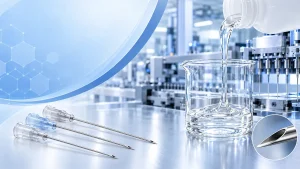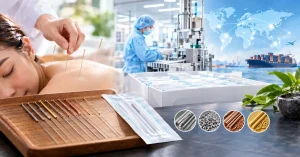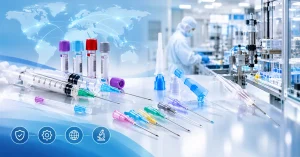








Le prélèvement sanguin veineux est l'une des procédures médicales invasives les plus couramment pratiquées dans le monde. Il constitue la première étape essentielle du diagnostic clinique, de la prise en charge des maladies, des analyses pathologiques et de la surveillance régulière des patients. Au cœur de cette procédure indispensable se trouve le aiguille de prélèvement sanguin veineux— un dispositif médical de haute technologie et de précision, conçu pour prélever des échantillons biologiques en causant un traumatisme tissulaire minimal, en garantissant une efficacité de débit maximale et en assurant une sécurité sans compromis.
Au fur et à mesure que la technologie médicale a progressé, la modeste aiguille est passée d’un simple tube creux à un outil de diagnostic sophistiqué. Aujourd’hui, fabricants de dispositifs médicaux doivent composer avec des cadres réglementaires stricts, les complexités de la science des matériaux et la nécessité permanente d'assurer le confort des patients pour produire des consommables médicaux de niveau mondial.
Ce guide complet présente les principes fondamentaux des instruments de phlébotomie, classe les différentes conceptions structurelles, explique en détail l'importance cruciale du choix du calibre, passe en revue les mécanismes de sécurité de pointe et propose une analyse approfondie des processus de fabrication automatisés qui permettent de fournir ces dispositifs essentiels aux hôpitaux et aux laboratoires du monde entier.
1. Introduction au prélèvement sanguin veineux
Principes fondamentaux de la phlébotomie
La phlébotomie — pratique consistant à prélever du sang chez les patients à des fins d'analyses de laboratoire — repose entièrement sur la qualité et la fiabilité du matériel utilisé. L'objectif principal est d'obtenir un échantillon de sang de haute qualité et non contaminé, sans provoquer d'hémolyse (rupture des globules rouges), ce qui pourrait fausser les résultats des analyses de laboratoire. Le aiguille de prélèvement sanguin veineux joue un rôle essentiel de lien entre le système circulatoire du patient et le récipient destiné à recueillir l'échantillon. Une aiguille mal conçue ou mal fabriquée peut entraîner des douleurs chez le patient, des hématomes, une contamination de l'échantillon et, en fin de compte, un diagnostic erroné.
Normes d'hygiène et d'utilisation à usage unique
En médecine moderne, l'utilisation d'un produit de haute qualité, aiguille jetable pour prélèvement sanguin est une obligation absolue. Le passage des seringues en verre réutilisables et des aiguilles stérilisables aux seringues en plastique à usage unique et aux aiguilles métalliques jetables a révolutionné la prévention des infections. La réutilisation des aiguilles, même après stérilisation en autoclave, présente de graves risques de transmission d’agents pathogènes transmissibles par le sang, tels que le VIH, l’hépatite B et l’hépatite C. De plus, la micro-pointe d’une aiguille se dégrade et s’émousse après une seule insertion. La réutilisation d’une aiguille entraînerait une déchirure tissulaire douloureuse plutôt qu’une ponction nette. Par conséquent, les emballages stérilisés à usage unique constituent la norme universelle, garantissant à la fois une stérilité absolue et une acuité mécanique optimale pour chaque intervention sur un patient.
L'évolution des techniques de prélèvement sanguin
Autrefois, les prélèvements sanguins s'effectuaient à l'aide d'un système ouvert : une seringue et une aiguille standard. Le phlébotomiste tirait manuellement sur le piston pour prélever le sang, puis transférait soigneusement ce dernier dans différents tubes à analyse. Cette méthode comportait de nombreux risques, notamment des déversements accidentels, l'exposition à des particules de sang en aérosol et des volumes d'échantillons très irréguliers.
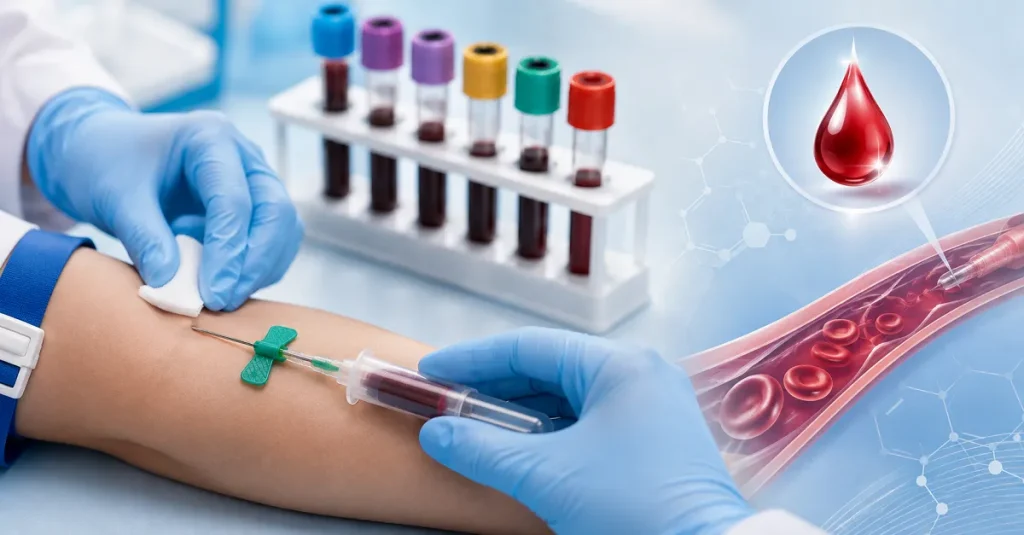
Le secteur a fini par adopter le système de prélèvement sous vide fermé, qui a révolutionné la rapidité et la sécurité du prélèvement sanguin. Grâce à l'utilisation d'une aiguille à double embout associée à des tubes à essai pré-aspirés, ce système moderne permet au sang de s'écouler directement de la veine vers un environnement stérile et hermétique, sous l'effet exclusif de la pression atmosphérique calibrée plutôt que d'une aspiration manuelle.
2. Types et classification des aiguilles de prélèvement sanguin
Le contexte clinique actuel nécessite une large gamme de modèles d'aiguilles afin de s'adapter aux différentes caractéristiques des patients, à l'état des veines et aux exigences en matière d'examens.
Aiguilles pour système à tube sous vide
Le système de tubes sous vide constitue la pierre angulaire de la phlébotomie moderne. Ce dispositif repose sur un type spécifique de tube à double extrémité aiguille de prélèvement sanguin sous vide. Une extrémité de l'aiguille perce la veine du patient, tandis que l'autre extrémité, recouverte d'un manchon en caoutchouc souple, perce le bouchon en caoutchouc d'un tube sous vide.
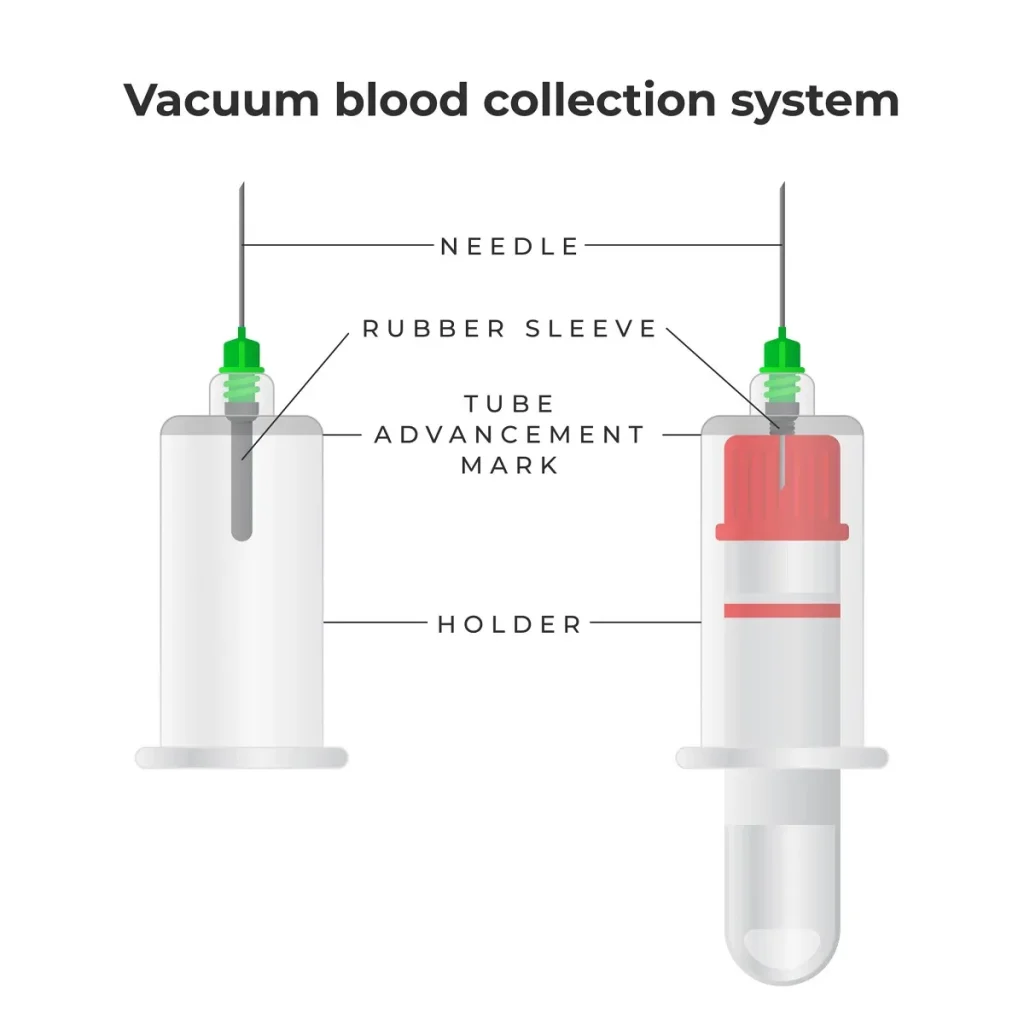
L'avantage structurel de la norme aiguille de prélèvement sanguin Vacutainer L'un des principaux atouts de ce système réside dans son efficacité dans les environnements cliniques à haut débit. Le sang s'écoulant directement dans un tube soumis à un vide prédéfini, le volume exact de sang requis est prélevé automatiquement. Cela garantit le rapport précis entre le sang et l'additif nécessaire à la réalisation d'analyses chimiques et d'études de coagulation fiables.
Aiguilles à prélèvement multiple
Une innovation majeure dans le système sous vide est la aiguille de prélèvement sanguin multi-échantillons. Il arrive souvent qu'un médecin prescrive plusieurs analyses sanguines différentes (par exemple, une numération globulaire complète, un bilan métabolique et un bilan lipidique), ce qui nécessite plusieurs tubes contenant des additifs chimiques différents.
L'aiguille multi-prélèvements est dotée d'un manchon en caoutchouc rétractable spécialement conçu qui recouvre la pointe interne de l'aiguille (le côté qui perce le tube). Lorsqu'un tube est emboîté sur l'aiguille, le manchon se rétracte, permettant ainsi au sang de s'écouler. Dès que le tube plein est retiré pour être remplacé par un nouveau, le manchon en caoutchouc se referme instantanément sur l'aiguille interne, interrompant ainsi l'écoulement du sang. Cette conception mécanique ingénieuse empêche toute fuite de sang dans le porte-aiguille lors du changement de tube, ce qui permet de préserver la propreté de l'environnement et de protéger le personnel soignant contre toute exposition.
Aiguilles de prélèvement sanguin à ailettes (aiguilles papillon)
Pour les patients présentant des veines fragiles, sinueuses ou superficielles — en particulier chez les enfants et les personnes âgées —, les aiguilles droites standard ne sont souvent pas adaptées. Dans ces cas-là, les professionnels de santé ont recours à aiguilles à prélèvement sanguin de type « papillon ».
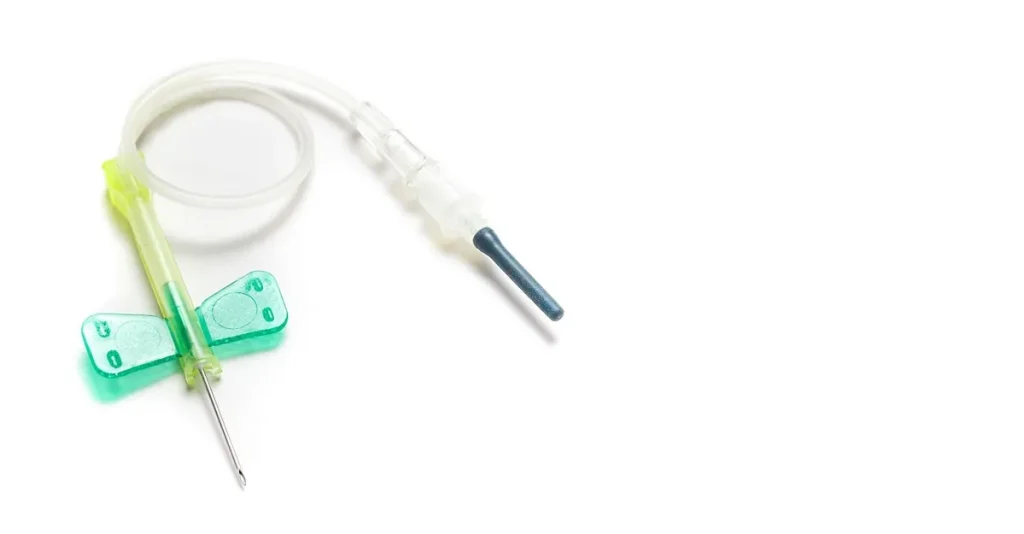
Également appelé aiguille de prélèvement sanguin à ailettes, ce dispositif est doté d'ailettes en plastique souples fixées à la base de l'aiguille, reliées à un tube souple et transparent. Les caractéristiques de sa conception offrent des avantages cliniques considérables :
- Angle d'insertion faible: Les ailettes permettent au phlébotomiste d'insérer l'aiguille selon un angle presque à l'horizontale, compris entre 10 et 15 degrés, ce qui la rend idéale pour les veines situées sur le dos de la main ou au niveau du pied.
- Commande ergonomique: Les ailettes offrent une prise sûre et texturée, permettant d'effectuer des micro-ajustements pendant la ponction veineuse.
- Immobilité: Une fois en place, les ailettes peuvent être fixées à plat contre la peau du patient à l'aide de ruban adhésif, ce qui empêche l'aiguille de se déloger si le patient a des spasmes ou bouge.
- Souplesse des tuyaux: Le tube flexible fait office d'amortisseur. Si le phlébotomiste manipule les tubes à vide raccordés, le mouvement n'est pas transmis à l'aiguille située dans la veine du patient, ce qui réduit considérablement les lésions tissulaires.
Technologie de flashback visuel
L'un des aspects les plus difficiles de la phlébotomie consiste à s'assurer que la ponction veineuse a bien réussi, ce qu'on appelle “ trouver la veine ”. Avec les aiguilles droites traditionnelles, le phlébotomiste s'appuie largement sur le retour tactile (une sensation de “ clic ”) et ne peut pas confirmer visuellement la présence d'un flux sanguin avant que le premier tube sous vide ne soit mis en place.
La modernité Aiguille de prélèvement sanguin « flashback » Vacutainer résout ce problème grâce à une chambre centrale transparente innovante. Lorsque la pointe de l'aiguille pénètre correctement dans la lumière de la veine, une petite quantité de sang s'écoule instantanément dans la chambre centrale translucide, ce qui permet d'observer immédiatement un “ reflux ” visuel. Cette confirmation instantanée minimise l’inconfort du patient en éliminant la nécessité de “ tâtonner ” ou de “ chercher ” la veine, ce qui augmente considérablement le taux de réussite dès la première ponction.
3. Guide de choix des aiguilles : comment choisir la bonne taille d'aiguille
Il est primordial de choisir une aiguille de taille adaptée. L'utilisation d'une aiguille trop grosse peut provoquer une douleur inutile et des hématomes importants (bleus). À l'inverse, l'utilisation d'une aiguille trop fine peut entraîner le cisaillement et la rupture des globules rouges lorsqu'ils sont forcés de passer par un orifice étroit — un phénomène appelé hémolyse —, ce qui rend l'échantillon inutilisable et nécessite un nouveau prélèvement.
Comprendre les mesures de calibre
Le calibre des aiguilles est mesuré en “ gauges ”, un système issu à l’origine de la « Birmingham Wire Gauge », utilisée dans la fabrication britannique de fil de fer. Dans le domaine médical, le terme « gauge » désigne le diamètre extérieur de l’aiguille.
Surtout, Le numéro de calibre est inversement proportionnel à la taille physique de l'aiguille. Un numéro de calibre élevé correspond à une aiguille plus fine, tandis qu'un numéro de calibre faible correspond à une aiguille plus épaisse. Afin de faciliter l'identification des tailles dans un environnement clinique où tout va très vite, les normes internationales imposent un code couleur spécifique pour les embouts d'aiguilles.
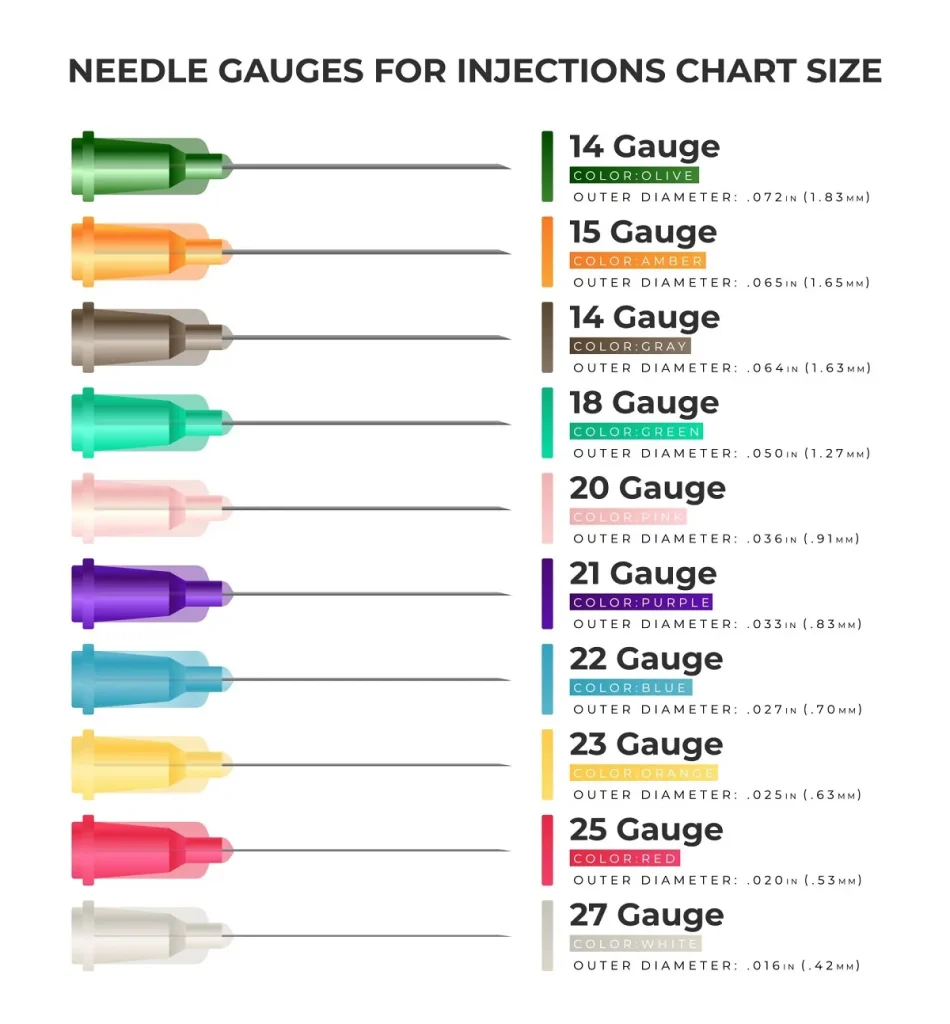
Référence faisant autorité : Tableau comparatif des calibres d'aiguilles de prélèvement sanguin
| Jauge (G) | Couleur de l'embout universel | Diamètre extérieur (mm) | Débit | Application clinique primaire |
| 16G | Blanc | 1,60 mm | Ultra-rapide | Don de sang (phlébotomie thérapeutique). N'est pas utilisé à des fins de diagnostic de routine. |
| 18G | Rose | 1,20 mm | Très rapide | Transfusions sanguines rapides, chirurgie traumatologique, prélèvements de grand volume. |
| 20G | Jaune | 0,90 mm | Rapide | Prélèvements diagnostiques à grand volume, à plusieurs tubes, chez les adultes présentant d’excellentes veines. |
| 21G | Vert | 0,80 mm | Standard | Prélèvement sanguin de routine chez l'adulte. La norme universelle pour les prélèvements sanguins en cabinet médical. |
| 22G | Noir | 0,70 mm | Modéré | Les enfants plus âgés et les adultes présentant des veines légèrement plus fines ou modérément fragiles. |
| 23G | Bleu clair | 0,60 mm | Lent | Pédiatrie, gériatrie, veines de la main et veines très fragiles ou ondulantes. |
| 25G | Orange | 0,50 mm | Très lent | Soins néonatals et prélèvements sanguins de très faible volume. Risque élevé d’hémolyse. |
Choisir l'aiguille de calibre la mieux adaptée au prélèvement sanguin
Lors de la détermination de la la meilleure aiguille pour un prélèvement sanguin, le praticien doit évaluer l'âge du patient, son état physique, l'accessibilité veineuse et les analyses de laboratoire spécifiques prescrites.
L'aiguille de calibre 21 pour les prélèvements sanguins
Celui aux moyeux verts Aiguille de calibre 21 pour prélèvement sanguin est considéré comme la référence absolue pour les ponctions veineuses de routine chez l'adulte. Il offre un équilibre parfait entre le confort du patient et l'efficacité fonctionnelle. La lumière (l'espace creux à l'intérieur) est suffisamment large pour permettre au sang de s'écouler rapidement, remplissant ainsi plusieurs tubes sous vide en un temps record sans soumettre les globules rouges à une contrainte de cisaillement excessive. Si le patient est un adulte en bonne santé présentant des veines cubitales médianes saillantes (les grosses veines situées dans le creux interne du coude), l'aiguille de calibre 21G est sans conteste le choix optimal.
L'aiguille de calibre 23 pour les prélèvements sanguins
Pour les patients présentant des difficultés d'accès veineux, le bleu clair Aiguille de calibre 23 pour prélèvement sanguin est très couramment utilisée. Ce calibre est généralement utilisé dans les aiguilles de type « papillon ». Étant plus fine, elle provoque moins de douleur lors de l'insertion et présente moins de risques d'occlusion d'une veine fragile. Cependant, le phlébotomiste doit effectuer le prélèvement plus lentement. En raison de la lumière plus étroite, l'utilisation de tubes à vide puissant avec une aiguille de calibre 23G peut provoquer des turbulences à grande vitesse, entraînant une hémolyse.
Les principes physiques de la prévention de l'hémolyse
L'hémolyse est l'ennemi juré de la pathologie de laboratoire. Lorsque les globules rouges se rompent, ils libèrent leur contenu intracellulaire (comme le potassium) dans le sérum sanguin, ce qui augmente artificiellement les résultats des analyses et rend l'échantillon inutilisable. La conception structurelle d'une aiguille de haute qualité permet de lutter contre ce phénomène grâce à la technologie des “ parois ultra-fines ”. Grâce à une métallurgie de pointe, les fabricants peuvent créer une aiguille présentant un calibre extérieur standard (par exemple, 21G), mais dont la paroi métallique est plus fine, ce qui permet d'obtenir une lumière interne plus large. Cela optimise le débit et minimise les forces de cisaillement agissant sur les cellules sanguines, préservant ainsi l'intégrité de l'échantillon.
4. Mécanismes de sécurité et conformité réglementaire
Les risques professionnels auxquels sont exposés les professionnels de santé sont considérables, les blessures par piqûre d'aiguille constituant une menace majeure de transmission d'agents pathogènes transmissibles par le sang. Conscientes de ce danger, les organisations mondiales chargées de la santé et de la sécurité ont imposé des changements radicaux dans la conception des dispositifs de prélèvement sanguin.
Prévention des blessures par piqûre d'aiguille
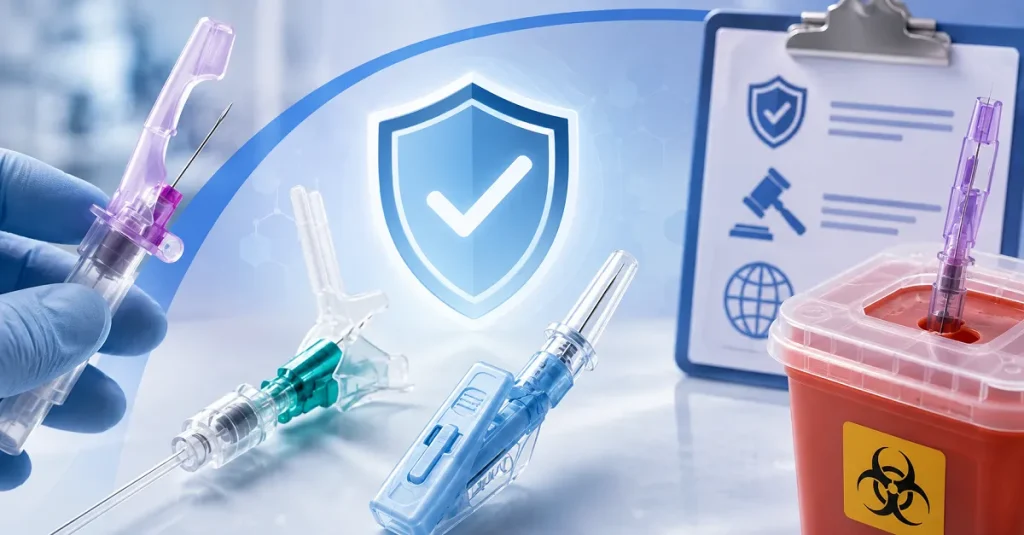
Des organismes tels que l'Administration américaine de la sécurité et de la santé au travail (OSHA) et l'Union européenne (par le biais de la directive 2010/32/UE) imposent strictement l'utilisation de dispositifs médicaux conçus selon les principes de sécurité. Par conséquent, les hôpitaux modernes achètent presque exclusivement aiguilles de sécurité pour les prélèvements sanguins. Ces dispositifs sont équipés de mécanismes de contrôle spécialement conçus pour isoler l'aiguille contaminée dès qu'elle est retirée de la veine du patient, empêchant ainsi physiquement toute piqûre accidentelle du personnel soignant, du personnel chargé de l'élimination des déchets ou du patient.
Conceptions de sécurité active et passive
Les mécanismes de sécurité se répartissent généralement en deux catégories, selon leur mode d'activation :
- Systèmes de sécurité active: Leur activation nécessite une action physique délibérée de la part du phlébotomiste.
- Écrans de protection à charnières: Le modèle le plus courant est constitué d’un capuchon en plastique rigide fixé à l’embout de l’aiguille par une charnière souple. Dès que l’aiguille est retirée du bras, le phlébotomiste utilise son pouce (ou appuie le capuchon contre une surface dure, comme une table) pour enclencher le capuchon sur l’aiguille contaminée. Un “ clic ” audible confirme que l’aiguille est définitivement verrouillée.
- Gaines coulissantes: Souvent présent sur les aiguilles de type « papillon », ce dispositif consiste en un cylindre en plastique que l'utilisateur fait glisser sur l'aiguille jusqu'à ce qu'il se verrouille sur la pointe.
- Systèmes de sécurité passive: Il s'agit de modèles très sophistiqués dont le mécanisme de sécurité se déclenche automatiquement, sans que l'utilisateur n'ait à effectuer aucune manipulation supplémentaire.
- Rétraction intraveineuse: D'une simple pression sur un bouton, alors que l'aiguille est encore dans la veine, un mécanisme à ressort la rétracte instantanément de la veine pour la faire rentrer dans le boîtier en plastique. Cela élimine pratiquement tout risque d'exposition entre le bras du patient et le conteneur de collecte des objets tranchants.
Normes de qualité et de stérilisation
Au-delà de la sécurité mécanique, les aiguilles de prélèvement sanguin doivent répondre à des critères de qualité internationaux rigoureux, notamment la norme ISO 11070 (Introducteurs, dilatateurs et fils-guides intravasculaires stériles à usage unique). Avant d'arriver dans un établissement de santé, une aiguille est soumise à des procédés de stérilisation validés, le plus souvent à l'oxyde d'éthylène (EtO) au gaz ou par irradiation gamma. De plus, chaque lot est certifié apyrogène (exempt d’endotoxines bactériennes susceptibles de provoquer de la fièvre) afin de garantir une sécurité absolue au patient lors de l’injection intravasculaire.
5. Références du marché et normes du secteur
Pour fabriquer des consommables médicaux à l'échelle mondiale, les entreprises doivent sans cesse se comparer aux leaders de premier plan du secteur.
À la pointe des innovations du marché
Les normes de conception fixées par les fabricants haut de gamme ont une forte influence sur l'ensemble de la chaîne d'approvisionnement. Par exemple, un Aiguille de prélèvement sanguin Nipro ou une société Becton Dickinson (BD) standard aiguille Vacutainer pour prélèvement sanguin constitue la référence en matière de performances cliniques. Ces dispositifs haut de gamme ne se distinguent pas seulement par leur fonction de base, mais aussi par des améliorations infimes qui transforment radicalement l'expérience du patient. Les fabricants en quête d'excellence évaluent ces produits afin de s'assurer qu'ils atteignent, voire dépassent, les critères de performance fixés dans plusieurs domaines essentiels.
Normes relatives à la science et à l'ingénierie des matériaux
La fabrication d'une aiguille de classe mondiale nécessite une synergie entre la métallurgie de pointe et le génie chimique :
- Acier inoxydable de qualité médicale: Les aiguilles de haute qualité sont fabriquées à partir d'acier inoxydable austénitique SUS304 ou SUS316L. Ce matériau offre une résistance à la traction maximale (ce qui empêche l'aiguille de se plier ou de se casser sous la peau) tout en conservant une résistance exceptionnelle à l'oxydation et à la dégradation chimique.
- Géométrie à trois biseaux: Une aiguille ne “ perce ” pas de trou ; elle sectionne les tissus avec précision. Les aiguilles haut de gamme présentent une pointe à trois biseaux (trois plans) découpée au laser. Cette forme complexe crée une pointe angulaire tranchante comme un rasoir qui glisse à travers l'épiderme, le derme et la paroi veineuse avec une résistance minimale et pratiquement aucune déchirure des tissus, favorisant ainsi une cicatrisation rapide.
- Lubrification au silicone exclusive: La dernière étape, cruciale, de la fabrication d'aiguilles haut de gamme consiste à appliquer une couche microscopique de fluide de silicone de qualité médicale. Ce revêtement réduit considérablement les frottements entre l'acier et les tissus du patient, transformant ainsi une intervention potentiellement douloureuse en une insertion en douceur, pratiquement indolore.
6. Intégration des processus de fabrication et lignes de production automatisées
Le parcours d'une aiguille de prélèvement sanguin, depuis le tube brut en acier inoxydable jusqu'au dispositif médical stérile et conditionné, est une véritable prouesse de la production automatisée à grande échelle. En tant que fabricant de matériel médical et de consommables, l'intégration de machines de précision à grande vitesse est essentielle pour respecter les normes de qualité ISO strictes tout en répondant à une demande mondiale massive.
Processus de fabrication des aiguilles
Le processus de fabrication exige une précision extrême dans un environnement de salle blanche hautement contrôlé (classe 100 000 / classe ISO 8 ou supérieure) :
- Découpe et meulage de canules: Des bobines continues de tubes en acier inoxydable sont découpées avec précision à la longueur souhaitée. Les extrémités sont ensuite soumises à un meulage robotisé en plusieurs étapes afin d'obtenir une pointe à triple biseau bien affûtée.
- Nettoyage et ébavurage: Les bains à ultrasons à haute fréquence éliminent tous les copeaux métalliques microscopiques, la poussière de meulage ou les huiles industrielles.
- Assemblage et collage: La canule métallique est collée à l'embout en plastique à code couleur à l'aide de résines époxy médicales durcissant aux UV.
- Siliconisation: Des micro-pulvérisateurs automatisés appliquent un revêtement en silicone ultra-fin et uniforme, réduisant les frottements, sur la surface extérieure de la canule.
- Bouchage et conditionnement: Les gaines de protection en plastique sont encliquetées, puis les aiguilles sont conditionnées sous blister à l'aide de machines automatisées de formage, remplissage et scellage avant d'être envoyées pour une stérilisation à l'oxyde d'éthylène.
Synergie avec les équipements de production de tubes
Une aiguille ne peut pas fonctionner dans le vide (jeu de mots intentionnel) ; elle fait partie d'un système intégré, au même titre que le tube à sang sous vide. Pour les fabricants qui produisent l'ensemble des consommables, la synchronisation des dimensions de l'aiguille avec les spécifications du tube est essentielle.
C'est là que sont entreposés les équipements industriels lourds, tels que le Machine automatique d'assemblage de tubes de prélèvement sanguin, s'avère indispensable. Cet équipement extrêmement complexe automatise la production des tubes sous vide : il dose les additifs chimiques (tels que l'EDTA, l'héparine ou les activateurs de coagulation), insère les bouchons en caoutchouc spécialisés, applique des pressions de vide précises et scelle les tubes à l'aide de bouchons en plastique.
L'assemblage entre l'aiguille et le tube repose sur des tolérances très strictes. L'aiguille interne du système Vacutainer doit percer parfaitement le bouchon en caoutchouc posé par le Machine automatique d'assemblage de tubes de prélèvement sanguin. Si le caoutchouc est trop dense, l’embout de l’aiguille risque de se casser ; s’il est trop souple, le vide ne sera pas étanche. En harmonisant les tolérances de fabrication des embouts d’aiguilles d’une même gamme avec les spécifications de bouchage de la chaîne de montage automatisée des tubes, les fabricants peuvent garantir un kit de prélèvement diagnostique intégré et irréprochable.
Contrôle qualité et essais de validation
Les systèmes d'inspection optique automatisée (AOI), équipés de caméras haute vitesse, surveillent la chaîne de production et rejettent instantanément toute aiguille présentant une bavure, une pointe tordue ou un embout mal positionné. Les contrôles par lots impliquent une validation mécanique rigoureuse :
- Essai de résistance à l'arrachement: Garantir que l'aiguille ne se détache jamais de son embout en plastique lors du retrait.
- Tests de précision et de pénétration: Mesure de la force exacte en grammes-force nécessaire pour que l'aiguille perce un analogue de peau synthétique.
- Débit et étanchéité des joints: Assembler des échantillons aléatoires d'aiguilles avec des tubes à vide afin de garantir des débits constants et vérifier l'absence de fuites de vide au niveau de l'interface avec le manchon en caoutchouc.
Foire aux questions (FAQ)
En milieu clinique, on l'appelle officiellement un aiguille de prélèvement sanguin veineux. Selon le système utilisé, on peut également l'appeler « aiguille Vacutainer », « aiguille de phlébotomie » ou « aiguille droite ».
En utilisant un aiguille jetable pour prélèvement sanguin Cela garantit deux choses : la stérilité et le tranchant. Les dispositifs à usage unique éliminent le risque de contamination croisée et de transmission de maladies transmissibles par le sang entre les patients. De plus, la pointe d'une aiguille s'émousse de manière microscopique dès la première utilisation ; une aiguille neuve et jetable assure une ponction plus douce et moins douloureuse.
Une aiguille droite standard se fixe directement sur un support en plastique rigide et convient particulièrement aux veines saines et de gros calibre. Une aiguille de prélèvement sanguin à ailettes (ou aiguille “ papillon ”) est dotée d’« ailes » en plastique qui assurent une meilleure prise en main, permettent un angle d’insertion moins prononcé et est équipée d’un tube souple. Elle est donc idéale pour accéder aux veines de petit calibre, fragiles ou qui ondulent, notamment au niveau des mains ou chez les patients pédiatriques et âgés.
Le Aiguille de calibre 21 pour prélèvement sanguin (raccord vert) est la norme universelle pour les prélèvements sanguins de routine chez les adultes en bonne santé ; il permet un écoulement rapide du sang sans endommager les globules rouges. Le Aiguille de calibre 23 pour prélèvement sanguin (embout bleu clair) est plus fin et est spécialement conçu pour les patients présentant des veines très fines, fragiles ou susceptibles de s'affaisser facilement ; son utilisation nécessite toutefois un prélèvement plus lent afin d'éviter l'hémolyse.
A aiguille de prélèvement sanguin multi-échantillons est doté d'un manchon en caoutchouc spécial recouvrant la partie interne de l'aiguille (celle qui perce le tube). Lorsqu'un tube est inséré, il repousse le caoutchouc, permettant ainsi au sang de s'écouler. Lorsque le tube est retiré, le manchon en caoutchouc se referme instantanément sur l'aiguille, stoppant l'écoulement du sang et évitant tout risque de salissure pendant que le phlébotomiste saisit le tube suivant.
A Aiguille de prélèvement sanguin « flashback » Vacutainer est dotée d’une chambre centrale transparente et translucide. Son principal avantage réside dans le fait que, dès que l’aiguille pénètre correctement dans la veine, une minuscule goutte de sang “ apparaît ” instantanément dans cette chambre transparente. Cela permet au phlébotomiste de vérifier immédiatement, à l’œil nu, que l’aiguille est correctement positionnée, ce qui réduit les incertitudes et la gêne pour le patient.
Dans la plupart des pays développés, oui. Les organismes de réglementation, tels que l'OSHA aux États-Unis et les directives européennes en matière de sécurité au travail, imposent strictement l'utilisation de aiguilles de sécurité pour les prélèvements sanguins. Ces dispositifs sont équipés de protections spécialisées ou de mécanismes rétractables destinés à protéger le personnel soignant contre les blessures accidentelles par piqûre d’aiguille et l’exposition à des agents pathogènes une fois le prélèvement sanguin terminé.
Les fabricants appliquent des normes ISO rigoureuses et recourent à une ingénierie de pointe pour adapter les caractéristiques techniques des aiguilles à celles des tubes. Les sites qui produisent les deux utilisent souvent des équipements sophistiqués tels que le Machine automatique d'assemblage de tubes de prélèvement sanguin. Cette machine garantit que les bouchons en caoutchouc des tubes sont fabriqués avec la densité et l'épaisseur exactes requises pour être percés facilement et en toute sécurité par la pointe interne de l'aiguille de prélèvement sanguin, assurant ainsi un système étanche à l'air et sans fuite.