







В современной медицине доставка лекарств так же важна, как и сами лекарства. Являясь ведущим производителем расходных материалов для медицины, мы понимаем, что точная инженерия, лежащая в основе медицинские иглы и шприцы является основой безопасности пациента и терапевтической эффективности. Выбор оборудования может быть самым разным: от условий быстрого реагирования в отделении неотложной помощи до тщательных требований эстетической клиники.
В этом руководстве представлен всеобъемлющий обзор инъекционные иглы и шприцы используемых в мировой клинической практике. Мы изучим технические характеристики, специализированные приложения, такие как шприцы и иглы для тестостерона и ботокс, а также экономические аспекты закупок, включая стоимость шприцев и игл для оптовых покупателей.
I. Анатомия и механизмы: Классификация типов шприцев
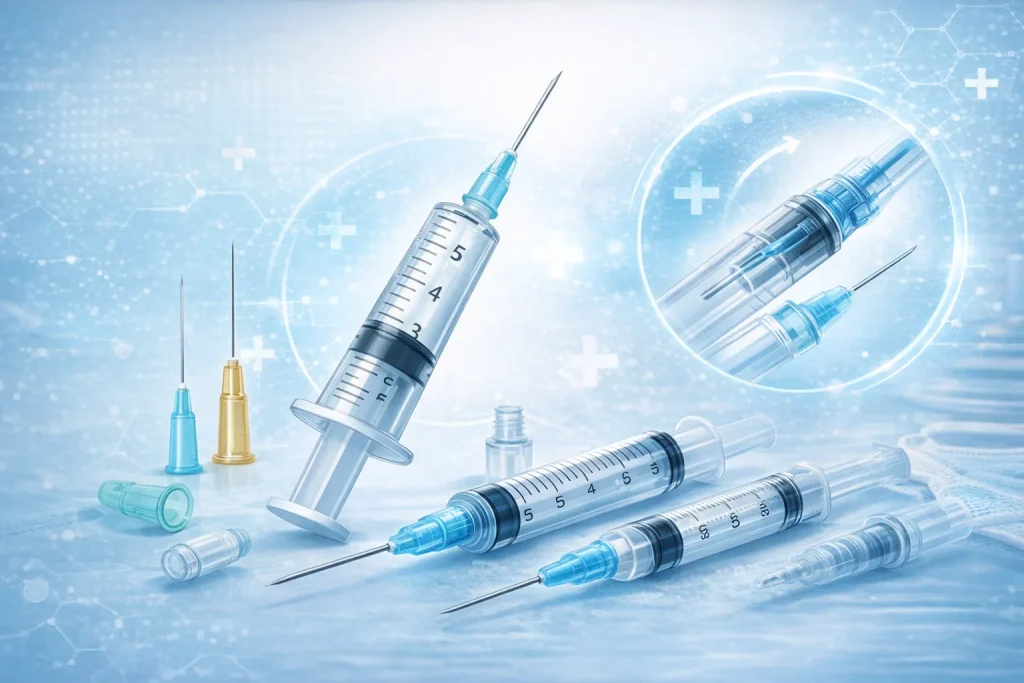
Шприц - это не просто насос, а откалиброванный инструмент, предназначенный для измерения и подачи точных объемов жидкости. Понимание механики инъекционные иглы и шприцы необходима любому медицинскому работнику или специалисту по закупкам.
A. Механизмы соединения: Проскальзывание Люэра против Замка Люэра
Способ крепления иглы к корпусу шприца определяет пригодность устройства для работы с жидкостями различной вязкости и давления.
- Насадка Luer Slip: Эти шприцы позволяют насаживать иглу на конический наконечник ствола. Они идеально подходят для быстрого применения и инъекций под низким давлением.
- Замок Луер Иглы и шприцы: Это промышленный стандарт безопасности и надежности. Сайт Иглы и шприцы с замком Люэра оснащены резьбовым наконечником, который позволяет скручивать и фиксировать иглу. Это предотвращает “сдувание” иглы со шприца при введении густых лекарств или при сильном ручном давлении.
B. Инновации в области безопасности: Шприцы с выдвижными иглами
Безопасность труда - одна из главных задач современного здравоохранения. Чтобы снизить риск травм от уколов и передачи возбудителей заболеваний, передающихся через кровь (таких как ВИЧ или гепатит), производители разработали шприцы с выдвижными иглами.
В этих конструкциях игла автоматически втягивается обратно в корпус шприца сразу после введения лекарства. Эта “активная” функция безопасности гарантирует, что острие никогда не будет обнажено после контакта с пациентом, что делает одноразовые иглы и шприцы Безопаснее, чем когда-либо, для утилизации.
C. Точное дозирование: Туберкулиновый шприц
Для малых, высококонцентрированных доз туберкулиновый шприц с иглой является наиболее подходящим инструментом. Как правило, эти шприцы вмещают не более 1 мл и имеют мелкую градуировку (0,01 мл), обеспечивающую предельную точность. Хотя первоначально они были разработаны для кожного тестирования на туберкулез (PPD), сейчас они широко используются для изготовления педиатрических лекарств, тестирования на аллергию и различных вакцин.
II. Технические характеристики: Система калибров и длин
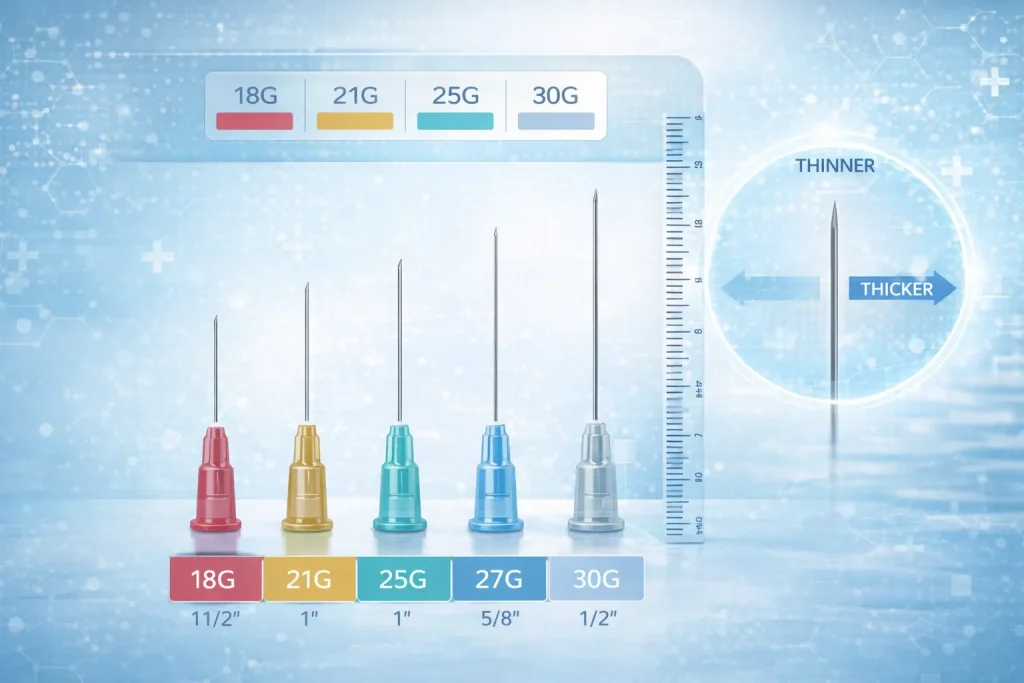
Чтобы выбрать правильный подкожные иглы и шприцы, Необходимо понять, что такое стандартизация размеров игл.
Таблица 1: Распространенные игольчатые калибры и их клиническое применение
| Манометр (G) | Цветовой код (ISO) | Типичная длина | Основной пример использования |
| 18G | Розовый | 1.5″ | Рисование густыми маслами; Травма крови |
| 21G | Зеленый | 1″ - 1.5″ | Внутримышечные иглы и шприцы |
| 23G | Голубой | 1″ | Общие инъекции при ИМ; вакцинация |
| 25G | Оранжевый | 0.5″ - 1″ | Подкожно; Шприцы и иглы для тестостерона |
| 27G | Серый | 0.5″ | Стоматология; Малый объем SC |
| 30G | Желтый | 0.3″ | Диабетические иглы и шприцы; ботокс |
| 32G | Глубокий красный | 4 мм - 6 мм | Иглы и шприцы для мезотерапии |
Примечание: Калибр (G) обозначает внешний диаметр иглы. Более высокий номер калибра указывает на тоньше игла.
III. Классификация по клиническому применению
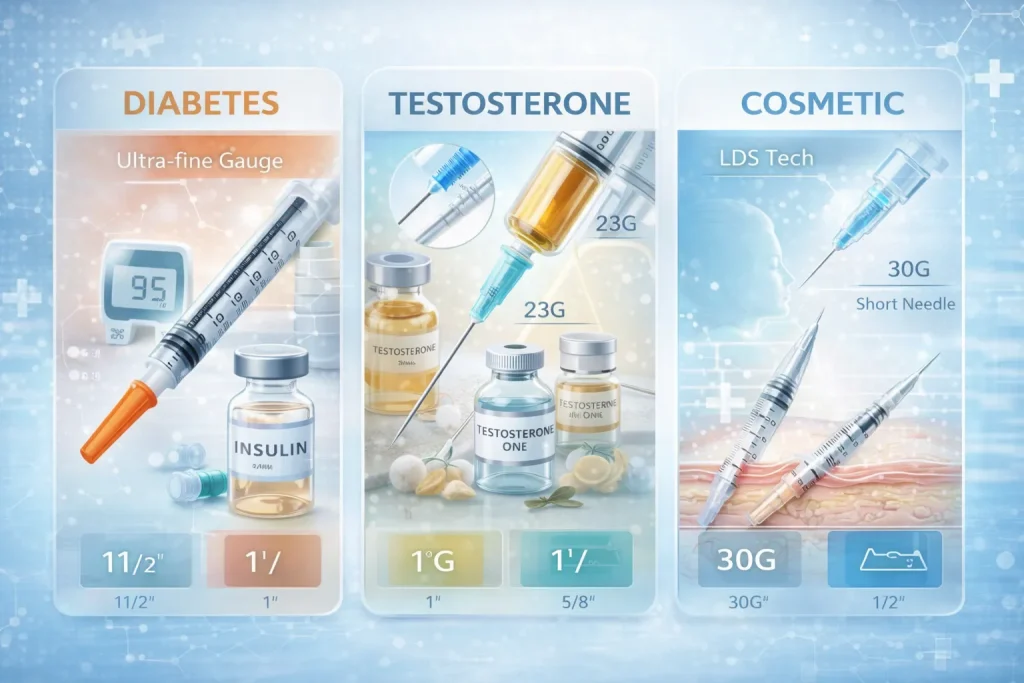
Различные методы лечения диктуют необходимость в специализированных стерильные иглы и шприцы. Как производитель, мы классифицируем наши производственные линии для удовлетворения этих специфических медицинских требований.
A. Хронический уход: Диабетические иглы и шприцы
Лечение диабета требует ежедневных, а зачастую и многократных инъекций. Следовательно, Диабетические иглы и шприцы разработаны для максимального комфорта. В них используются сверхтонкие калибры (до 31G или 32G) и “смазанные” наконечники, обеспечивающие практически безболезненное проникновение через кожу. Большинство инсулиновые шприцы Конструкция “фиксированной иглы” исключает “мертвое пространство”, гарантируя, что пациент получит каждую каплю жизненно важной дозы.
B. Гормональная терапия: Применение тестостерона
Тестостерон обычно суспендируется в маслах-носителях (например, хлопковом или виноградном), что делает его очень вязким. Использование обычной тонкой иглы для этого процесса затруднительно и болезненно.
- Процесс: Клиницисты часто используют иглу 18-G для набирания лекарства в шприц, а затем переходят на шприцы и иглы для тестостерона (обычно 23G или 25G) для фактической инъекции.
- Сайт: Поскольку это суспензия на масляной основе, она требует внутримышечные иглы и шприцы чтобы лекарство попало глубоко в мышечную ткань для постепенного всасывания.
C. Эстетика: Ботокс и мезотерапия
В эстетической индустрии предъявляются высокие требования к точности и минимальной травматизации тканей.
- Шприц и игла для ботокса: В инъекциях ботокса участвуют очень маленькие единицы токсина. Специализированный Шприц и игла для ботокса в настройках часто используется “Низкое мертвое пространство” (LDS) технология. Благодаря этому дорогостоящий токсин не задерживается в игле после инъекции.
- Иглы и шприцы для мезотерапии: Мезотерапия включает в себя множество микроинъекций в средний слой кожи. Они требуют иглы и шприцы для мезотерапии С помощью очень коротких (от 4 до 6 мм) и тонких (от 30 до 32G) игл можно воздействовать на дерму, не достигая мышц и не задевая крупные нервы.
IV. Закупки и коммерческая логистика
Для больничных сетей и крупных дистрибьюторов логистика закупок шприцы и иглы оптом необходимо соблюдать баланс между стоимостью, качеством и соответствием нормативным требованиям.
A. Понимание стоимости шприцев и игл
Сайт стоимость шприцев и игл зависит от нескольких факторов:
- Особенности безопасности: Шприцы с выдвижными иглами обычно имеют более высокую стоимость за единицу продукции, чем стандартные одноразовые иглы и шприцы благодаря сложным внутренним пружинам и механизмам блокировки.
- Материалы: Высококачественный медицинский полипропилен и нержавеющая сталь (304/316) необходимы для поддержания целостности стерильные иглы и шприцы.
- Объем: Закупки шприцы и иглы оптом Значительно снижает цену за единицу продукции, что очень важно для таких крупных предприятий, как центры вакцинации.
B. Варианты упаковки: Розничная торговля по сравнению с массой медицинского шприца
Мы предлагаем два основных формата упаковки для наших глобальных партнеров:
- Индивидуальная упаковка: Каждый медицинская игла и шприц запечатан в стерильную блистерную упаковку, идеально подходящую для клинического использования.
- Шприц для лекарств оптом: Это относится к нестерильным или расфасованным компонентам. Шприц для медикаментов оптом часто приобретается “упаковщиками”, которые собирают специализированные аптечки, хирургические лотки или наборы для эстетических процедур.

V. Заключение
Мир медицинские иглы и шприцы обширна и технически сложна. Ищете ли вы Диабетические иглы и шприцы для заботы о пациенте, внутримышечные иглы и шприцы для гормональной терапии или новейшие разработки в области шприцы с выдвижными иглами Для обеспечения безопасности персонала понимание спецификаций - первый шаг к клиническому совершенству.
Сотрудничая с производителем, который уделяет первостепенное внимание качеству одноразовые иглы и шприцы, В этом случае медицинские работники могут гарантировать, что они используют самые безопасные и эффективные средства.
Часто задаваемые вопросы (FAQ)
Иглы и шприцы с замком Люэра обеспечивают резьбовое соединение, которое фиксирует иглу в шприце. Это очень важно при введении густых жидкостей (например, тестостерона) или при использовании высокого давления, так как предотвращает случайное отсоединение иглы, что может привести к утечке или травме.
Диабетические иглы и шприцы используют очень высокий калибр (обычно 30G или 31G), что означает, что игла очень тонкая. Кроме того, кончики игл часто имеют тройную фаску и покрыты медицинской смазкой, что позволяет игле скользить по коже с минимальным сопротивлением.
Нет. Хотя туберкулиновый шприц с иглой может измерять небольшие объемы, он градуирован в миллилитрах (мл), в то время как инсулиновые шприцы градуированы в единицах (U-100). Использовать туберкулиновый шприц для инсулина опасно, так как это может привести к ошибке в дозировке. Всегда используйте специальные инсулиновые шприцы для диабета.
Закупки шприцы и иглы оптом позволяет больницам и клиникам сократить свои накладные расходы. Для производителей и сборщиков комплектов покупка медицинский шприц оптом предоставляет исходные компоненты, необходимые для специализированных медицинских наборов, по минимально возможной цене.
Да, при условии, что упаковка не повреждена. Стерильные иглы и шприцы обрабатываются оксидом этилена (EtO) газа или гамма-излучения в процессе производства. Если бумажная или пластиковая пломба нарушена, игла больше не считается стерильной и должна быть выброшена.
Большинство клиницистов рекомендуют использовать две иглы: иглу 18G для забора вязкого масла в шприц и иглу 23G или 25G. внутримышечная игла для инъекции. Длина от 1″ до 1,5″ является стандартной для того, чтобы лекарство достигло мышцы.
Шприцы с выдвижными иглами оснащены механизмом, при котором игла втягивается обратно в корпус шприца после полного нажатия на плунжер. Благодаря этому острие иглы защищено с момента выхода из кожи пациента, что исключает риск случайного укола иглой при утилизации.
Мертвое пространство - это небольшое количество жидкости, которое остается в игле и втулке после того, как плунжер полностью опускается. Именно поэтому Шприц и игла для ботокса часто разрабатываются как устройства с “низким мертвым пространством” (LDS), чтобы предотвратить трату дорогостоящих лекарств.