







I. Введение: Эволюция венозного доступа
Изменения в сфере медицинского обслуживания
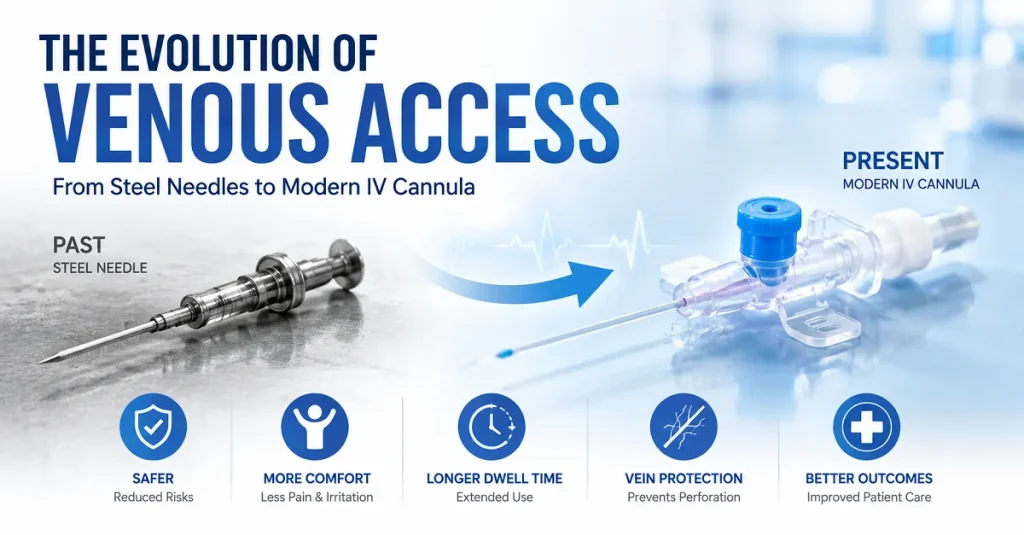
За последнее столетие сфера современного сосудистого доступа претерпела коренные изменения. Ранние методы внутривенной терапии опирались исключительно на жесткие стальные иглы, которые, хотя и были эффективны для однократного прокола, представляли серьезную опасность при длительном использовании. Если пациент шевелился, жесткая сталь могла легко проколоть заднюю стенку вены, что приводило к быстрой инфильтрации, образованию гематом и сильному дискомфорту для пациента.
Наиболее значительным прорывом в области лечения сосудистых заболеваний стала разработка внутривенная игла, которую сегодня обычно называют периферическим внутривенным доступом. Вводя гибкий катетер через острую вводную иглу, медицинские работники могли с высокой точностью выполнить первоначальную венопункцию, вытащить острую стальную иглу и оставить в сосудистой системе только мягкую и гибкую трубку. Эта инновация значительно повысила комфорт пациентов, продлила срок использования места доступа и практически исключила риск механической перфорации вены при движении пациента.
Точка зрения производителя
С точки зрения производства и глобальной цепочки поставок, изготовление высококачественного канюля для внутривенного введения требует абсолютной точности. По мере расширения глобальной инфраструктуры здравоохранения растёт спрос на медицинские расходные материалы с нулевым уровнем брака. Ведущие производители работают в соответствии со строгими системами управления качеством ISO 13485, используя чистые помещения класса 100 000, чтобы гарантировать отсутствие в каждом компоненте твердого загрязнения и пирогенов.
Для отделов закупок больниц, дистрибьюторов медицинского оборудования и покупателей в сегменте B2B крайне важно понимать технические особенности этих устройств. Выбор правильного производителя означает гарантию безупречного качества материала катетера, геометрии скоса иглы и механизмов безопасности. Дефект в производстве — например, плохо закрепленный наконечник катетера или тупая игла-интродюсер — может привести к немедленному клиническому сбою, что поставит под угрозу безопасность пациента и приведет к росту затрат на здравоохранение.
II. Анатомия современной канюли для внутривенного введения
Чтобы в полной мере осознать различия в клиническом применении, покупатели должны сначала разобраться в конструктивной анатомии этих устройств. Каждый компонент разработан таким образом, чтобы обеспечить баланс между простотой введения и долгосрочной биосовместимостью.
Материал катетера
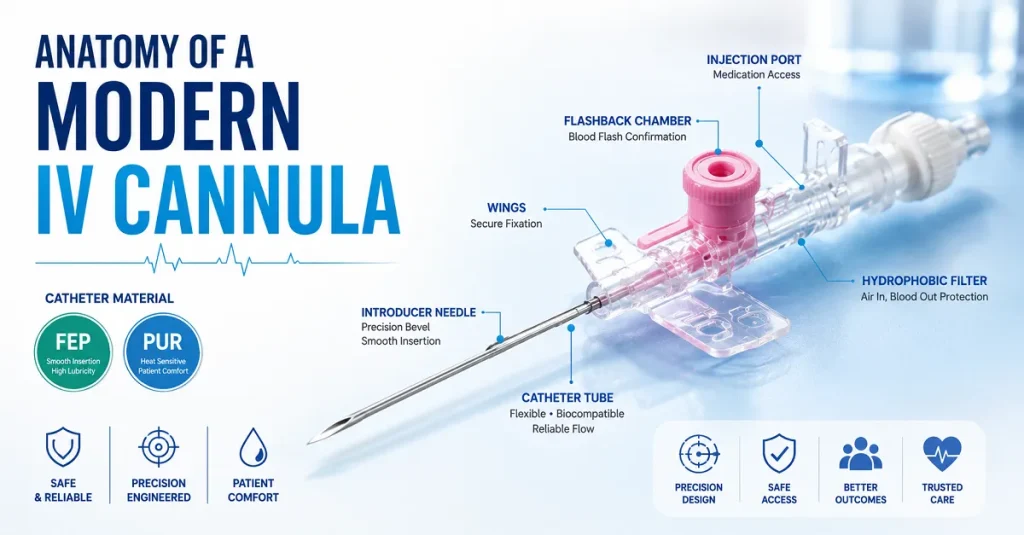
Отличительной особенностью современного внутривенного доступа является пластиковая канюля для внутривенного введения. Раньше использовались такие материалы, как ПВХ, но в настоящее время производство перешло почти исключительно на два полимера премиум-класса:
- FEP (фторированный этилен-пропилен): Также известный как тефлон, FEP обладает высокой смазывающей способностью. Он имеет исключительно гладкую поверхность, что снижает трение при введении и сводит к минимуму риск развития механического флебита. Катетеры из FEP относительно жесткие, что облегчает их продвижение через плотную кожу.
- PUR (полиуретан): PUR обладает высокой термочувствительностью. При комнатной температуре он имеет твёрдую консистенцию (что облегчает введение), но при контакте с теплом тела значительно размягчается. Благодаря этому размягчению катетер комфортно удерживается в вене, что снижает раздражение эндотелиальной оболочки и позволяет продлить время пребывания катетера в вене.
Разъяснение терминологии
В сфере медицинских товаров покупатели часто сталкиваются со следующими терминами: Канюля для внутривенного введения и внутривенный катетер. Хотя в больничных палатах эти термины часто используются как синонимы, с технической точки зрения “канюля” обозначает всё собранное устройство (включая иглу, муфту и камеру обратного оттока), тогда как “катетер” относится исключительно к гибкой пластиковой трубке, которая остается в вене пациента.
Конструктивные элементы
Канюля премиум-класса состоит из нескольких высокотехнологичных деталей:
- Вводная игла: Игла, изготовленная из нержавеющей стали хирургического качества (обычно SUS304), имеет микропрецизионный скос с обратной стороны. Такая специфическая геометрия обеспечивает V-образный разрез в ткани, а не прокол до самой сердцевины, что снижает болезненные ощущения при введении и способствует более быстрому заживлению ткани после извлечения.
- «Труба»: Сайт Трубка канюли IV проходит процесс точной экструзии. Кончик должен быть тщательно заужен, чтобы плотно прилегать к стальной игле, обеспечивая плавный переход, предотвращающий отслоение пластика (“эффект гармошки”) при введении в кожу.
- Впускной канал: Встречается на определённых моделях, Порт для инъекций в канюлю IV оснащен односторонним силиконовым клапаном. Это позволяет медсестрам вводить лекарственные препараты болюсным методом с помощью шприца, не прерывая подачу жидкости по основной линии, и при этом предотвращая обратный отток крови.
- Камера ретрофлекса и гидрофобный фильтр: Эта прозрачная камера, расположенная на задней втулке, позволяет врачу мгновенно убедиться в успешном введении в вену, когда кровь “всплескивает” обратно. Микроскопический гидрофобный фильтр пропускает воздух из камеры, обеспечивая поступление крови, но при этом надежно предотвращает ее вытекание.
III. Классификация различных типов игл для внутривенных инъекций
Мировые рынки требуют разнообразия дизайнов, чтобы учитывать различные протоколы оказания медицинской помощи, региональные предпочтения и особенности анатомии пациентов. Понимание различные типы игл для внутривенных инъекций имеет решающее значение для дистрибьюторов медицинской продукции при формировании ассортимента своей продукции.
Модели с выпуклостью и без выпуклости
Стандарт тип канюли зависит в первую очередь от наличия инъекционного отверстия и крепежных крылышек.
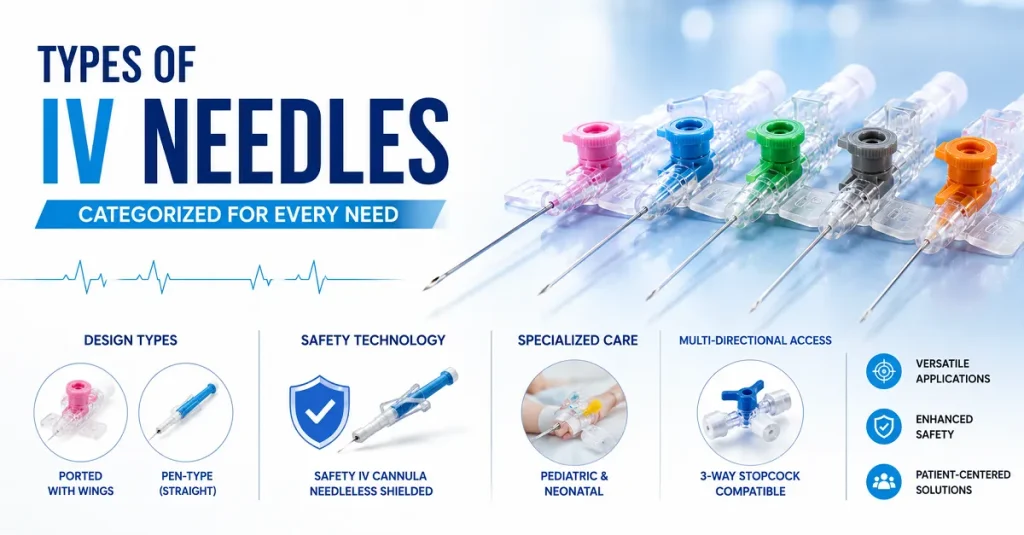
- Канюля перообразного типа (прямая): Эта конструкция не имеет крылышек и вводного отверстия, напоминая обычную ручку. Она пользуется большой популярностью в регионах, где первостепенное значение имеет экономичность, а также для быстрого и простого введения жидкостей. Благодаря своей компактной конструкции она реже зацепляется за одежду или постельное белье.
- Канюля с отверстиями и «крылышками»: Это самая распространённая модель в мире. Крылышки в форме «бабочки» обеспечивают надёжную фиксацию на коже пациента, что снижает риск механического смещения. Верхнее отверстие для инъекций обеспечивает мгновенный доступ для введения препаратов в экстренных случаях.
Передовые разработки в области безопасности
В связи с введением во всем мире строгих норм охраны труда (таких как OSHA в США) наблюдается массовый переход к безигольная экранированная канюля, широко известная как «безопасная канюля для внутривенных введений». Травмы от укола иглой представляют серьезную угрозу передачи патогенов, передаваемых через кровь, таких как ВИЧ и гепатит, медицинским работникам.
- Механизмы пассивной безопасности: Когда врач извлекает стальную иглу из муфты катетера, металлическая или пластиковая защелка автоматически фиксируется на остром скосе. Это не требует от пользователя никаких дополнительных действий и обеспечивает соответствие требованиям 100%.
- Механизмы активной безопасности: Пользователь должен вручную нажать кнопку или сдвинуть защитный колпачок, чтобы закрыть иглу.
Педиатрическая и неонатальная помощь
Производство Канюля Pedia IV требует высочайшей точности. Венозные сосуды новорожденных чрезвычайно хрупкие и крошечные. Для изготовления этих устройств (как правило, калибром 24G или 26G) требуется экструзия катетеров с ультратонкой стенкой, что позволяет максимально увеличить внутренний расход при сохранении как можно меньшего внешнего диаметра. Иглы подвергаются дополнительной электрополировке для обеспечения абсолютной гладкости поверхности, необходимой для максимально бережной венепункции.
Многонаправленный доступ
В случае сложных клинических ситуаций, таких как работа в отделении интенсивной терапии или в операционной, покупатели часто интересуются Назначения 3-ходовой канюли для внутривенного введения. Хотя стандартная канюля обеспечивает только одну точку доступа, её часто подключают к трёхходовым кранам. Такая схема позволяет одновременно вводить несколько растворов — например, проводить непрерывную инфузию физиологического раствора для гидратации и одновременно вводить антибиотик локально, причём всё это регулируется поворотом крана без необходимости повторного прокола вены.
IV. Типы и размеры канюль: международная система калибров
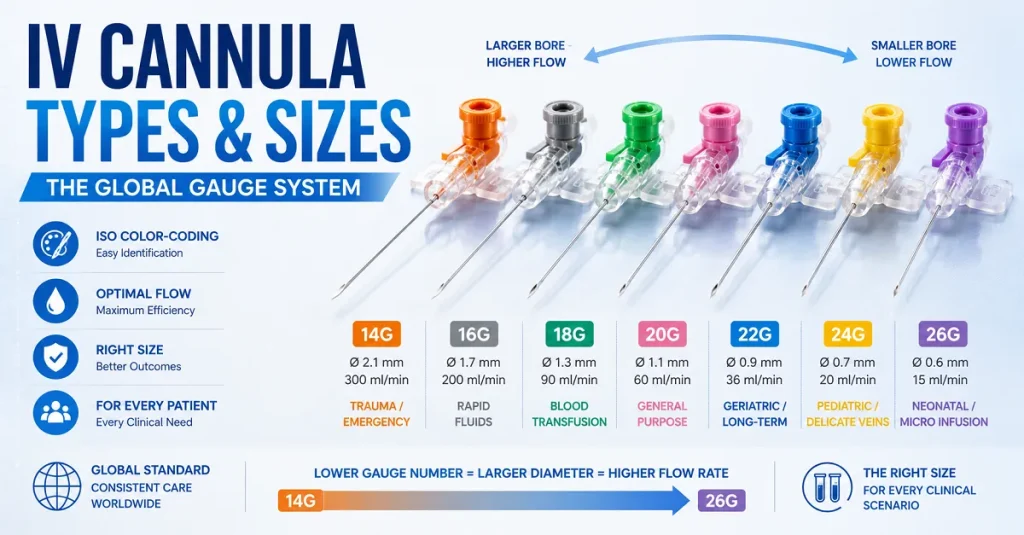
Основой обеспечения сосудистого доступа является понимание стандартизированной системы цветовой кодировки ISO. Эта система гарантирует, что медсестра в Германии и врач в Бразилии смогут мгновенно определить размер катетера по цвету его муфты.
При оценке Типы и размеры канюль для внутривенных инъекций, здесь действует общее правило, вытекающее из закона Пуазейля в гидродинамике: расход пропорционален радиусу в четвертой степени. Следовательно, незначительное увеличение внутреннего диаметра катетера приводит к значительному увеличению расхода. И наоборот, номер калибра (G) обратно пропорционален диаметру — чем ниже номер калибра, тем толще игла.
Ниже приводится авторитетная разбивка по Типы и области применения канюль для внутривенных вливаний, в котором подробно изложены технические требования, необходимые для принятия решений о закупках в сфере B2B.
Полное руководство по измерительным приборам и расходам
| Манометр (G) | Цвет концентратора ISO | Внешний диаметр (мм) | Средний расход (мл/мин) | Основное клиническое применение |
| 14G | Оранжевый | 2,10 мм | 240–270 мл/мин | Тяжёлая травма, операционная, экспресс-восполнение объёма крови. |
| 16G | Серый | 1,80 мм | 180–200 мл/мин | Серьёзные хирургические операции, экспресс-переливание крови, сильное обезвоживание. |
| 17G | Белый | 1,50 мм | 130–140 мл/мин | Специализированное донорство крови, ветеринария (реже встречается в обычных отделениях для людей). |
| 18G | Зеленый | 1,30 мм | 90–100 мл/мин | Стандартная процедура при переливании крови, введении контрастного вещества при компьютерной томографии и подготовке к серьезным хирургическим операциям. |
| 20G | Розовый | 1,10 мм | 60–65 мл/мин | Универсальный стандарт для рутинных процедур катетеризация периферических вен, стандартные инфузионные растворы и антибиотики. |
| 22G | Голубой | 0,90 мм | 36–40 мл/мин | Пожилые люди, дети, пациенты с проблемными или хрупкими венами, длительная антибиотикотерапия. |
| 24G | Желтый | 0,70 мм | 20–23 мл/мин | Новорожденные, младенцы, онкологические пациенты с серьезными нарушениями работы сосудистой системы. |
| 26G | Фиолетовый | 0,60 мм | 13–15 мл/мин | Недоношенные новорождённые, высокоспециализированные микроинфузии. |
Подробное изучение клинических применений
14G (оранжевый) и 16G (серый): «Спасатели при травмах». Это массивные катетеры, которые используются практически исключительно в отделениях неотложной помощи, операционных и парамедиками. Когда пациент переживает гиповолемический шок (массивную кровопотерю), быстрая инфузионная терапия становится решающим фактором, определяющим жизнь или смерть. Катетер 14-G способен опорожнить 1-литровый пакет с физиологическим раствором менее чем за четыре минуты. Для их введения требуется крупная, здоровая вена, как правило, в локтевой ямке (сгибе локтя).
18G (зелёный): стандарт для переливания крови Кровь — это вязкая жидкость, содержащая хрупкие эритроциты. При проталкивании через узкий катетер клетки могут подвергаться сдвиговому воздействию и разрушаться (гемолиз). Поэтому катетер 18-G является минимальным стандартом для быстрого и безопасного переливания крови. Он также необходим для введения рентгеноконтрастных веществ под высоким давлением во время компьютерной томографии.
20G (розовый): универсальный «рабочий конь». Если бы в больнице можно было хранить только один размер, это был бы 20G. Он обеспечивает идеальный баланс: игла достаточно тонкая, чтобы без проблем вводиться в большинство вен взрослого человека на предплечье или тыльной стороне кисти, но при этом внутренний диаметр достаточно широк для рутинной инфузии, введения лекарственных препаратов и даже медленного переливания крови, если не удается установить иглу 18G.
22G (синий): Мягкая альтернатива. С возрастом у пациентов вены теряют эластичность, становятся хрупкими и подверженными разрыву при введении катетера. Катетер 22G является стандартным выбором для пожилых пациентов. Это также предпочтительный размер для пациентов, которым требуется длительная антибиотикотерапия с медленным введением, когда высокая скорость введения не требуется, но крайне важно сохранить целостность вены в течение нескольких дней.
24G (желтый) и 26G (фиолетовый): высокоточный уход за новорожденными. Они представляют собой вершину технологий экструзии. Используются в основном в качестве канюля «Педия IV», катетеры этих размеров вводятся в мелкие вены кожи головы, рук или ног новорожденных. Поскольку скорость потока очень низкая (15–20 мл/мин), они используются исключительно с инфузионными насосами, которые точно регулируют микрокапельное введение лекарственных препаратов и питательных веществ недоношенным детям.
V. Поиск поставщиков в сегменте B2B: факторы, влияющие на цену канюли для внутривенных вливаний
Для дистрибьюторов медицинского оборудования и отделов закупок больниц понимание факторов, которые определить Цены на канюли для внутривенных инъекций имеет решающее значение для оптимизации цепочек поставок без ущерба для клинической безопасности. Производство медицинских расходных материалов осуществляется с минимальной рентабельностью, а колебания цен обусловлены рядом сложных технических факторов.
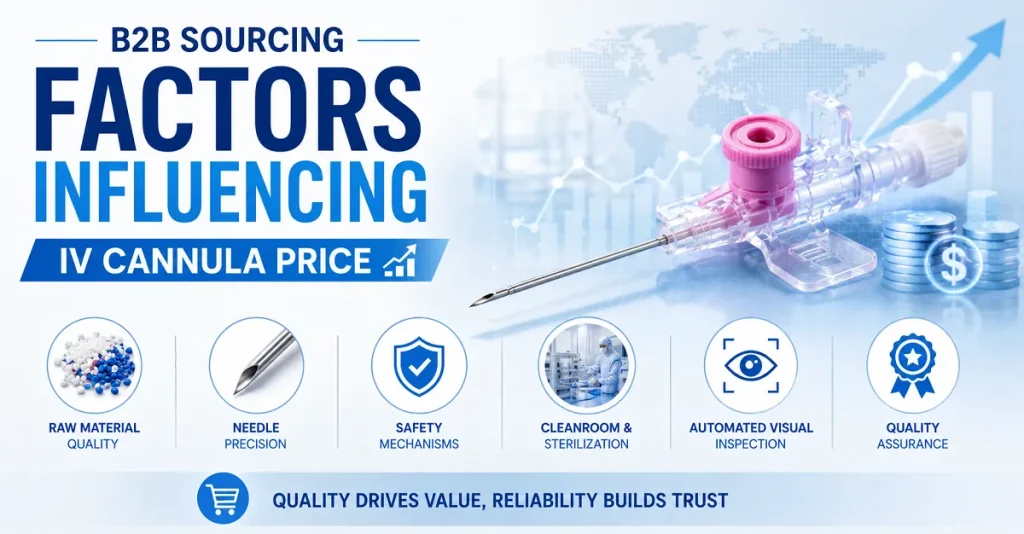
1. Выбор сырья
Выбор между FEP (тефлоном) и PUR (полиуретаном) для Катетер с канюлей IV существенно влияет на стоимость. PUR по своей природе обходится дороже в закупке и обработке, чем FEP. Однако благодаря тому, что PUR размягчается в вене, он значительно снижает частоту развития флебита. Больницы часто приходят к выводу, что небольшая надбавка к стоимости катетеров из PUR в целом позволяет сэкономить средства за счет сокращения количества повторных введений канюли на одного пациента.
2. Геометрия иглы и её обработка
Шлифовка стандартных фасок обходится относительно недорого. Однако, производители премиум-класса используют многоступенчатый процесс ультразвуковой шлифовки с обратной резьбой, за которым следует этап электрополировки и нанесение микросиликонового покрытия. Это обеспечивает скольжение иглы по ткани с минимальным трением. Сокращение этапов шлифовки иглы позволяет снизить цену, но при этом резко увеличивает болезненные ощущения пациента и частоту неудачных попыток введения.
3. Механизмы безопасности
Интеграция безигольная экранированная канюля Данный механизм по своей сути приводит к увеличению себестоимости единицы продукции из-за дополнительных пластиковых и металлических компонентов, а также необходимости сложной автоматизированной сборки. Однако в таких регионах, как США и ЕС, использование защитных канюль предписывается законом. Кроме того, стоимость лечения одного случая травмы от укола иглой, полученной в больнице (которая может достигать десятков тысяч долларов), намного превышает небольшую надбавку к стоимости безопасной канюли, составляющую всего несколько центов за единицу.
4. Стандарты для чистых помещений и стерилизации
Производство медицинской продукции высокого качества требует значительных затрат на поддержание чистоты в чистых помещениях класса 100 000 (ISO 8). Кроме того, предпочтительным методом стерилизации таких изделий является использование этиленоксида (EtO) газа. Технология обработки этиленоксидом (EtO) требует строгого контроля температуры и влажности, а также последующего длительного карантинного периода дегазации, чтобы гарантировать отсутствие остатков токсичного газа на пластике. Производители, предлагающие цены, которые кажутся “слишком хорошими, чтобы быть правдой”, часто экономят на обслуживании чистых помещений или сокращают критически важный этап дегазации, подвергая риску безопасность пациентов и рискуя привлечением к ответственности со стороны регулирующих органов.
5. Автоматизированный визуальный контроль (AVI)
Заводы высшего уровня не полагаются исключительно на визуальный контроль со стороны человека. Они используют системы высокоскоростных камер, управляемые искусственным интеллектом, для проверки кончика катетера на наличие микроскопических заусенцев или обломов, обеспечивая идеальное совпадение скоса иглы с катетером. Такое оборудование требует значительных капиталовложений, но гарантирует партию продукции без дефектов, что позволяет защитить репутацию бренда покупателя.
VI. Часто задаваемые вопросы (Q&A)
Чтобы еще больше помочь покупателям и клиническим специалистам понять Типы внутривенных канюль и их применение, мы собрали самые актуальные вопросы, возникающие в отрасли.
Исторически сложилось так, что в рекомендациях таких организаций, как CDC, предлагалось плановая замена канюли для периферического внутривенного введения каждые 72–96 часов с целью профилактики инфекции. Однако современная клиническая практика и обновленные рекомендации в настоящее время отстаивают принцип “замены по клиническим показаниям”. Это означает, что пока в месте введения нет признаков осложнений (покраснение, отек, боль) и канюля остается полностью работоспособной, её можно оставить на месте при условии, что медицинский персонал тщательно осматривает её во время каждой смены.
Хотя в целом эта процедура считается весьма безопасной, основные риски связаны с локальными сосудистыми осложнениями. Наиболее распространённым из них является флебит (механическое или химическое воспаление вены). Инфильтрация Это происходит, если катетер выскальзывает из вены, в результате чего внутривенные растворы скапливаются в окружающих тканях. В тяжелых случаях несоблюдение правил стерильности при введении катетера может привести к локальным инфекциям или, в редких случаях, к системным инфекциям кровотока.
Традиционная стальная игла является жесткой. Если пациент согнет руку или неожиданно пошевелится в тот момент, когда стальная игла закреплена пластырем в вене, острый кончик легко повредит стенку вены, что приведет к кровотечению и испортит место доступа. А внутривенная игла решает эту проблему, полностью извлекая стальной интродюсер после обеспечения доступа. На месте остается только мягкий, гибкий пластиковая канюля для внутривенного введения который изгибается и принимает форму тела пациента, не нанося никакого внутреннего повреждения.
Внутривенные доступа обычно классифицируются в зависимости от места расположения кончика катетера:
Катетеризация периферических вен: Наиболее распространённый вид, который вводят в мелкие вены кисти или предплечья для краткосрочного применения.
Катетеры средней линии: Более длинные катетеры, вводимые в верхнюю часть руки и заканчивающиеся ниже плеча, используются для промежуточных курсов лечения (1–4 недели).
Центральные венозные катетеры (ЦВК): Вводится в крупные вены (шеи, груди или паха) так, чтобы кончик находился рядом с сердцем; используется для введения препаратов высокой концентрации и в условиях интенсивной терапии.
Для поддержания проходимости (открытости) Трубка канюли IV, согласно стандартному больничному протоколу, катетер необходимо промывать 2–5 мл стерильного физиологического раствора. Это необходимо делать непосредственно перед и после введения любого лекарственного препарата для очистки катетера. Если канюля “заблокирована” (в данный момент не подключена к непрерывной капельнице), её следует промывать не реже одного раза каждые 8–12 часов, чтобы предотвратить свертывание крови и закупорку пластиковой трубки.
Введение требует соблюдения строгих правил асептики. Врач накладывает жгут для наполнения вены кровью, обрабатывает кожу хлоргексидином и фиксирует вену. Игла-интродюсер и катетер вводятся под углом от 10 до 30 градусов. Как только в камере появляется “всплеск” крови, угол наклона уменьшают, катетер полностью вводят в вену по игле, жгут снимают, а стальную иглу полностью извлекают и безопасно утилизируют.
В процессе введения пациент ощущает кратковременное резкое покалывание, когда стальная игла проникает через кожу и стенку вены. Однако благодаря тому, что ведущие производители используют высокоточные скосы с обратным срезом и технологию микросиликонизации, эта боль сводится к минимуму и длится всего несколько секунд. Как только игла удаляется и остается только мягкий пластиковый катетер, пациент не должен ощущать абсолютно никакой боли ни во время покоя, ни во время введения жидкости.
Канюля с портом оснащена встроенным вторичным портом для инъекций, расположенным в верхней части устройства и снабженным односторонним клапаном. Это позволяет медицинскому персоналу мгновенно вводить препараты для оказания неотложной помощи или промывать вену физиологическим раствором непосредственно в вену без необходимости отсоединения основной линии для внутривенного введения. Канюля без порта (типа «ручка») не имеет этой функции, поэтому все лекарственные препараты необходимо вводить через соединительный узел основной линии, что делает её немного менее универсальной, но более экономичной.