





Sağlık hizmetleri dünyasında sıvıların, ilaçların veya besin maddelerinin doğrudan hastanın kan dolaşımına verilmesi temel bir görevdir. Bu, tedavilerin güvenli ve verimli bir şekilde uygulanmasını sağlamak için tasarlanmış infüzyon iğnelerinin kullanılmasıyla gerçekleştirilir. İnfüzyon iğneleri, her biri tıbbi duruma, hastaya ve klinik ortama bağlı olarak belirli ihtiyaçları karşılamak üzere tasarlanmış çeşitli tiplerde olabilir.
İnfüzyon İğnelerinin Tanımı:
İnfüzyon iğneleri, intravenöz (IV), subkutan (SC) veya intraosseöz (IO) erişim gibi farklı yollarla vücuda sıvı, ilaç veya besin vermek için kullanılan tıbbi cihazlardır. Bu iğneler dolaşım sistemine kontrollü ve etkili bir şekilde erişmek için tasarlanmıştır ve klinisyenlerin ağrı kesici, antibiyotik, kemoterapi veya hidrasyon gibi tedavileri uygulamasına olanak tanır.
Seçimin Önemi:
İnfüzyon iğnesi seçimi hasta konforunu, güvenliğini ve klinik sonuçları önemli ölçüde etkileyebilir. İyi seçilmiş bir iğne ağrıyı en aza indirecek, enfeksiyon riskini azaltacak ve prosedürün başarısını artıracaktır. Tersine, kötü iğne seçimi sızıntı, doku hasarı veya damarlara erişim zorluğu gibi komplikasyonlara yol açabilir, sonuçta tedaviyi uzatabilir veya hastaya rahatsızlık verebilir.
Tasarımın Evrimi:
İnfüzyon iğnesi tasarımı, temel, tek kullanımlık iğnelerden hem hasta güvenliğine hem de klinik verimliliğe öncelik veren son derece özel güvenlik setlerine kadar yıllar içinde önemli ölçüde gelişmiştir. İlerleme infüzyon iğnesi tasarımlar, iğne batması sonucu yaralanmalarla ilgili artan endişelerden ve daha hassas ve ağrısız prosedürlere duyulan ihtiyaçtan etkilenmiştir.
II. Periferik ve Saçlı Deri Ven İnfüzyon Setleri
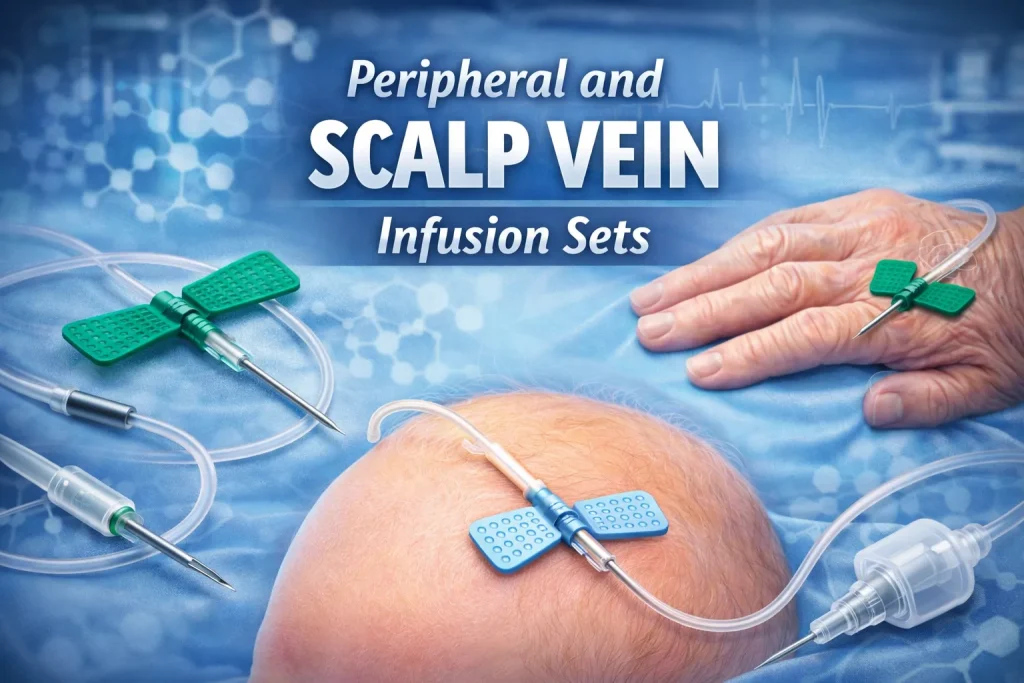
Periferik erişim için kullanılan infüzyon iğneleri tipik olarak kollarda, ellerde veya kafa derisinde (bebekler söz konusu olduğunda) bulunan damarlara yerleştirilir. Bu iğneler ilaçların, sıvıların ve kan ürünlerinin verilmesi de dahil olmak üzere çeşitli amaçlar için kullanılır.
Çok Yönlü Kelebek Tasarımı
Kelebek İnfüzyon İğneleri / Kelebek İnfüzyon Setleri:
En iyi bilinen ve çok yönlü infüzyon iğnesi türlerinden biri kelebek iğnesi. Benzersiz “kanatlı” tasarımı ile karakterize edilen kelebek infüzyon iğneleri, yerleştirme sırasında ve infüzyon işlemi boyunca gelişmiş stabilite sunar. İğnenin kanatları, iğnenin yerinde sabitlenmesine yardımcı olarak prosedür sırasında yerinden çıkma veya gereksiz ağrıya neden olma olasılığını azaltır. Kelebek infüzyon setleri genellikle pediatrik hastalarda bulunanlar gibi küçük damarlarda veya erişilmesi zor damarlarda ven ponksiyonu için kullanılır.
Kelebek iğnenin ergonomik yapısı, özellikle damarları kırılgan veya küçük olan hastalarda kısa süreli infüzyon tedavileri ve çekimler için idealdir.
Teknik Özellikler Tablosu: Saçlı Deri Damar İnfüzyon Setleri
| İğne Ölçer (G) | Renk Kodu | Dış Çap (mm) | İğne Uzunluğu (mm) | Yerçekimi Akış Hızı (mL/dak) | Klinik Hedef |
| 18G | Pembe | 1.2 | 19 | 80 - 95 | Acil yetişkin kafa derisi erişimi (nadir); yüksek hacimli çekimler. |
| 19G | Krem | 1.1 | 19 | 60 - 75 | Ergen/Yetişkin hassas damarlar; kan alma. |
| 21G | Yeşil | 0.8 | 19 | 30 - 45 | Yetişkin kan alımları ve rutin infüzyonlar için standart. |
| 23G | Mavi | 0.6 | 19 | 15 - 22 | Pediatrik hastalar; yaşlı yetişkinlerde ince damarlar. |
| 25G | Turuncu | 0.5 | 19 | 8 - 12 | Yenidoğan / Bebek kafa derisi damarları; son derece kırılgan damarlar. |
| 27G | Gri | 0.4 | 12 | 3 - 5 | Özel yenidoğan bakımı; mikro hacimli ilaç dağıtımı. |
Kanatlı İnfüzyon İğnesi / Üst Kanatlı İnfüzyon Seti:
Kelebek tasarımına benzer şekilde kanatlı infüzyon iğnesi (üstten kanatlı infüzyon seti olarak da bilinir) iğne göbeğinin her iki yanında küçük, esnek kanatlarla donatılmıştır. Bu tasarım, sağlık uzmanlarının kanatları kolayca kavramasını ve daha rahat bir yerleştirme işlemi için iğneyi stabilize etmesini sağlar. Kanatlar ayrıca infüzyon sırasında daha fazla kontrol sağlayarak özellikle iğnenin hareket etmesini veya yerinden çıkmasını önlemeye yardımcı olur.
Kanatlı infüzyon iğnesinin ergonomik avantajları, kemoterapi veya diyaliz tedavileri gibi hassas ve kontrollü infüzyonların gerekli olduğu klinik ortamlarda popüler olmasını sağlar.
Saçlı Deri Damar İnfüzyon Seti:
Pediatrik ve geriatrik bakımda, özellikle hassas damarları olan hastalar için, kafa derisi ven infüzyon setleri sıklıkla kullanılır. Bu setler, bebeklerin kafa derilerinde bulunanlar gibi daha küçük damarlara daha kolay yerleştirilmesine olanak tanıyan daha ince bir duvarla tasarlanmıştır. Bu setler kafa derisi ven infüzyon seti hastanın yaşı veya sağlık durumu nedeniyle standart IV iğneler için uygun olmayabilecek damarlara erişmek için idealdir.
Kafa derisi ven infüzyon setlerinin benzersiz bir özelliği de silikonize iğneler, Bu da rahatsızlığı azaltmaya ve iğnenin hasta için daha az acı verici olmasına yardımcı olur. Bu setler ayrıca, tekrarlanan iğne girişlerine gerek kalmadan sürekli sıvı uygulamasına olanak tanıyan entegre hortumlarla birlikte gelir.
III. Subkutan ve Emniyetli İnfüzyon Sistemleri
Bazı durumlarda, infüzyon iğneleri sıvıların veya ilaçların subkutanöz (deri altına) verilmesi için kullanılır. Bu tür infüzyon iğneleri, daha yavaş emilim oranları gerektiren veya kronik tedaviye yönelik tedaviler için gereklidir.
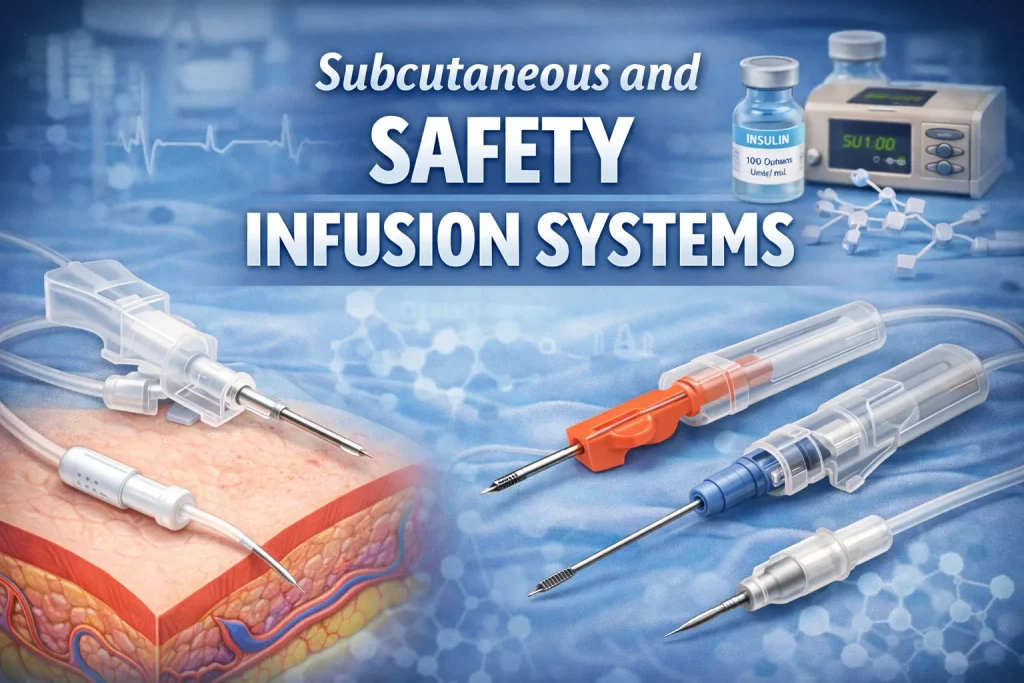
Subkutan İnfüzyon İğnesi
Hipodermoklizde Kullanım:
Bu deri altı infüzyon iğnesi tipik olarak, sıvıları veya ilaçları doğrudan deri altı dokuya verme yöntemi olan hipodermokliz için kullanılır. Bu teknik özellikle IV infüzyonları tolere etmekte zorlanan veya uzun süreli hidrasyon veya ilaç verilmesi gereken hastalar için yararlıdır. Yaygın uygulamalar şunları içerir insülin iğnesi diyabet hastaları için uygulama, kronik rahatsızlıklardan muzdarip olanlar için ağrı yönetimi ve bağışıklık yetersizliği olan hastalar için immünoglobulin tedavisinin sağlanması.
Doğrudan kan dolaşımına verilen intravenöz infüzyonların aksine, subkutan infüzyonlar daha yavaş emilir ve zaman içinde genişletilmiş terapötik etkiler sunar. Bu tip infüzyon iğnesi özellikle sık ve kısa infüzyonların gerekli olduğu evde bakım ve kronik hastalık yönetimi için faydalıdır.
İnfüzyonlar için Subkutan Güvenlik İğne Setleri
İğne Batmasını Önleme:
Güvenlik, modern sağlık hizmetlerinde bir öncelik olmaya devam etmektedir, subkutan güvenli̇ i̇ğne setleri̇ sağlık hizmeti ortamlarında yaygın bir enfeksiyon kaynağı olan iğne batması yaralanmalarını önlemek için mekanizmalarla donatılmıştır. Bu güvenlik mekanizmaları, kullanıcının güvenlik özelliğini manuel olarak devreye sokmasını gerektiren “aktif” veya iğne hastanın cildinden çekildiğinde otomatik olarak devreye giren “pasif” olabilir.
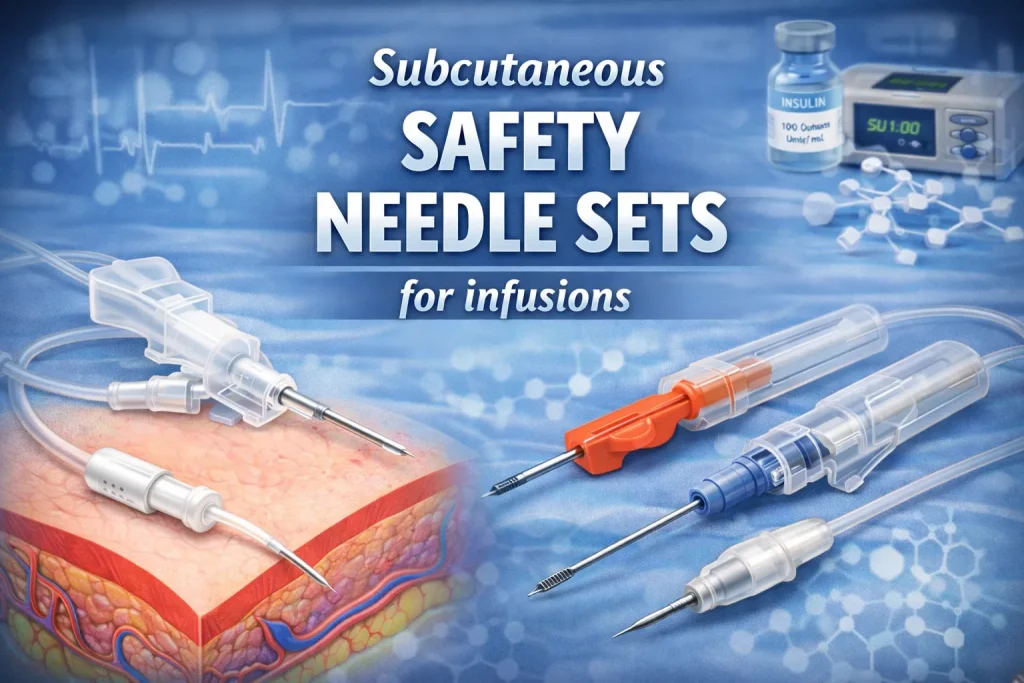
Subkutan güvenlik iğneleri, sağlık çalışanları için ek bir koruma katmanı sunarak ve kan yoluyla bulaşan patojenlere maruz kalma riskini en aza indirerek infüzyon tedavisinde devrim yaratmıştır.
Teknik Özellikler Tablosu: Subkutan İnfüzyon İğneleri
| İğne Ölçer (G) | Standart Renk | Dış çap (mm) | Kimlik (mm) | Ortak Uzunluklar | Nominal Akış Hızı (Hidrasyon/Salin) | Birincil Klinik Uygulama |
| 24G | Sarı | 0.55 | 0.3 | 6mm - 14mm | 300 mL/saate kadar | Yüksek hacimli hidrasyon (Hipodermokliz) veya yüksek viskoziteli Ig tedavisi. |
| 25G | Turuncu | 0.5 | 0.25 | 6mm - 16mm | 150 - 200 mL/saat | Genel ilaç dağıtımı ve pediatrik hidrasyon. |
| 26G | Kahverengi | 0.45 | 0.24 | 4mm - 14mm | 60 - 120 mL/saat | Standart SCIg (Subkütan İmmünoglobulin) ve ağrı yönetimi. |
| 27G | Gri | 0.4 | 0.2 | 4mm - 12mm | 30 - 60 mL/saat | Kronik hastalık yönetimi; hasta konforu/sık kullanım için tercih edilir. |
| 29G | Kırmızı | 0.33 | 0.18 | 4mm - 9mm | 10 - 20 mL/saat | İnsülin pompaları ve yüksek konsantrasyonlu, düşük hacimli biyolojik ilaçlar. |
| 31G | Beyaz | 0.25 | 0.13 | 4mm - 6mm | < 5 mL/saat | Pediatrik insülin iletimi veya çok yavaş, tutarlı ilaç salımı. |
IV. Özel İnfüzyon Erişimi
Bazı klinik senaryolar, damarlara veya geleneksel yöntemlerle ulaşılması zor olan diğer alanlara erişmek için daha özel infüzyon iğneleri gerektirir.
İntraosseöz (IO) İnfüzyon İğnesi
Acil Durum Başvuruları:
Travma durumlarında veya geleneksel intravenöz erişimin mümkün olmadığı durumlarda intraosseöz (IO) infüzyon iğnesi sıvıları, ilaçları veya kan ürünlerini doğrudan kemik iliğine uygulamak için kullanılır. Bu yöntem özellikle zamanın kritik olduğu ve çökmüş damarlar, dehidrasyon veya şok nedeniyle geleneksel venöz erişimin sağlanamadığı acil durumlarda değerlidir.
Bu IO infüzyon iğnesi Kemiğin dış tabakasını delerek ve iliğe bir iğne yerleştirerek çalışır ve dolaşım sistemine hızlı infüzyon sağlar. Bu teknik yaygın olarak acil tıbbi hizmetlerde (EMS) ve travma bakımı.
Teknik Özellikler Tablosu: İntraosseöz (IO) İnfüzyon İğneleri
| İğne Tipi/Göbek Rengi | Gösterge (G) | İğne Uzunluğu | Hasta Ağırlığı / Bölge | Akış Hızı (Yerçekimi) | Akış Hızı (Basınç 300mmHg) |
| Pembe (Pediatrik) | 15G | 15 mm | 3 - 39 kg (Bebekler/Çocuklar) | ~10-20 mL/dak | ~30-50 mL/dak |
| Mavi (Yetişkin Standart) | 15G | 25 mm | ≥3 kg (Tibia/Yetişkin) | ~20-50 mL/dak | ~150 mL/dak (1-3 L/saat) |
| Sarı (Büyük Yetişkin) | 15G | 45 mm | ≥40 kg (Humerus/Obez) | ~80-150 mL/dak | 500 mL/dak'ya kadar (5 L/saat) |
| El Kitabı (Jamshidi) | 14G-18G | Değişken | Acil Pediatrik Erişim | Boyuta bağlı olarak | Sahaya bağlı |
Huber İnfüzyon Seti
İmplante Portlar için Oymasız İğneler:
Bu Huber infüzyon seti gibi implante edilmiş portlara erişmek için kullanılan özel bir iğne türüdür. Port-a-Cath, Kanser hastalarında uzun süreli ilaç uygulaması için yaygın olarak kullanılır. Standart iğnelerden farklı olarak, Huber iğneleri çentiksiz, Yani yerleştirildiklerinde portun silikon septumundan doku çıkarmazlar. Bu, implante edilen portun bütünlüğünün korunmasına yardımcı olarak kontaminasyon riskini azaltır ve zaman içinde işlevselliğini korur.
Bu 90 derecelik viraj Huber iğnesinin doğru hizalanmasına yardımcı olur ve uzun süreli terapötik tedaviler için gerekli olan infüzyonlar sırasında iğnenin güvenli bir şekilde sabitlenmesini sağlar.
Teknik Özellikler Tablosu: Huber İnfüzyon Setleri
| İğne Ölçer (G) | Renk Kodu | Dış Çap (mm) | Tipik Uzunluklar (mm) | Maksimum Akış Hızı (Gravite - mL/saat) | Birincil Klinik Uygulama |
| 19G | Kahverengi/Krem | 1.1 | 15, 20, 25, 38 | 900 - 1,200 | Hızlı sıvı bolusu, yoğun kan ürünleri veya yüksek viskoziteli beslenme (TPN). |
| 20G | Sarı | 0.9 | 15, 20, 25, 38 | 600 - 800 | Yüksek hacimli kemoterapi veya rutin kan transfüzyonları. |
| 22G | Siyah | 0.7 | 15, 20, 25, 38 | 400 - 550 | En Yaygın; standart kemoterapi, antibiyotikler ve hidrasyon. |
| 25G | Turuncu | 0.5 | 15, 20, 25 | 120 - 180 | Pediatrik kullanım veya düşük hacimli, sürekli ilaç dağıtımı. |
V. Kullanım Durumuna Göre Klinik Kategorizasyon
İnfüzyon iğneleri klinik kullanımlarına ve desteklemek için tasarlandıkları tedavi türüne göre de kategorize edilebilir.
IV İnfüzyon İğnesi
İntravenöz Tedavi için Standart:
Bu IV infüzyon iğnesi hastane ortamlarında intravenöz tedavi için standart seçimdir. Bu iğneler sıvıları, ilaçları ve diğer tedavileri doğrudan kan dolaşımına vermek için kullanılır. IV infüzyon iğneleri çeşitli boyutlarda (ölçülerde) ve uzunluklarda olup, seçim hastanın yaşına, boyutuna ve gerekli infüzyon türüne bağlıdır.
Teknik Özellikler Tablosu: Periferik IV İnfüzyon İğneleri
| Gösterge (G) | Standart Renk | Dış Çap (mm) | Tipik Uzunluk (mm) | Yerçekimi Akış Hızı (mL/dak) | Yaygın Klinik Kullanım Örneği |
| 14G | Turuncu | 2.1 | 45 | 240 - 300 | Ağır travma, hızlı kan transfüzyonu, şok. |
| 16G | Gri | 1.8 | 45 | 180 - 210 | Ameliyat, hızlı sıvı hacmi replasmanı. |
| 18G | Yeşil | 1.3 | 32 - 45 | 90 - 110 | Kan nakli ve ameliyat için standart. |
| 20G | Pembe | 1.1 | 32 | 60 - 65 | En yaygın olanları; rutin sıvılar, ilaçlar ve kontrast. |
| 22G | Mavi | 0.9 | 25 | 35 - 40 | Daha küçük/yaşlı yetişkin damarları; rutin infüzyonlar. |
| 24G | Sarı | 0.7 | 19 | 20 - 25 | Pediatri, yenidoğanlar ve çok hassas damarlar. |
| 26G | Mor | 0.6 | 19 | 10 - 15 | Yenidoğan bakımı; son derece hassas infüzyonlar. |
İnfüzyon İğne Seti
Komple Montaj:
Bir infüzyon iğne seti İnfüzyon tedavisi için kullanılan bileşenlerin tamamını ifade eder. Buna iğnenin kendisi, stabilizasyon için kanatlar, sıvı iletimi için hortumlar ve diğer ekipmanlara takmak için konektörler dahildir. İnfüzyon iğnesi setleri, uygulanan tedavinin özel gereksinimlerine uyacak şekilde çeşitli konfigürasyonlarda mevcuttur.
Terapötik İnfüzyon İğnesi
Özel Terapiler için Özel İğneler:
Terapötik infüzyon iğneleri belirli ilaç dağıtım sistemleri için tasarlanmıştır. Örneğin, onkoloji hastaları kemoterapi ilaçlarının uygulanması için özel iğnelere ihtiyaç duyabilirken, kronik hastalıkları olan hastalar biyolojik ajanların infüzyonu için özel iğnelere ihtiyaç duyabilir. Bu iğneler belirli terapötik kullanımlar için optimize edilmiştir ve ilaçların doğru şekilde verilmesini sağlar.
VI. Üreticiler için Teknik Özellikler
Sağlık hizmeti sağlayıcıları klinik kullanım için infüzyon iğnesi seçerken iğnenin ölçüsü, uzunluğu, malzemesi ve güvenlik özellikleri dahil olmak üzere çeşitli teknik özellikleri göz önünde bulundurmalıdır.
Ölçü ve Uzunluk
Bu gösterge iğnenin çapını belirler, daha küçük sayılar daha büyük bir çapı gösterir (örneğin, 18G iğne 27G iğneden daha büyüktür). İğnenin uzunluğu damarın konumuna ve gereken infüzyon türüne bağlı olarak değişir. Daha kısa iğneler tipik olarak periferik damarlar için kullanılırken, daha derin damarlar veya subkutan erişim için daha uzun iğneler gerekebilir.
Malzeme Kalitesi
İnfüzyon iğneleri genellikle şunlardan yapılır tıbbi sınıf paslanmaz çelik güç ve dayanıklılık sağlamak için. İğnenin yapımında kullanılan malzemelerin yanı sıra hortum ve konektörler de yüksek standartları karşılamalıdır biyouyumluluk alerjik reaksiyon veya diğer komplikasyon riskini en aza indirmek için.
Güvenlik Uyumluluğu
Sağlık hizmeti kaynaklı enfeksiyon riskini azaltmak için (HAI'ler) ve hasta güvenliğini sağlamak için infüzyon iğneleri aşağıdaki gibi uluslararası standartlara uygun olmalıdır ISO. Bu standartlar, iğnelerin sterilite, tasarım ve performansa ilişkin katı gereklilikleri karşılamasını garanti eder.
VII. Sonuç
İnfüzyon iğneleri dünyası, belirli tıbbi ihtiyaçları ve hasta gereksinimlerini karşılamak için tasarlanmış farklı tiplerle çok çeşitlidir. İster çok yönlü kelebek tasarımı, ister özel subkütan güvenlik setleri, ister acil durumlara hazır intraosseöz iğne olsun, infüzyon teknolojisinin evrimi önemli adımlar atmıştır.
SSS
Pratikte bunlar aynı şeydir. “Kelebek infüzyon iğneleri”, stabilizasyon kanatları kelebek kanatlarına benzediği için klinisyenler tarafından kullanılan halk dilinde bir terimdir. Üretim ve teknik kataloglarda resmi olarak Kanatlı İnfüzyon Setleri veya Üst Kanatlı İnfüzyon Setleri olarak adlandırılırlar.
İmplante edilmiş bir porta (Port-a-Cath) her eriştiğinizde bir Huber infüzyon seti kullanılmalıdır. Standart iğnelerin eğimli uçları portun silikon septumunu “oyarak” (bir tıkacı çıkararak) sızıntıya neden olur. Huber iğneleri “çekirdeksizdir” ve silikonu kesmek yerine kenara iter.
Yaşlı hastalar genellikle ince, kırılgan bir cilde ve elastikiyetini kaybeden “yuvarlanan damarlara” sahiptir. Kafa derisi ven infüzyon setinde küçük, keskin bir iğne ve iğnenin vene çok fazla mekanik baskı uygulamasını önleyerek hematom veya infiltrasyon riskini azaltan esnek bir boru bulunur.
Subkutan emniyetli iğne setleri hastaların evde sürekli ilaç (immünoglobulinler gibi) almasına olanak sağlar. Güvenlik mekanizması, iğne çıkarıldıktan sonra hemen korumaya alınmasını sağlayarak hastanın veya tıbbi atıkla ilgilenen aile üyelerinin kazara yaralanmasını önler.
Evet. İğne göstergeleri için uluslararası bir renk kodlama sistemi vardır. Örneğin, 21G genellikle Yeşil, 23G Mavi ve 25G Turuncudur. Bu, klinisyenlerin yüksek basınçlı tıbbi prosedürler sırasında iğne boyutunu bir bakışta belirleyebilmelerini sağlar.
Hayır. İntraosseöz infüzyon iğneleri kesinlikle acil erişim içindir (genellikle 24 saate kadar). Hasta stabilize edildikten ve periferik veya merkezi venöz erişim sağlandıktan sonra kemik enfeksiyonu (osteomiyelit) riskini önlemek için IO iğnesi çıkarılır.