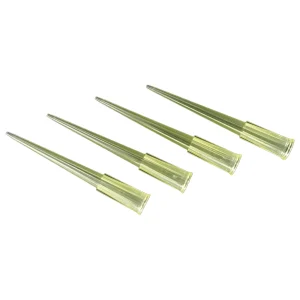






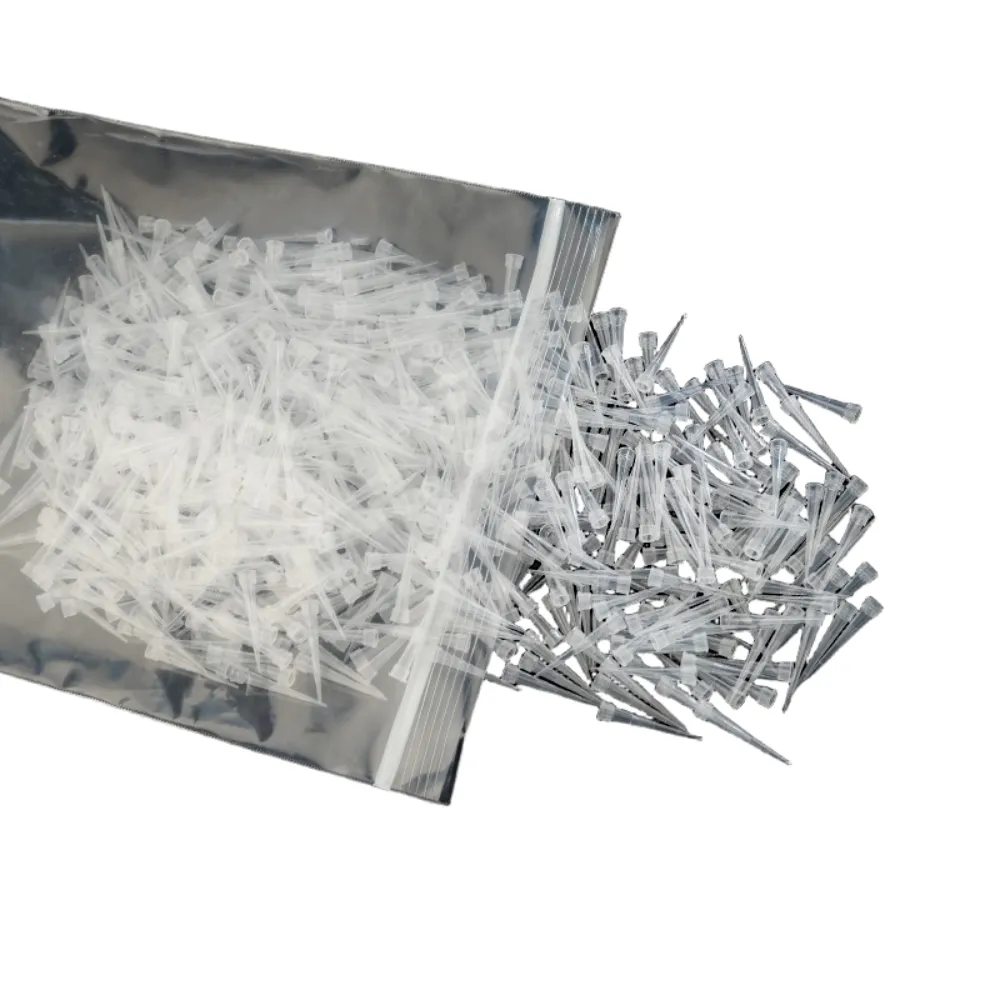
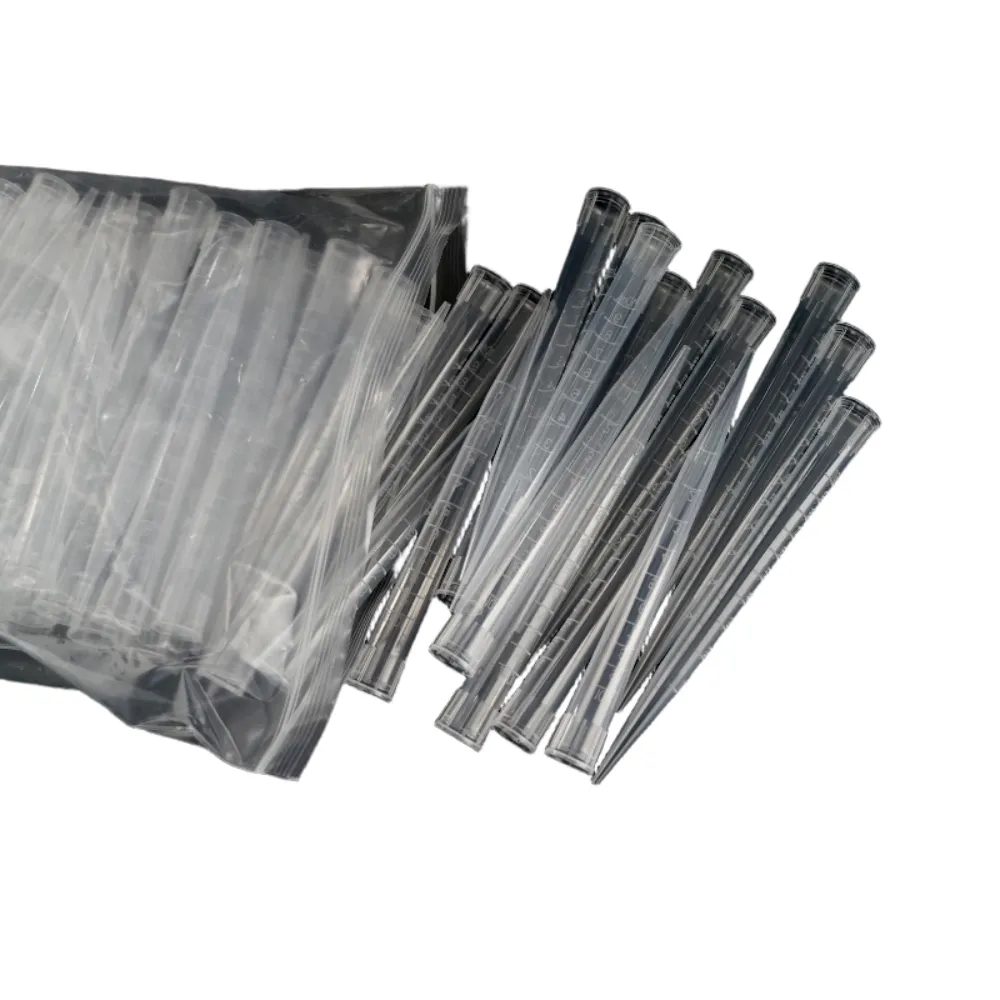
With excellent transparency, it facilitates observation of the liquid level during use. It has strong tolerance and can be used for aspirating various organic solutions. It boasts good sealing performance and is compatible with both single-channel and multi-channel pipettes.
Pipette Tips Parameters
Product Structure Composition: Polypropylene (PP)
Packaging: Sterile bagged (capable of high-temperature and high-pressure sterilization)
Product Application: Used in conjunction with pipettes, it can be applied to liquid transfer, liquid aliquoting, liquid mixing, sample addition to working plates and reaction vessels, removal of supernatant after extraction, etc.
| Product Model No | Name | Capacity | Color | Packaging Specifications |
| 2302A0010 | 10μL transparent bagged tips | 10μL | transparent | 1000pcs/pack, 20packs/box |
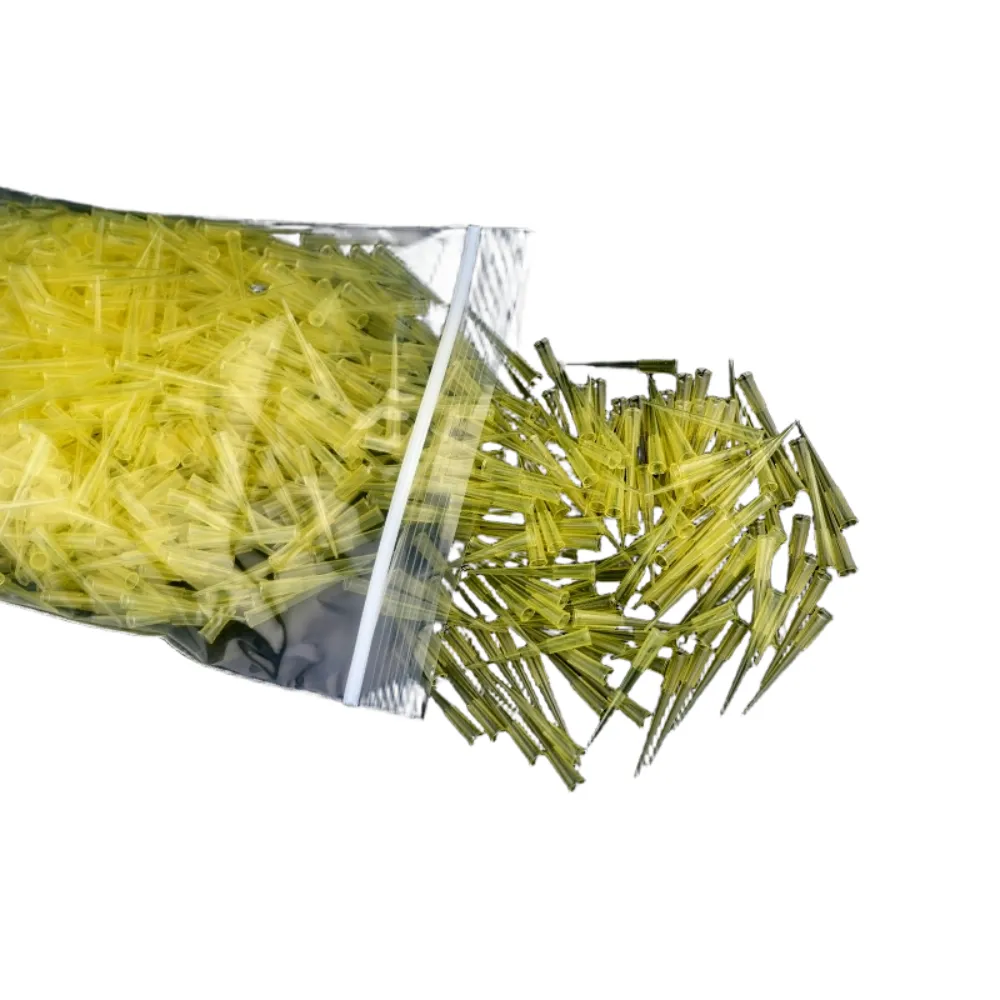
| 2302A0200 | 200μL Yellow Bag Tips | 200μL | yellow | 1000pcs/pack, 20packs/box |
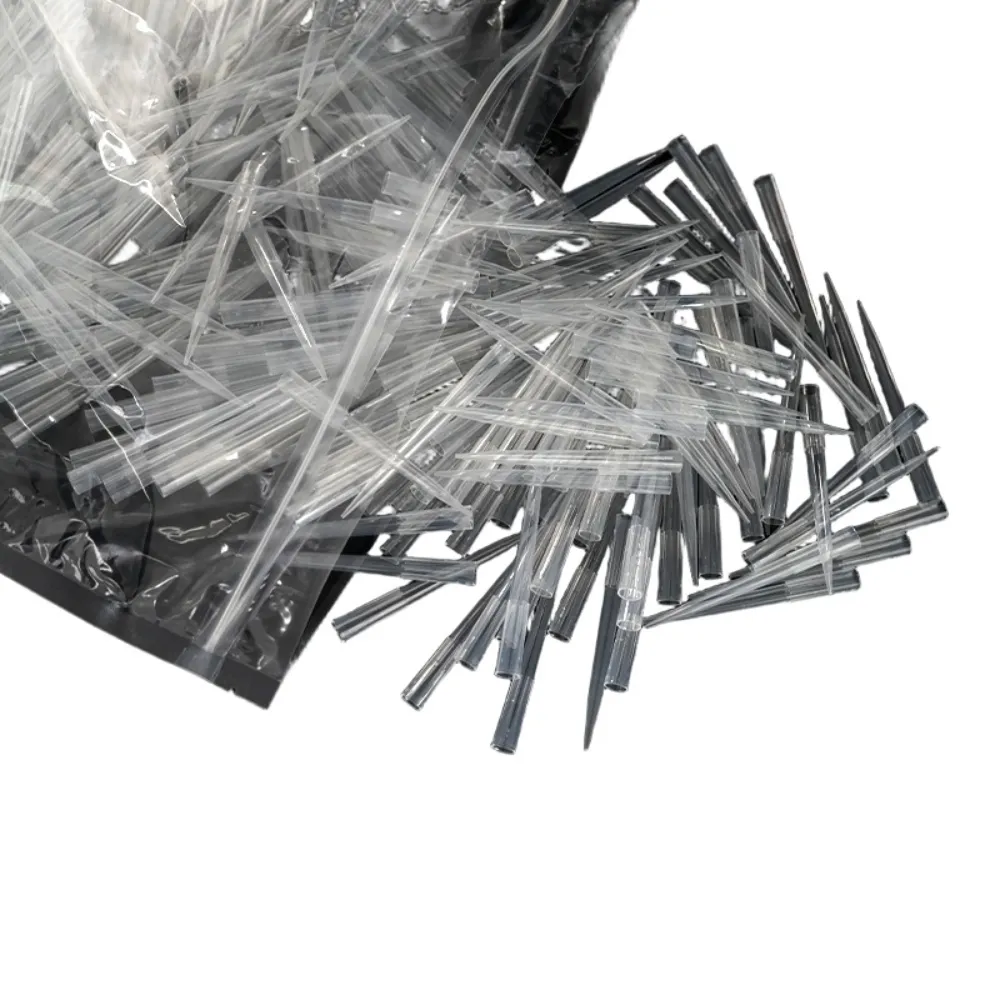
| 2302A1250 | 1000μL transparent bagged tips | 1000μL | transparent | 1000pcs/pack, 5packs/box |
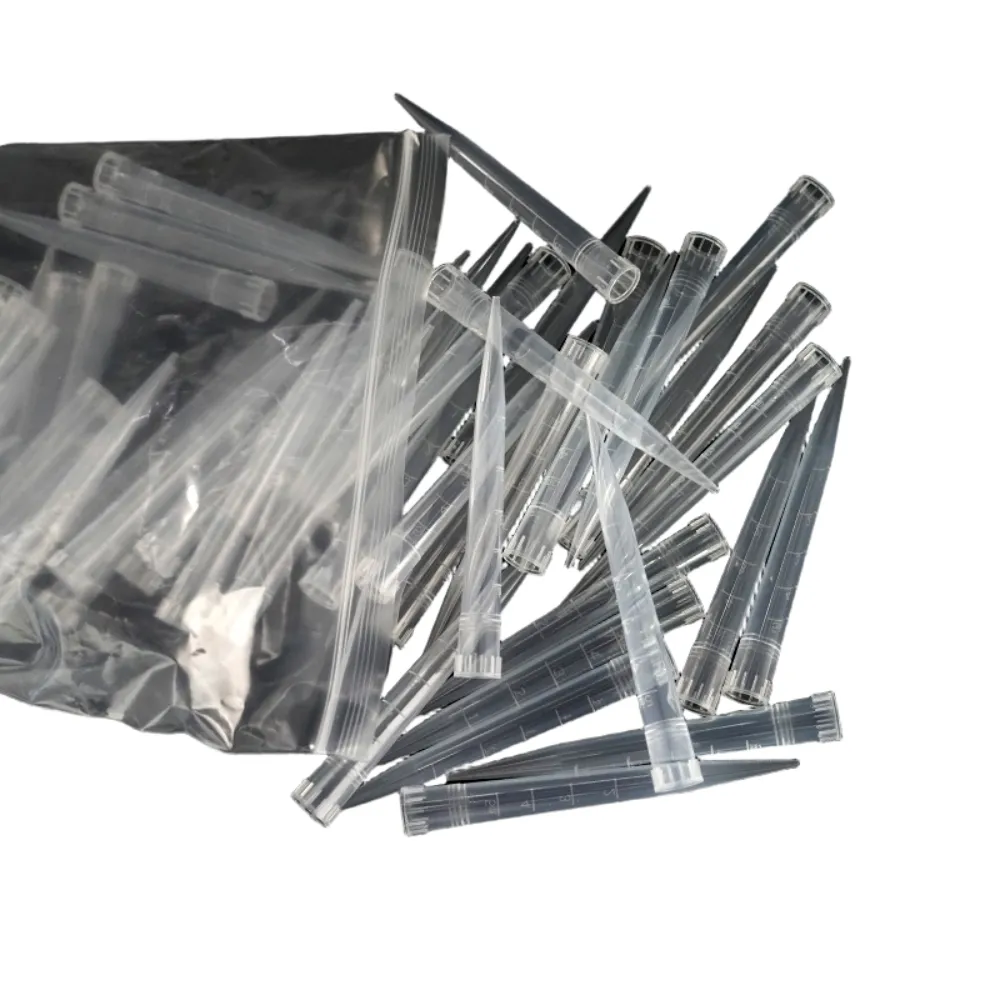
| 2302A5000 | 5000μL transparent bag tips | 5000μL | transparent | 400pcs/pack, 5packs/box |
| 2302A0010 | 10mL transparent bagged tips | 10mL | transparent | 100pcs/pack, 20packs/box |
Pipettes and tips come in different sizes and specifications, and their specifications need to be compatible with the pipettes. Generally, they are as follows:
- 10μl tips are compatible with pipettes with a range of 1-10μl and intermediate ranges, and they are commonly white.
- 200μl tips are compatible with pipettes with a range of 20-200μl and intermediate ranges, and they are commonly yellow.
- 1000μl tips are compatible with pipettes with a range of 100-1000μl; 1000μl tips are commonly white or blue.
- 5ml tips are compatible with pipettes with a range of 1-5ml.
- 10ml tips are compatible with pipettes with a range of 1-10ml.

Geometry Expertise
J-hooks, helical coils, side ports, multi-lumen structures, or patient-specific bends. Micro-barb retention elements, fluid channels (≥50μm ID), or directional drug delivery windows.

Advanced Manufacturing
Laser micromachining precision ±5μm. Electroforming for seamless tapered transitions. Nitinol shape-memory integration for steerable functionality.

Rapid Prototyping
Surgical-grade steel / PEEK 3D-printed prototypes delivered within 72 hours. CFD and structural simulation reports to accelerate product validation.
Related products
-
Laboratory Consumables
1.5 – 50ml Polypropylene Centrifuge Tubes, Centrifuge Tube Supplier
Read more