







1.5 – 50ml Polypropylene Centrifuge Tubes, Centrifuge Tube Supplier
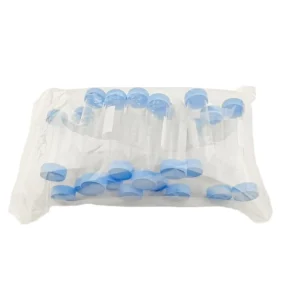
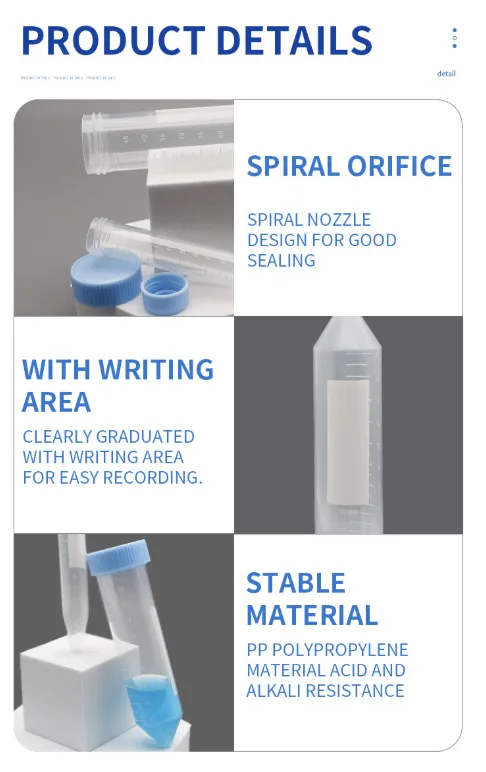
Polypropylene Centrifuge Tubes, Body (polypropylene) Cap (polyethylene). Clear, graduated lines; good sealing; no enzyme; and no pyrogen. Complete specifications. Tubular specimen containers for use with centrifuges, with sealing lids or caps.
SPECIFICATIONS
Technical Parameters
Product parameters:
| Product Name | Plastic Polypropylene Centrifuge Tubes |
| Product Material |
Body (polypropylene) Cap (polyethylene) |
| Product Features | Clear graduated lines, good sealing, no enzyme, and no pyrogen, complete specifications |
| Product Use | Tubular specimen containers for use with centrifuges, with sealing lids or caps |
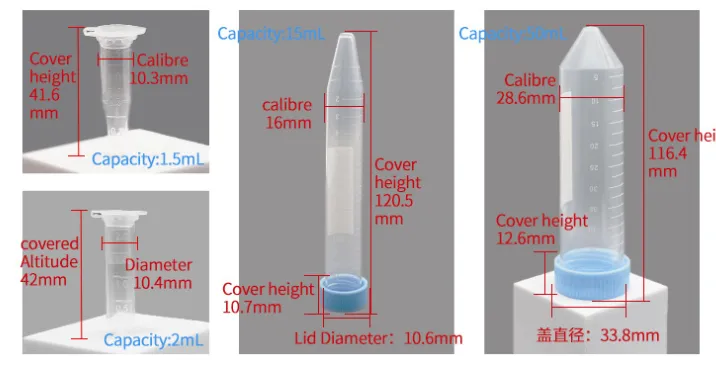
| Norm | Diameter (mm) | Lid Diameter(mm) | Lid height(mm) | Height with cover(mm) |
| 1.5ml | 10.3 | / | / | 41.6 |
| 2ml | 10.4 | / | / | 42 |
| 5ml | 16 | 10.6 | 10.7 | 120.5 |
| 50ml | 28.6 | 33.8 | 12.6 | 116.4 |
Warm tip: The above data is for manual measurement. If there is an error, please prevail in kind.
FEATURES
Customization Advantages
Precision engineering for complex medical applications
Geometry Expertise
J-hooks, helical coils, side ports, multi-lumen structures, or patient-specific bends. Micro-barb retention elements, fluid channels (≥50μm ID), or directional drug delivery windows.
Advanced Manufacturing
Laser micromachining precision ±5μm. Electroforming for seamless tapered transitions. Nitinol shape-memory integration for steerable functionality.
Rapid Prototyping
Surgical-grade steel / PEEK 3D-printed prototypes delivered within 72 hours. CFD and structural simulation reports to accelerate product validation.
Ready to Discuss Your Custom Requirements?
RELATED PRODUCTS
Related Products
Related products
FAQs
Q: What sizes of centrifuge tubes are there?
A: We offer centrifuge tubes in 15 and 50 ml as well as 250 and 500 ml sizes, and microcentrifuge tubes in sizes ranging from. 6 ml to 5 ml. Centrifuge tubes are used to store and handle liquids during the centrifugation process.
Q: What are the different types of centrifuge tubes?
A: Centrifuge tubes can be categorized by their shape, material, and volume. Common shapes include conical and flat-bottom, and materials include polypropylene and glass. They also vary in size, from small microcentrifuge tubes for tiny samples to larger conical tubes for big volumes.
Q: What is a centrifuge tube for?
A: Centrifuge tubes are an essential tool in scientific research and medical laboratories. They are used to separate materials based on their density by spinning the tube at high speeds, causing the heavier components to settle at the bottom of the tube.
Q: Can I reuse centrifuge tubes?
A: Can you reuse centrifuge tubes? Most centrifuge tubes, such as those made from polypropylene (PP), are recommended for single use only to ensure accuracy in use. In addition to glass tubes, only centrifuge tubes made of fluorinated ethylene propylene (FEP) are durable enough to be reused.
GET A FREE CONSULTATION