







I. Introduction: Sourcing from the Birthplace of Acupuncture
The global healthcare landscape is experiencing a paradigm shift. As the integration of Traditional Chinese Medicine (TCM) and Western allopathic medicine accelerates, the worldwide demand for high-quality clinical consumables has reached unprecedented levels.
From elite sports medicine facilities in North America to massive hospital networks in Europe and bustling holistic clinics in Australia, acupuncture has transcended its alternative roots to become a cornerstone of modern pain management and rehabilitation.
At the very heart of this global medical movement is the primary instrument of healing: the needle. For international medical distributors and wholesale buyers, navigating the complex supply chain of acupuncture suppliers can be a daunting task.
The market is flooded with varying qualities, regulatory standards, and price points. However, partnering directly with an established, authentic Chinese acupuncture needles manufacturer offers a distinct, insurmountable advantage.
As a premier manufacturer located in the birthplace of this ancient practice, we seamlessly blend centuries of traditional medical wisdom with cutting-edge, medical-grade manufacturing technology.
We do not just produce sterile medical devices; we craft authentic Chinesische Akupunkturnadeln that honor the legacy of TCM while strictly adhering to modern ISO 13485, CE, and FDA quality management systems.
This comprehensive B2B sourcing guide is designed to educate procurement officers, clinic directors, and medical wholesalers on the intricate engineering, metallurgical science, and clinical applications of modern acupuncture needles.
By understanding the deep technical specifications of our manufacturing portfolio, buyers can optimize their supply chains, ensure absolute patient safety, and elevate the clinical efficacy for their end-users.

II. The Evolution of the Needle: From Antiquity to Modern Precision
To truly appreciate the engineering of modern medical consumables, one must understand their historical evolution. Needle design is not arbitrary; it reflects over two millennia of clinical refinement.
The Roots of the Craft
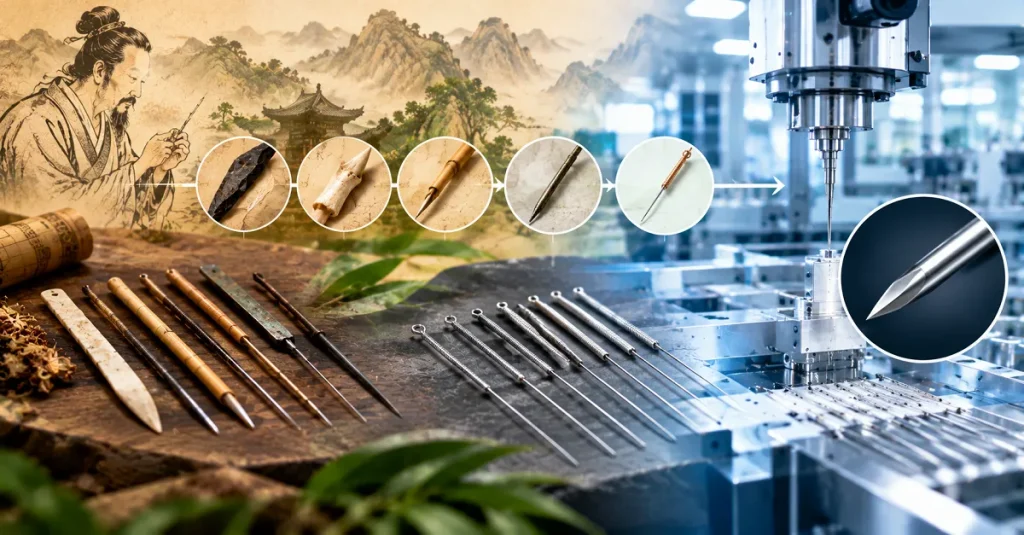
The earliest foundational text of Chinese medicine, the Huangdi Neijing (The Yellow Emperor’s Inner Canon), compiled around 200 BCE, explicitly details the “Nine Needles” (Jiu Zhen).
These ancient Chinese acupuncture needles were not the delicate, flexible instruments used today. Because of the metallurgical limitations of antiquity, early practitioners used sharpened stones (Bian shi), animal bones, bamboo, and eventually bronze and iron.
These ancient tools served multiple purposes. They included thick, lance-like needles for bloodletting, blunt needles for acupressure, and stiletto needles for lancing abscesses.
The application of these tools was inherently painful and carried significant risks of infection, yet they laid the anatomical and meridian foundations for all future developments in the field.
The Transition to Classic Designs
As metallurgy advanced through the dynastic periods, the ability to draw metal into fine wire revolutionized the practice. The brutal surgical tools of the past slowly gave way to the classic acupuncture needles—most notably the Hao Zhen, or filiform (hair-thin) needle.
This specific design, characterized by a flexible shaft and a coiled wire handle, became the universal standard for manipulating Qi (vital energy) and treating systemic diseases without causing excessive tissue trauma.
Modern Medical Engineering
Today, our manufacturing facilities have taken the geometry of the classic acupuncture needles and perfected them through aerospace-grade automation. The modern needle is a marvel of micro-engineering.
Our CNC (Computer Numerical Control) grinding machines shape the tip of the needle into a precise, multi-faceted geometry (often referred to as a “pine-needle” tip) that parts human tissue fibers seamlessly rather than tearing them.
Furthermore, modern manufacturing utilizes automated ultrasonic cleaning and medical-grade silicone micro-coating. This coating, applied at a microscopic level, drastically reduces friction upon insertion, virtually eliminating the pain associated with the ancient practice and ensuring high patient retention rates for modern clinics.
III. Our Comprehensive Product Portfolio: Materials & Specifications
The therapeutic intent of an acupuncture treatment dictates the physical material of the needle. A premier manufacturer must possess the industrial capacity to process a variety of metals, meeting the demands of both standard Western clinics and deeply traditional Eastern practitioners.
Der Industriestandard: Edelstahl
The undisputed workhorse of the global market is the stainless steel needle. Over 95% of the bulk orders we fulfill for global acupuncture suppliers consist of stainless steel acupuncture needles.
We utilize premium, surgical-grade austenitic stainless steel (primarily SUS304 and SUS316L imported from Japan or Germany).
Tensile Strength & Flexibility: Stainless steel offers an unparalleled balance. The needle must be rigid enough to penetrate the tough dermal layer without buckling, yet flexible enough to bend without snapping if the patient’s muscles spasm or the patient moves.
Rostbeständigkeit: The high chromium and nickel content in 304/316L steel prevents oxidation. This ensures the needle shaft remains perfectly smooth, sterile, and free of microscopic rust particles throughout its 3-to-5-year shelf life.
Scalability: For high-volume TCM clinic networks and hospital supply chains, stainless steel is the most economically viable option for bulk B2B procurement without sacrificing clinical excellence.
Premium & Traditional Metals
While stainless steel dominates, elite clinics often demand specialized metals for their unique therapeutic properties.
Silver Acupuncture Needles: In classical TCM theory, different metals possess different energetic properties. Silver is traditionally renowned for its “cooling” and “dispersing” effects, often used to clear excessive heat, reduce severe inflammation, and calm a hyperactive nervous system. From a manufacturing standpoint, silver is softer than steel. Therefore, we utilize specialized cold-drawing techniques to maximize the structural integrity of our silver acupuncture needles, ensuring they can penetrate the skin while delivering their traditional therapeutic benefits. They are highly sought after by premium holistic clinics and practitioners treating inflammatory autoimmune conditions.
Copper and Gold: We also manufacture copper-handled needles (prized for superior thermal conductivity during Moxibustion) and 24k gold-plated needles (utilized for “tonifying” weak Qi and for patients with severe nickel allergies).
Specialty Dimensions and Microsystems
Beyond standard body acupuncture, modern clinical protocols require highly specialized, miniature instruments.
Small Acupuncture Needles: We have dedicated cleanroom lines for the production of ultra-short and microscopic needles. These include intradermal needles and press tacks (often measuring only 1mm to 3mm in length).
Klinische Anwendung: These small acupuncture needles are primarily utilized in Auricular (ear) acupuncture, where the cartilage is extremely thin and deep insertion is dangerous. They are also the primary tool in pediatric acupuncture, where a child’s delicate constitution and fear of needles require a rapid, virtually imperceptible insertion.
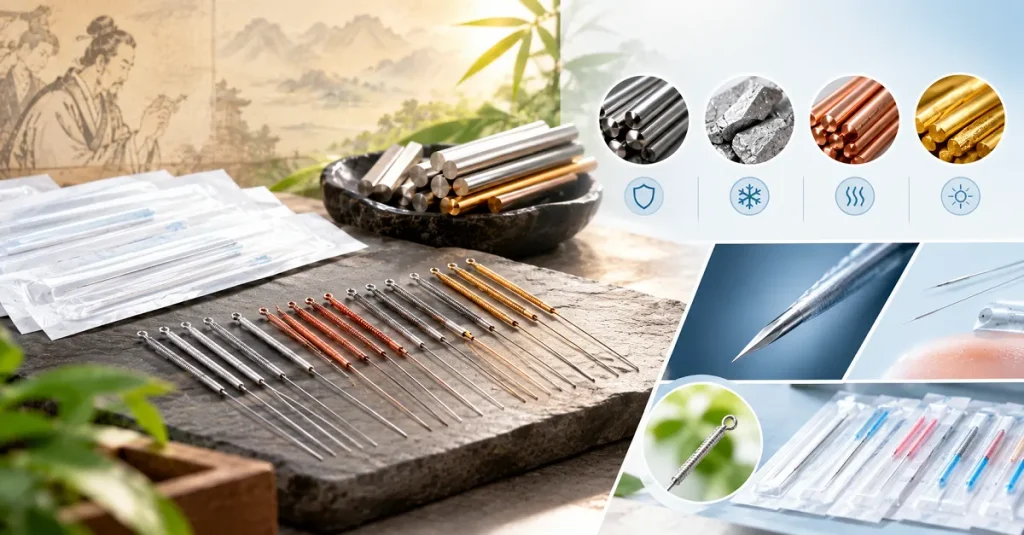
Table 1: Manufacturer’s Guide to Acupuncture Needle Materials
| Needle Material | Manufacturing Characteristics | Primäre klinische Anwendung | TCM Energetic Property | Cost Tier (B2B) |
| Stainless Steel (304/316L) | High tensile strength, rust-resistant, highly flexible. | General daily clinic use, deep tissue, electro-stimulation. | Neutral / Balancing | Most Economical |
| Silver (Alloy or Plated) | Softer metal, high thermal conductivity, hypoallergenic. | Inflammation reduction, sensitive patients, premium clinics. | Cooling / Dispersing (Sedation) | Premium |
| Gold (24k Plated Steel) | High rigidity (due to steel core), entirely hypoallergenic. | Dermatological use, treating extreme fatigue. | Warming / Tonifying (Stimulation) | Highest |
| Copper (Handle Only) | Excellent electrical and thermal conductivity. | Moxibustion (heat therapy), electroacupuncture. | Sedation | Mid-Range |
IV. Targeted Clinical Applications
To successfully distribute medical consumables, B2B buyers must understand the highly segmented end-user market. Acupuncture is no longer a monolithic practice; it has branched into highly specialized modalities, each requiring specific manufacturing tolerances.
Facial Rejuvenation and Dermatology
One of the fastest-growing sectors in the wellness industry is facial acupuncture, often marketed as a holistic, chemical-free alternative to Botox and dermal fillers.
Cosmetic Acupuncture Needles: The epidermis of the face is exceptionally thin, highly vascularized, and incredibly prone to bruising (hematomas). Standard body needles are far too traumatic for this application.
Manufacturing Specifications: We engineer our cosmetic acupuncture needles with ultra-fine gauges (typically 0.12mm to 0.16mm). The manufacturing process for these needles includes a proprietary, three-stage micro-polishing process to ensure the tip is flawlessly smooth. Furthermore, a specialized, ultra-thin coating of medical-grade silicone is applied to guarantee a frictionless entry that parts capillaries rather than piercing them, ensuring the patient leaves the clinic glowing, not bruised.
Western Sports Medicine and Orthopedics
Conversely, the integration of acupuncture into Western physical therapy and sports medicine has created a massive demand for robust, deep-tissue instruments.
Dry Acupuncture (Dry Needling): This modality focuses entirely on the musculoskeletal system. Practitioners insert needles directly into dense, spasming muscle tissue (myofascial trigger points) to force the muscle to twitch and release.
Manufacturing Specifications: Dry acupuncture requires a distinctly different tool than cosmetic work. We manufacture these needles using a slightly thicker gauge (0.25mm to 0.35mm) and extended lengths (up to 100mm or more). More importantly, these needles are often manufactured without a silicone coating. The absence of silicone provides the practitioner with enhanced tactile feedback and micro-friction, allowing them to “wind” the fascia around the needle to mechanically stretch the connective tissue. The stainless steel must be tempered to a specific hardness to prevent the long shaft from bending under the immense pressure of a spasming gluteal or lumbar muscle.
Minimalist Master Techniques
Among the highest echelons of classical TCM practitioners, less is more.
One Needle Acupuncture: This is a highly advanced clinical strategy where a master practitioner diagnoses a complex systemic issue and treats it by inserting only a single needle into a highly specific, powerful acupoint.
Manufacturing Specifications: When a treatment relies entirely on one point, the instrument must be flawless. The one-needle acupuncture technique demands a needle with perfect handle weight distribution, absolute shaft straightness, and a tip that provides immediate “Deqi” (the sensation of Qi arriving at the point). Our premium line of spring-handle needles, subject to individual laser-guided optical inspection, is specifically favored by these master clinicians.

Table 2: Needle Specifications by Clinical Modality
| Clinical Modality | Recommended Gauge (mm) | Recommended Length (mm) | Key Manufacturing Feature | Guide Tube Required? |
| Cosmetic (Facial) | 0.12mm – 0.16mm | 7mm – 15mm | Ultra-polished, silicone-coated, high flexibility. | Yes (often short tubes) |
| Pediatric / Auricular | 0.16mm – 0.20mm | 1mm – 13mm | Micro-dimensions, press-tack designs. | No (often taped to skin) |
| Standard Body (TCM) | 0.20mm – 0.25mm | 25mm – 40mm | Standard flexibility, silicone coated. | Optional / Practitioner preference |
| Dry Acupuncture | 0.25mm – 0.35mm | 40mm – 100mm+ | High column strength, rigid, uncoated (tactile). | Yes (due to length) |
V. Clinical Safety and the Disposable Revolution
For medical distributors importing into highly regulated markets (such as the FDA in the USA, the EMA in Europe, or the TGA in Australia), clinical safety, traceability, and sterility are the most critical factors in supplier selection.
The Historical Context of Reusable Needles
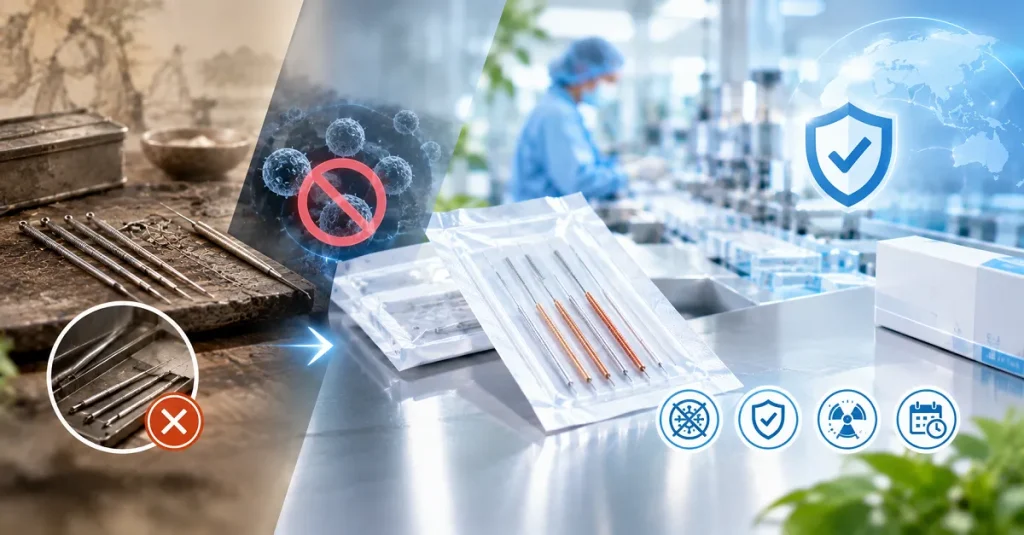
In the mid-20th century, before the advent of mass-produced medical plastics and advanced automated sterilization, the global standard was reusable acupuncture needles. Practitioners would purchase a single set of thick steel, gold, or silver needles and use them for years.
The Clinical Risk: Between patients, these needles had to be scrubbed and placed in high-pressure steam autoclaves. However, autoclaving does not guarantee the removal of all biological proteins (such as prions). Furthermore, repeated insertion and high-heat sterilization rapidly degraded the metal, causing the needle tip to become blunt, hooked, and deeply painful for the patient.
The Hepatitis Crisis: The global outbreak of bloodborne pathogens (specifically Hepatitis B, C, and eventually HIV) in the late 20th century rendered the practice of reusable needles ethically and medically obsolete.
The Modern Disposable Standard
Today, our manufacturing facilities strictly champion the single-use, disposable revolution. To comply with modern health regulations, absolutely every needle we manufacture is a single-use device.
Sterilization Protocols: Once our automated machinery seamlessly attaches the needle shaft to the handle and packages it into a medical-grade blister pack, the products are loaded into massive sterilization chambers. We utilize either Ethylene Oxide (EtO) gas or Gamma Irradiation. These processes penetrate the packaging, destroying the DNA of any lingering microbes, bacteria, or spores.
Biological Indicators: Every batch is tested using rigorous biological indicators before being released for export, ensuring a completely sterile shelf life of up to 5 years. By exclusively supplying single-use needles, we protect the patient from cross-contamination, protect the practitioner from malpractice liability, and protect the distributor from regulatory recalls.
VI. Why Choose Us Over Other Acupuncture Suppliers?
In a saturated market, procurement managers must differentiate between trading companies (middlemen) and authentic primary manufacturers. Here is why partnering with our factory provides an unmatched B2B competitive advantage.
1. Direct-from-Factory Pricing
By eliminating the trading company layer, we offer medical wholesalers and distributors direct factory-gate pricing. This massive reduction in the cost of goods sold (COGS) allows distributors to dramatically increase their profit margins while still offering highly competitive pricing to local clinics and hospital networks. We are equipped to handle massive bulk container orders, ensuring your supply chain remains uninterrupted regardless of global demand spikes.
2. Comprehensive OEM & White-Label Customization
We do not just sell our brand; we build yours. Our expansive OEM (Original Equipment Manufacturer) division allows massive clinic networks and international distributors to create their own proprietary line of needles.
Custom Handles: Choose from traditional Chinese wire coil (with or without a top loop), Japanese-style extruded pipe handles (ideal for painless tapping), or modern Korean-style spring handles.
Custom Packaging: We offer custom-designed blister packs. Choose from single-needle-per-blister packs for strict hygiene protocols, or bulk packs (e.g., 5 or 10 needles with a single guide tube) to help high-volume clinics reduce plastic waste and opening time.
Custom Branding: From the inner blister paper to the outer export cartons, your corporate branding, regulatory CE marks, and barcode systems are flawlessly integrated.
3. Rigorous Quality Control (QC)
The bane of any medical distributor is a product recall or a batch of defective needles causing clinician complaints. We heavily invest in Automated Visual Inspection (AVI) technology. High-speed optical sensors scan every single needle tip on the assembly line. If a tip features a microscopic burr, a “hooked” point, or is blunted, the machine instantly rejects it. This guarantees that your clients receive a zero-defect product, ensuring brand loyalty and repeat procurement orders.
VII. Schlussfolgerung
The journey of the acupuncture needle from a sharpened stone in ancient China to a sterile, micro-engineered, surgical steel instrument is a testament to the evolution of global medicine. For the modern clinician, the needle is an extension of their intent, their skill, and their reputation. A painless, effective treatment guarantees patient retention, while a defective needle guarantees a lost client.
For global medical distributors, sourcing from authentic, high-capacity Chinese manufacturers is the key to dominating the local TCM and physiotherapy supply markets. We offer the heritage of authentic Chinese manufacturing combined with the strict, uncompromising rigor of Western medical device regulations.
Are you ready to optimize your supply chain, expand your profit margins, and offer your clinicians the finest instruments on the market? We invite international wholesalers, medical supply distributors, and large hospital procurement networks to contact our export division today. Reach out to request our comprehensive technical dossiers, verify our CE/FDA/ISO regulatory certificates, and claim your free OEM sample kits to experience our manufacturing excellence firsthand.
VIII. Frequently Asked Questions (Q&A)
To assist procurement teams and clinic managers in their sourcing journey, we have compiled detailed answers to the industry’s most critical queries regarding the manufacturing and clinical use of acupuncture consumables.
While ancient Chinese acupuncture needles were crafted from stone, bone, and eventually bronze and iron, modern authentic needles are predominantly manufactured from surgical-grade stainless steel (304 or 316L). This material provides the perfect balance of tensile strength, flexibility, and rust resistance. Premium variations are also manufactured using silver alloys, copper handles, or 24k gold plating for specific energetic therapies.
Historically, practitioners boiled or autoclaved thick steel needles for reuse. However, this practice is now medically obsolete and illegal in most regulated healthcare systems. Reusable needles degrade rapidly, causing painful, blunt insertions. More importantly, reusing needles poses a severe, unacceptable risk of transmitting bloodborne pathogens (like Hepatitis and HIV). Modern global standards mandate strict adherence to single-use, pre-sterilized disposable needles.
Classic acupuncture needles are designed for traditional meridian therapy; they are highly flexible and usually coated with medical silicone for a gentle, painless, and relatively shallow insertion. Dry acupuncture (or dry needling) is a Western orthopedic technique targeting deep muscle knots. Therefore, dry needles are manufactured with a thicker gauge, extended length, higher column rigidity, and often lack a silicone coating to give the practitioner better tactile feedback when manipulating dense muscle fascia.
Yes, significantly. The face has a very thin epidermis and dense capillary networks, making it highly prone to bruising. Cosmetic acupuncture needles are engineered specifically for facial rejuvenation. They feature ultra-fine gauges (often 0.12mm to 0.16mm), short lengths, and undergo a specialized micro-polishing and heavy silicone coating process to ensure the needles part the capillaries frictionlessly without causing bleeding or hematomas.
Small acupuncture needles (ranging from 1mm press tacks to 13mm filiform needles) are utilized in specialized micro-systems. They are the primary instruments for Auricular (ear) acupuncture, where deep insertion is impossible due to cartilage. They are also highly favored in pediatric acupuncture, where rapid, virtually painless superficial insertion is required to treat children safely.
One-needle acupuncture is a highly advanced, minimalist clinical approach where a master practitioner diagnoses a complex condition and treats it using only a single, perfectly placed needle, rather than dozens. Because the entire efficacy of the treatment relies on one insertion, practitioners of this technique demand needles with absolutely flawless tip geometry, perfect straightness, and balanced handles to ensure immediate energetic feedback (Deqi).
Premier manufacturers and acupuncture suppliers operate massive sterilization chambers at the end of their automated assembly lines. The sealed blister packs of needles are subjected to either Ethylene Oxide (EtO) gas or Gamma Irradiation. These processes penetrate the medical paper and destroy all microbial life. Every batch is validated with biological indicators to guarantee a sterile shelf life of 3 to 5 years before export.
B2B procurement managers should bypass trading companies and seek direct primary manufacturers. Crucial vetting steps include verifying their medical device quality management certification (ISO 13485), checking for destination-specific regulatory compliance (FDA 510k, CE mark, TGA), ensuring they utilize Automated Visual Inspection (AVI) to prevent defective tips, and confirming their capability to provide OEM white-label packaging and custom handle configurations.