I. Introdução: O papel fundamental da precisão nos produtos médicos de consumo
In the realm of modern medicine, the efficacy of a pharmaceutical agent is intrinsically linked to its delivery mechanism. Administering a vaccine, an oil-based hormone, or a precise diagnostic antigen requires exact anatomical targeting. Selecting the correct needles sizes for injections is not merely a matter of clinical preference; it is a fundamental requirement that dictates patient comfort, medication absorption rates, and overall tissue safety.
As a premier manufacturer of medical consumables, we understand that a hypodermic needle is a highly engineered medical instrument. The transition of fluid from the syringe barrel, through the cannula, and into the targeted human tissue (whether muscle, fat, or dermis) relies on exacting manufacturing tolerances. A needle that is too short may deposit irritating intramuscular medication into subcutaneous fat, leading to sterile abscesses. Conversely, a needle that is too thick will cause unnecessary trauma and pain, reducing patient compliance with chronic therapies.
This comprehensive B2B guide is designed to navigate the complex variables of needle selection. By detailing the specific parameters of Gauge (diameter) and Length, we aim to equip procurement officers, pharmacy buyers, and clinical administrators with the authoritative knowledge required to optimize their supply chains and improve patient outcomes.

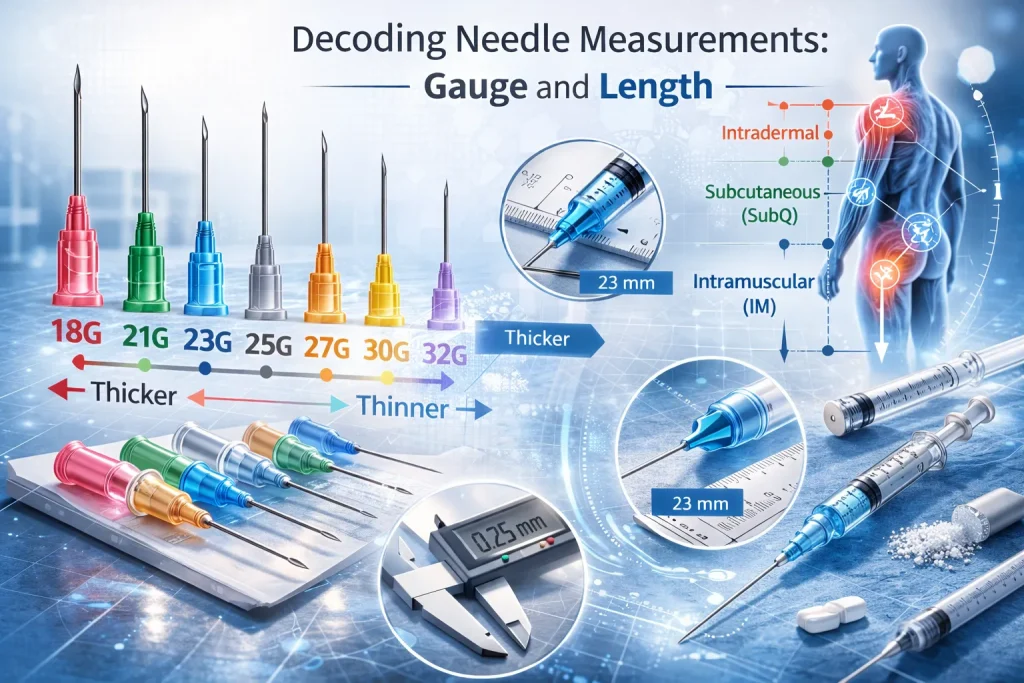
II. Decoding Needle Measurements: Gauge and Length
The anatomy of a hypodermic needle is defined globally by two primary measurements: its gauge and its length. Understanding how these two variables interact with fluid dynamics and human anatomy is the foundation of clinical procurement.
A. Understanding the Gauge System
The “Gauge” (abbreviated as G) refers to the outer diameter of the needle cannula. The medical industry utilizes the Birmingham Wire Gauge (BWG) system, which operates on an inverse scale: the higher the gauge number, the thinner the needle. For example, an 18G needle is significantly thicker than a 30G needle. When selecting a gauge, clinicians and procurement teams must consider the viscosity of the medication:
- Aqueous Solutions: Thin, water-based medications (like most vaccines or insulin) flow easily and can be administered through fine needles (25G to 32G).
- Viscous Solutions: Thick, oil-based suspensions (such as testosterone cypionate or crystalline corticosteroid suspensions) require a larger internal lumen to flow without requiring excessive thumb pressure on the syringe plunger. These typically require 18G to 23G needles.
B. Understanding Length Selection
Needle length is measured in inches or millimeters, typically ranging from a mere 4mm (5/32 inch) for specialized aesthetic or diabetic uses, up to 3.5 inches or more for deep spinal or bariatric intramuscular injections.
Length is strictly dictated by the target tissue layer:
- Epidermis/Dermis (Intradermal): Requires very short needles (3/8 to 1/2 inch).
- Adipose Tissue (Subcutaneous): Requires short to medium needles (5/16 to 5/8 inch).
- Muscle Tissue (Intramuscular): Requires longer needles to bypass the fat layer (1 to 1.5 inches, adjusted for patient BMI).
C. Reference Tables and Charts
To facilitate accurate ordering and inventory management, adherence to ISO 6009 color-coding standards is vital. Below is a comprehensive chart of needle gauge sizes for injections that match ISO hub colors to their standard applications.
Table 1: Comprehensive Chart Needle Gauge Sizes for Injections
| Calibre (G) | ISO Hub Color | Diâmetro exterior (mm) | Comprimentos comuns | Aplicação clínica primária | Fluid Type |
| 18G | Cor-de-rosa | 1.20 mm | 1.5″ – 2.0″ | Blood donation, drawing thick meds from vials | Highly Viscous |
| 20G | Amarelo | 0.90 mm | 1.0″ – 1.5″ | IV medication prep, deep tissue injections | Viscous |
| 21G | Deep Green | 0.80 mm | 1.0″ – 1.5″ | Standard venipuncture, thick IM injections | Viscous |
| 22G | Preto | 0.70 mm | 1.0″ – 1.5″ | Standard IM injections, older pediatric IVs | Medium |
| 23G | Deep Blue | 0,60 mm | 1.0″ | Needle size for deltoid im injection, vaccines | Aqueous/Medium |
| 25G | Laranja | 0.50 mm | 5/8″ – 1.0″ | Standard subcutaneous injection needle size, pediatric IM | Aqueous |
| 26G | Castanho | 0.45 mm | 3/8″ – 1/2″ | Intradermal (TB/Allergy), cosmetic injections | Aqueous |
| 27G | Cinzento | 0,40 mm | 1/2″ – 1.5″ | Dental anesthesia, ophthalmic blocks | Aqueous |
| 30G | Light Yellow | 0,30 mm | 5/16″ – 1/2″ | Insulin delivery, Botox, localized aesthetics | Aqueous |
| 32G | Vermelho profundo | 0.23 mm | 4mm - 6mm | Micro-dosing, mesotherapy, advanced diabetes care | Micro-dosing, mesotherapy, and advanced diabetes care |
To further simplify procurement, the following needle size chart summarizes the standard parameters based solely on the route of administration.
Table 2: Needle Size Chart Injections by Administration Route
| Route of Administration | Target Tissue Layer | Insertion Angle | Standard Gauge Range | Standard Length Range |
| Intramuscular (IM) | Deep Muscle | 90 Degrees | 22G – 25G | 1 inch – 1.5 inches |
| Subcutaneous (SubQ) | Adipose (Fat) | 45 or 90 Degrees | 25G – 30G | 3/8 inch – 5/8 inch |
| Intradérmica (ID) | Dermis (Skin) | 5 to 15 Degrees | 26G – 28G | 3/8 inch – 1/2 inch |
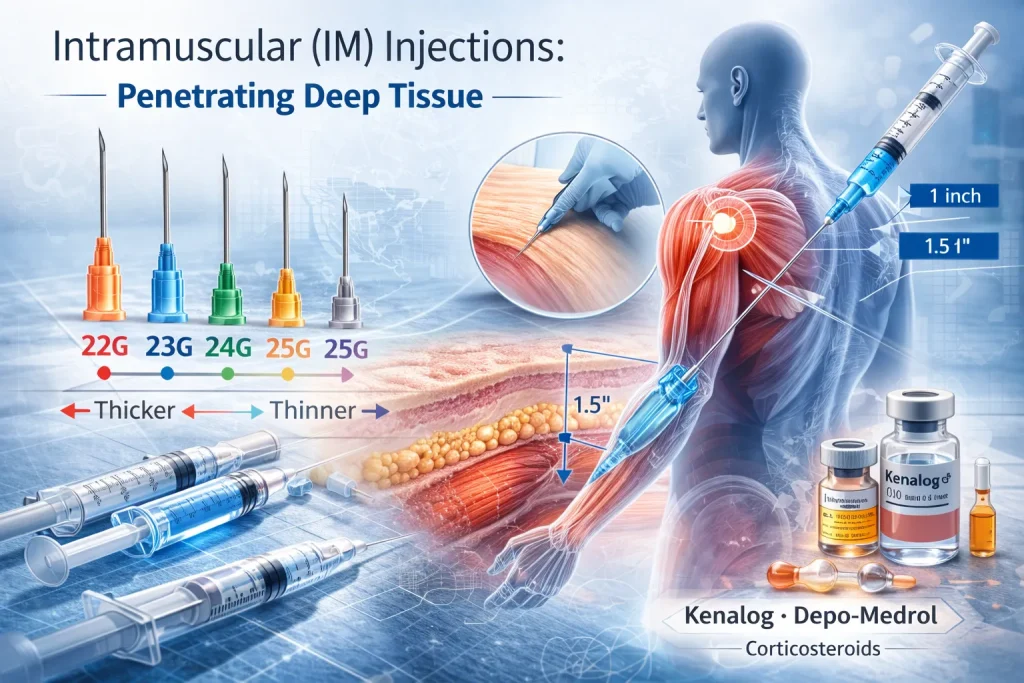
III. Intramuscular (IM) Injections: Penetrating Deep Tissue
Intramuscular injections are designed to deposit medication deep into the muscle fascia. Muscle tissue possesses a rich, expansive blood supply, ensuring that medications are absorbed into the systemic circulation more rapidly than via the subcutaneous route.
A. Standard IM Specifications and Clinical Rationale
Because the needle must completely bypass the epidermis, dermis, and subcutaneous fat layers before reaching the muscle, length is the most critical factor.
- Adult Standards: The standard length for an adult of average weight is 1 inch to 1.5 inches.
- Bariatric Considerations: For obese patients, a 1-inch needle may only reach the adipose tissue, risking a subcutaneous deposition of an IM medication, which can alter absorption rates and cause severe tissue irritation. In such cases, 1.5 to 2-inch needles are mandated.
- Gauge Selection: The standard gauge is 22G to 25G, balancing the need to minimize pain with the structural integrity required to penetrate deep tissue without bending.
B. Site-Specific Sizing: The Deltoid Muscle
The deltoid muscle of the upper arm is the preferred site for adult vaccinations (such as influenza, mRNA COVID-19 vaccines, and tetanus toxoid). Because the deltoid is a relatively shallow muscle mass compared to the gluteus, precise sizing is required to avoid striking the humerus bone.
The ideal needle size for deltoid IM injection for an adult weighing between 130 lbs and 150 lbs is a 23G to 25G needle, exactly 1 inch in length.
- For adults under 130 lbs: A 5/8 inch needle (typically 25G) may be used if the skin is stretched flat.
- For adults over 200 lbs (females) or 260 lbs (males): A 1.5-inch needle is required to ensure muscle penetration.
C. Specialized IM Applications: Corticosteroid Therapy
Orthopedic and rheumatological treatments frequently utilize IM or intra-articular (joint) injections for pain management and inflammation reduction.
The appropriate cortisone injection needle size is heavily dependent on the target anatomy and the nature of the medication. Cortisone and similar steroid suspensions (like Kenalog or Depo-Medrol) are crystalline suspensions. If the gauge is too small, the crystals will clump and clog the needle lumen, a phenomenon known as “jamming.”
- Major Joints (Knees/Shoulders): Clinicians generally prefer a 22-G or 21-G needle, 1.5 inches in length.
- Minor Joints (Fingers/Toes): A 25G needle, 5/8 to 1 inch in length, is preferred to minimize trauma to delicate joint capsules.
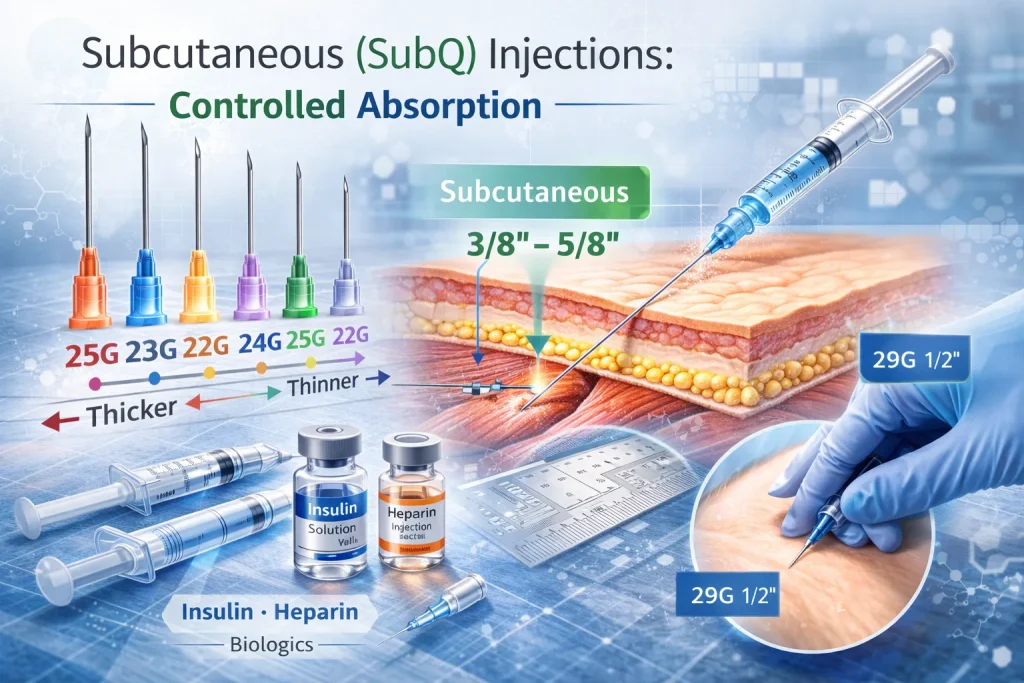
IV. Subcutaneous (SubQ) Injections: Controlled Absorption
Subcutaneous injections deliver medication into the adipose (fat) layer located directly beneath the dermis and above the muscle. Adipose tissue has fewer blood vessels than muscle, resulting in a slower, more sustained, and predictable absorption rate. This route is ideal for medications like insulin, heparin (blood thinners), and various biologic therapies.
A. Standard SubQ Specifications
Because the adipose layer is superficial, long needles are contraindicated. Using a long needle risks accidental intramuscular injection, which can lead to dangerously rapid absorption (e.g., causing severe hypoglycemia if insulin is injected into muscle).
A norma subcutaneous injection needle size ranges from 25G to 30G, with lengths typically spanning 3/8 inch to 5/8 inch.
B. Patient Comfort and Manufacturing Excellence
Many medications administered subcutaneously are designed for self-administration by the patient at home, often daily or even multiple times a day (such as insulin for Type 1 Diabetes). Therefore, patient comfort is paramount.
As a manufacturer, we utilize advanced “Thin Wall” technology for our SubQ lines. By utilizing superior-grade stainless steel, we can maximize the inner diameter of the cannula while keeping the outer diameter ultra-fine (e.g., 31G or 32G). Furthermore, applying a micro-bonded silicone lubricant to the exterior of the needle significantly reduces friction, allowing the needle to part the skin fibers smoothly rather than tearing them. This reduces bruising, tissue micro-trauma, and patient anxiety.
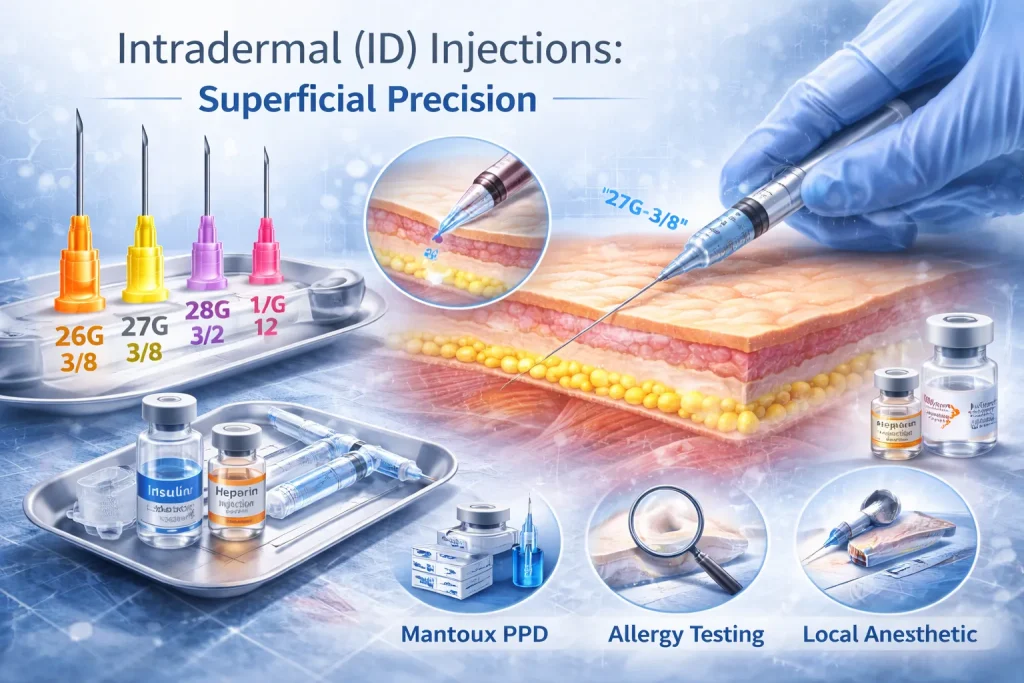
V. Intradermal (ID) Injections: Superficial Precision
Intradermal injections are the shallowest type of injection, administered directly into the dermis layer of the skin at a very shallow angle (typically 5 to 15 degrees). The dermis is highly vascularized with capillaries and contains a dense concentration of immune cells, making it the ideal route for diagnostic testing.
A. Clinical Applications and Specifications
The most common applications for ID injections include:
- Tuberculin skin testing (Mantoux test or PPD)
- Allergy testing
- Administration of local anesthetics before IV insertion
Because the dermis is extremely thin, only the finest needles can be used. The standard ID needle is 26G to 28G, with a length of 3/8 inch to 1/2 inch.
A successful ID injection requires the bevel of the needle to be facing upwards. Upon injection, the fluid creates a visible “wheal” or “bleb” (a small blister-like bump) on the surface of the skin. If the needle is too long or the angle too steep, the medication will slip into the subcutaneous layer, rendering the diagnostic test invalid. Our manufacturing process ensures that the short-bevel grinds on our ID needles are razor-sharp to facilitate this highly specific, shallow entry.
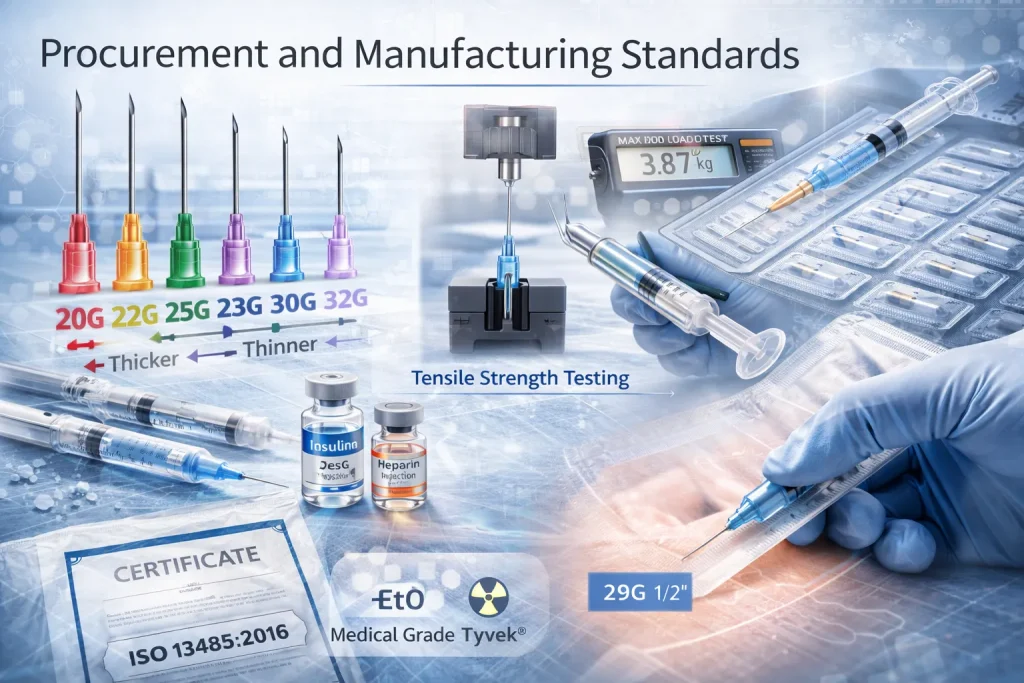
VI. Procurement and Manufacturing Standards
For B2B buyers, distributors, and hospital procurement networks, understanding clinical specifications is only half the equation. The other half is securing a supply chain that guarantees uncompromising quality and regulatory compliance.
A. Quality Assurance in Needle Manufacturing
A hypodermic needle is subjected to intense physical forces during insertion. As a primary manufacturer, we adhere to strict ISO 13485 standards. Our manufacturing process includes:
- Electropolishing: After the stainless steel tubing is cut and ground to form the bevel, microscopic burrs (metal fragments) remain. We utilize electropolishing to strip away these imperfections, resulting in a microscopic surface smoother than glass.
- Tensile Strength Testing: Needles, especially fine gauges used for IM injections, must not buckle or snap when contacting dense tissue or cartilage. We test our steel alloys for maximum tensile yield.
- Hub Bonding: The attachment point between the steel cannula and the plastic Luer hub is a common point of failure in low-quality brands. We utilize medical-grade epoxies and ultrasonic welding to ensure the needle will never detach under high-pressure fluid delivery.
B. Sterilization and Shelf Life
Every needle and syringe unit is rigorously sterilized using either Ethylene Oxide (EtO) gas or Gamma Irradiation. Packaging integrity is paramount; our blister packs utilize medical-grade Tyvek backing to ensure the product remains sterile for its full 5-year shelf life, protecting the hospital’s long-term inventory investment.
VII. Conclusão
The selection of appropriate needle sizes for injections bridges the gap between pharmaceutical science and clinical success. Whether an oncology ward requires long, sturdy needles for deep intramuscular hormone delivery, or a diabetic clinic requires millions of ultra-fine, frictionless needles for daily subcutaneous care, understanding the interplay of gauge and length is non-negotiable.
By consulting standard sizing charts, respecting the physics of fluid viscosity, and partnering with a manufacturer dedicated to precision engineering, healthcare networks can drastically reduce patient discomfort, prevent adverse injection-site reactions, and optimize therapeutic efficacy.
Next Steps for Procurement: We invite clinical administrators and medical distributors to contact our enterprise sales team. We offer comprehensive sample kits, bulk pricing tiers, and customized OEM solutions tailored to the specific demands of your healthcare facility.
Frequently Asked Questions (Q&A)
To provide immediate clarity on the most common clinical and procurement queries, we have compiled the definitive answers below.
For a standard intramuscular (IM) injection, the ideal size is a 22G to 25G needle, with a length of 1 inch to 1.5 inches. The exact size depends on the patient’s body mass and the viscosity of the medication being injected. Thicker medications require a thicker needle (22G), while standard vaccines can be administered with a thinner needle (25G).
The correct needle length for intramuscular injections is determined by the patient’s body weight and the specific injection site. The standard length for an adult of average weight is 1 inch to 1.5 inches. For pediatric patients or very frail adults, a 5/8 inch needle may suffice. For obese patients (women over 200 lbs, men over 260 lbs), a 1.5-inch to 2-inch needle is required to successfully bypass the thick subcutaneous fat layer and reach the muscle tissue.
You should generally use a 22G, 23G, 24G, or 25G needle for an IM injection. The choice of gauge within this range is dictated by the medication’s thickness. Aqueous (water-like) solutions flow easily through a 25-G needle, which causes less pain. Viscous (oil-based or crystalline) medications, such as certain antibiotics or hormones, require a 22-G or 23-G needle to prevent the syringe from clogging and to allow for smooth plunger operation.
A subcutaneous injection requires a short, fine needle designed to deposit medication into the fat layer just below the skin. The standard size is a 25-G to 30-G needle, with a length of 3/8 inch to 5/8 inch. Using a needle longer than 5/8 inch increases the risk of accidentally injecting the medication into the muscle.
Intradermal injections are administered very close to the skin’s surface and require the finest, thinnest needles available for clinical administration. Typically, a 26-G, 27-G, or 28-G needle is used. The length is also kept very short, usually 3/8 inch to 1/2 inch, to prevent penetrating too deeply into the subcutaneous layer.
The most universally accepted size for routine subcutaneous injections is a 25-G, 27-G, or 30-G needle, with a length of 1/2 inch or 5/8 inch. These sizes are the standard choice in medical facilities for administering medications like low-molecular-weight heparin, insulin, and various biologic therapies that require slow, steady absorption from the fatty tissues.
Clinically, it is not recommended to use a 23-gauge needle for a subcutaneous injection unless necessary. While a 23G needle that is short enough (e.g., 5/8 inch) will physically deposit the medication in the right tissue layer, a 23G needle is much thicker than the standard 25G–30G SubQ needles. Using a 23G needle will cause unnecessary pain, increase the risk of tissue trauma, and likely lead to bruising and minor bleeding at the injection site.
Human Growth Hormone (HGH) is almost exclusively administered via the subcutaneous route. Because it is often injected daily and is an aqueous solution, patient comfort is the primary concern. The standard size needle for an HGH injection is an ultra-fine 29-G, 30-G, or 31-G needle, with a very short length of 5/16 inch (8mm) to 1/2 inch (12.7mm).