







Silicone coating can influence medical needle insertion force, with results depending on needle design, formulation and application conditions. TOPKEY supports customized formulation selection, sample testing and process assessment to help manufacturers achieve consistent coating performance.
1. Why Silicone Coating Is Evaluated
A thin silicone layer is commonly used to lubricate the surface of medical needles. Insertion-force testing can show whether a selected coating and application method improves the measured force profile for a particular needle design. A lower value in one test, however, does not by itself establish clinical comfort, safety or performance in another device.
The starting point is a clear application target: the first puncture, force over several punctures, or consistency from batch to batch. Manufacturers should define that target before comparing materials.
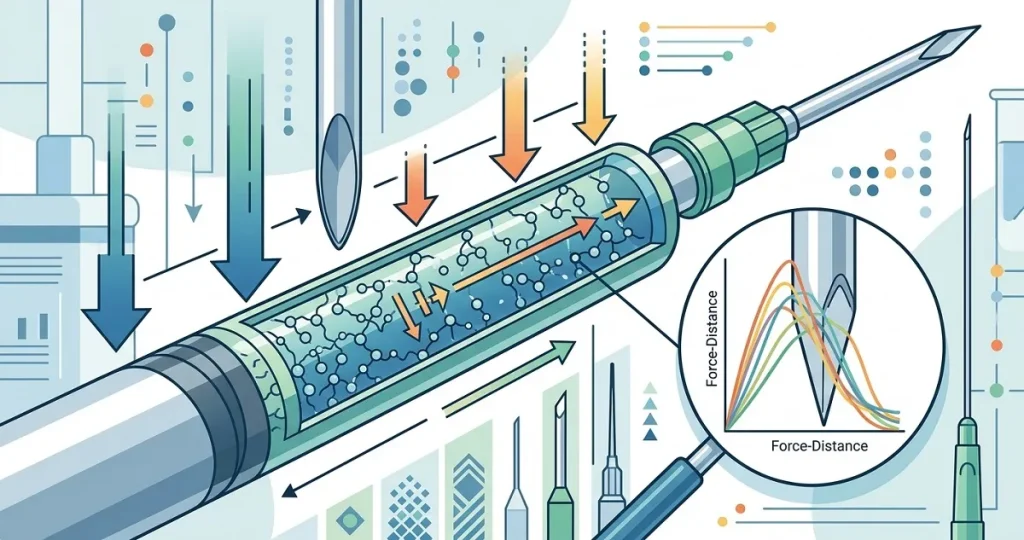
What an insertion-force curve can reveal
A force curve captures more than one peak number. It can show the initial puncture peak, force during travel through the medium and changes over repeated passes. Compare curves generated with the same apparatus, medium and needle geometry; report the sample count and variation as well as the average.
2. Factors Beyond Silicone Oil
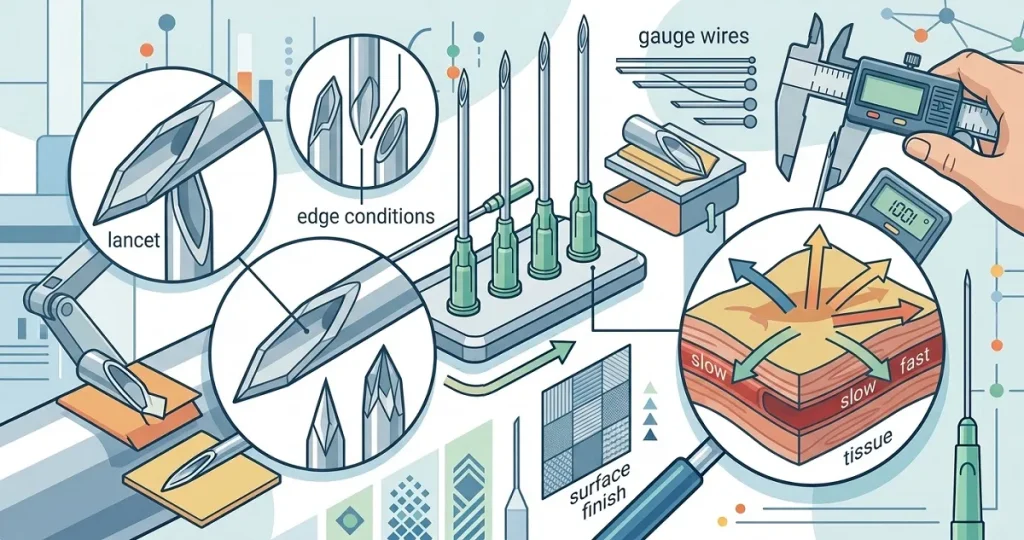
Needle gauge, bevel geometry, edge condition, surface finish and straightness all influence force. Test medium, insertion angle, speed and depth also change the result. If several factors change at once, the effect of the coating cannot be isolated.
For a practical A/B comparison, use needles from the same production lot where possible. Hold the test setup constant and record the coating formulation, preparation, application method and time between coating and testing. A control group of uncoated or current-process needles provides a useful baseline.
3. Applications by Needle Type
| Application Field | Customer Pain Points | Solution | Field Performance |
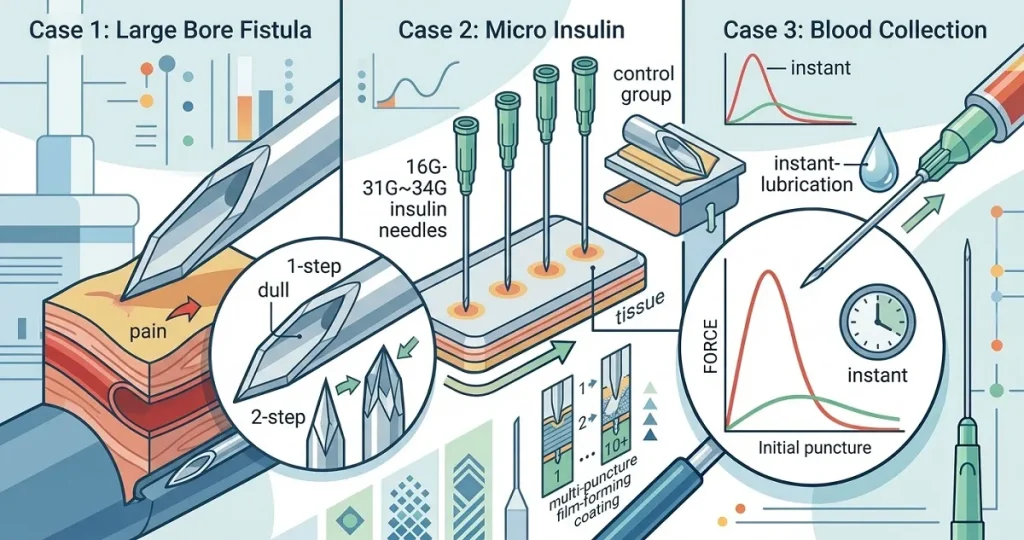
| Fistula Needle (AVF) 16G | Extremely high puncture drag, deep tissue trauma. | Customizable development of “1-step siliconization” or “2-step curable composite” silicone oil processes. | Significantly reduces peak penetration force of large-bore needles; effectively relieves puncture pain for dialysis patients. |
| Insulin Pen Needle 31G~34G | After consecutive punctures through subcutaneous tissue, conventional silicone oil is quickly scraped off, leading to subsequent puncture force escalation. | Anti-degradation, multi-puncturefilm-forming silicone oil formulation. | Penetration force does not attenuate after 10+consecutivepunctures; verified to outperform BD insulin needle puncture force values. |
| Blood Collection Needle18G~30G | Requires “instant zero-pain on initial puncture”; must adapt to high-speed production on automated assembly lines. | Specialty ultra-low- drag instantaneous lubrication silicone oil for blood collection needles. | Peak initial puncture resistance drops dramatically, achieving low-drag penetration. |
These are evaluation examples, not universal performance limits. The test plan should follow the intended device use, customer specifications and applicable quality requirements.
4. How to Set Up a Useful Coating Trial
Define the comparison. State the needle type, gauge, bevel, substrate and target result. Identify the current coating as the reference.
Agree on the method. Specify the test medium, speed, depth, angle, number of samples and, where relevant, the number of repeated punctures.
Prepare traceable samples. Record formulation and lot, dilution and mixing, application equipment, coating conditions and sample age.
Review the complete results. Compare force curves and variability, inspect coating coverage where appropriate, and record deviations or defects.
Confirm on the production line. A bench result should be followed by a process trial when the material will be used in routine manufacturing.

5. Maintaining Coating Consistency in Production
A coating formulation performs only as consistently as the process applying it. Where a working solution contains a volatile diluent, evaporation, replenishment and mixing can shift concentration during a run. Application geometry, dwell time and drying conditions may also affect the final coating. The relevant controls depend on the selected grade and equipment.
Set a documented preparation procedure and a sampling plan for the actual line. Compare early, middle and late production samples under the same insertion-force method. If results drift, review concentration, circulation, coating coverage and equipment settings before changing the formulation alone.
6. What to Ask a Silicone Oil Supplier
Request the exact grade and applicable technical documentation, the recommended preparation and handling method, and a report tied to your needle design. Technical data and biocompatibility information are available for that grade and destination market. Packaging, storage, shelf life and any transport classification should be checked against the actual formulation.
For a TOPKEY trial, share the needle drawing or uncoated samples, gauge and bevel, intended use, current coating process, target performance, test method and estimated annual consumption. We can discuss formulation selection, sample preparation and comparative testing under an agreed protocol.
Часто задаваемые вопросы
Results vary with needle geometry, formulation, coating method and test conditions. Compare against your current needle using the same protocol.
A candidate may be evaluated for several devices, but selection should be confirmed separately against each needle design and its performance target.
A defined series helps show whether the measured force changes as the coating is used. Report each cycle rather than only the first puncture.
Share the equipment type, application method, working-solution preparation and current test results. TOPKEY can discuss process assessment and possible adjustments.
Send the needle specification, drawings or uncoated samples, intended use, current coating method, expected volume and target market.
Discuss Your Needle Coating Trial
Send your needle details and current coating challenge to TOPKEY Medical. We will review the application and suggest a practical next step for sample evaluation.
Электронная почта: info@topkeymedical.com | WhatsApp: +86 133 9100 9797