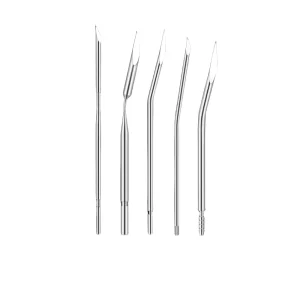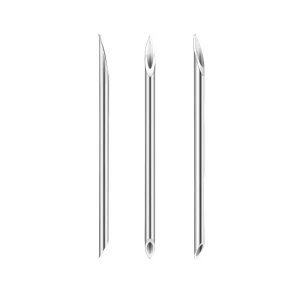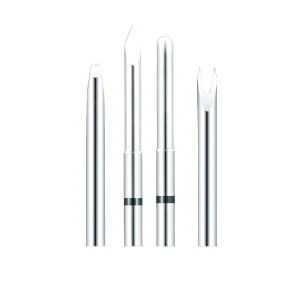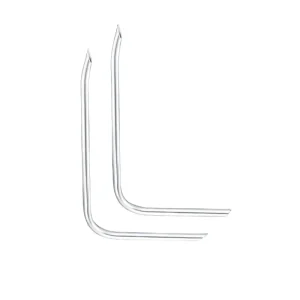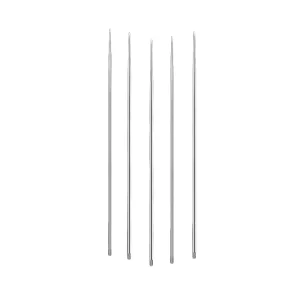








Biopsy Needle 10G-22G, 3.4mm-0.7mm

Biopsy Needle Product Introduction:

1. It has fine workmanship. When it penetrates the skin, the blade is firm and sharp.
2. Clear tick mark and controllable puncture depth.
3. The tail of the outer cannula can be flared and frosted, and the tail of the needle core can be flattened.

Technical Specifications

Parameter Specification
Product Name Biopsy Needle 10G-22G, 3.4mm-0.7mm
Material – Cannula Medical-grade SUS304 stainless steel; hardened and polished for durability
Gauge Range 10G – 22G
Outer Diameter (OD) 3.4 mm (10G) – 0.7 mm (22G)
Length Options 100 mm – 250 mm (±1 mm tolerance); customizable per procedure
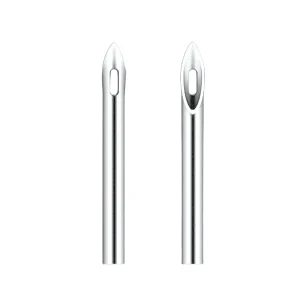
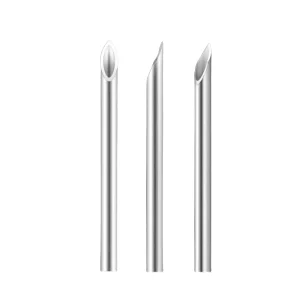
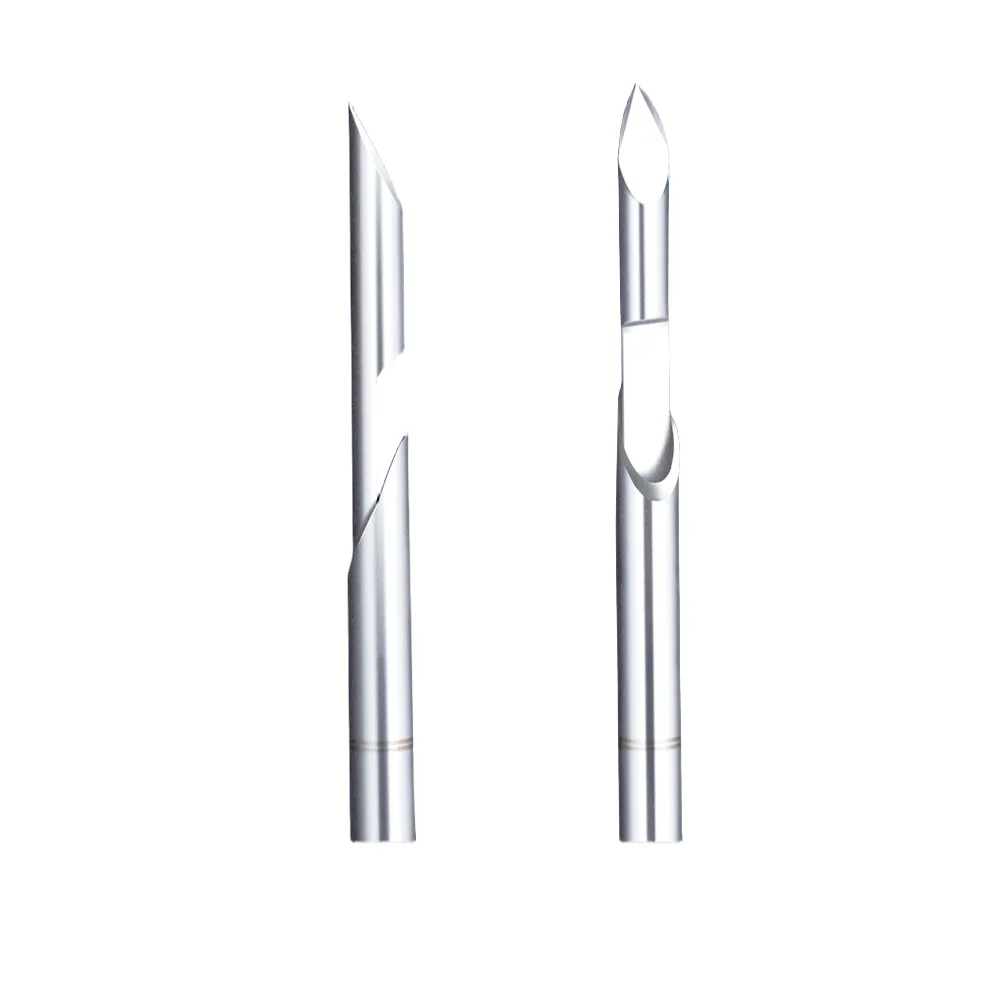
Tip Design Tri-beveled, ultra-sharp for skin penetration; core-cutting type
Depth Markings Clear tick marks in 1 cm increments for controlled puncture depth
Outer Cannula Tail Flared and frosted for better grip and stability
Inner Needle Core Tail Flattened for easy identification and manipulation
Hub Type Standard Luer-lock / custom ergonomic handle
Surface Finish Mirror-polished cannula, reduces friction during insertion
Sterilization Method Ethylene Oxide (EO) or Gamma sterilized
Packaging Individually sterile blister packs, 10 pcs per box
Single-Use Yes
Certifications ISO 13485, CE marking, FDA approval (regional availability)
Shelf Life 3–5 years under controlled storage conditions

Biopsy Needle: Precision Tissue Sampling for Definitive Diagnosis.

Biopsy Needle Clinical Purpose

Our biopsy needle delivers unparalleled accuracy in obtaining high-yield tissue cores for pathological analysis. Designed for ultrasound, CT, or MRI-guided procedures, it enables reliable sampling of lesions in organs including liver, breast, prostate, and lung—critical for cancer diagnosis, staging, and treatment planning.

Key Advantages

Optimal Sample Integrity

– Twin-bevel cutting edge: Ultra-sharp 14° tip preserves tissue architecture with minimal crushing artifact.
– Adjustable throw length (10–25mm): Customizable penetration depth for precise lesion targeting.

Enhanced Safety & Control

– Echogenic distal notch: Real-time ultrasound visibility with 360° rotational alignment.
– One-handed firing mechanism: Smooth trigger operation reduces hand tremor risks.

Procedural Efficiency

– Core sample retrieval >98% success rate (per Radiology 2024 study data).
– Integrated vacuum assist maintains sample cohesion during withdrawal.

Advanced Material Engineering

– Cannula: Electropolished 304VM stainless steel (wall thickness: 0.13mm) for superior flexural strength.
– Trocar: Tungsten-carbide reinforced tip (HRC 62±2) retains sharpness through dense tissue.
– Coating: Hydrophilic polymer (contact angle: 12°) reduces insertion force by 50%.

Applications

– Core needle biopsy (CNB) of tumors
– Breast biopsy under stereotactic guidance
– Transrectal prostate sampling
– Lung nodule FNA/FNB procedures

Questions and Answers

Q: How painful is a needle biopsy?

A: A needle biopsy is generally not very painful, with most patients describing the sensation as pressure rather than pain. Local anesthesia is used to numb the area, making the procedure itself feel minimal after the initial injection. Post-procedure, you may experience mild soreness or tenderness that can be managed with over-the-counter pain medication.

Q: What is the prep for a needle biopsy?

A: If you are having a needle or surgical biopsy, ask your health care provider if you need to stop taking any medications before the procedure. Your doctor may tell you not to eat or drink for eight hours before your biopsy. However, you may take your routine medications with sips of water.

Q: What kind of biopsy requires sedation?

A: General anesthesia: It is most often used for the most invasive biopsies, such as those in which tissue is drawn from inside the chest or abdomen, and for biopsies in which the patient must remain relaxed or still.

Q: Does a needle biopsy leave a scar?

A: If you had a core needle biopsy, the cut the doctor made in your skin, called an incision, may leave a small scar. This usually fades with time. You can go back to most of your usual activities right away.

Q: How long until I get my biopsy results?

A: Your biopsy sample will be reviewed by a pathologist, and the results will be given to your doctor. Your doctor will then share the results with you. This usually takes about a week.

Get A Free Consultation!

Free contact us! Tell us about your goals and let’s start the conversation!
Scroll to Top

Get A Free Consultation!