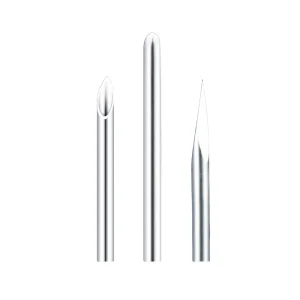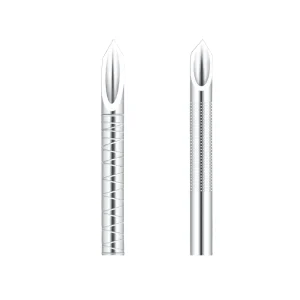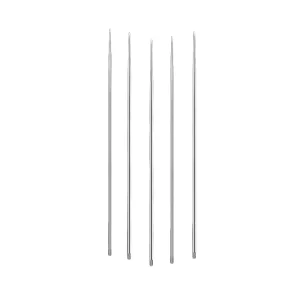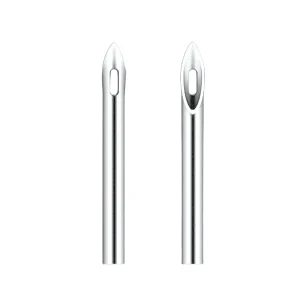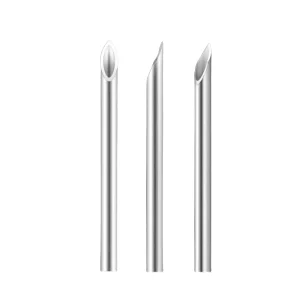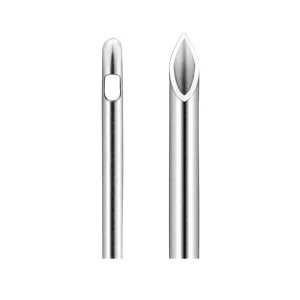







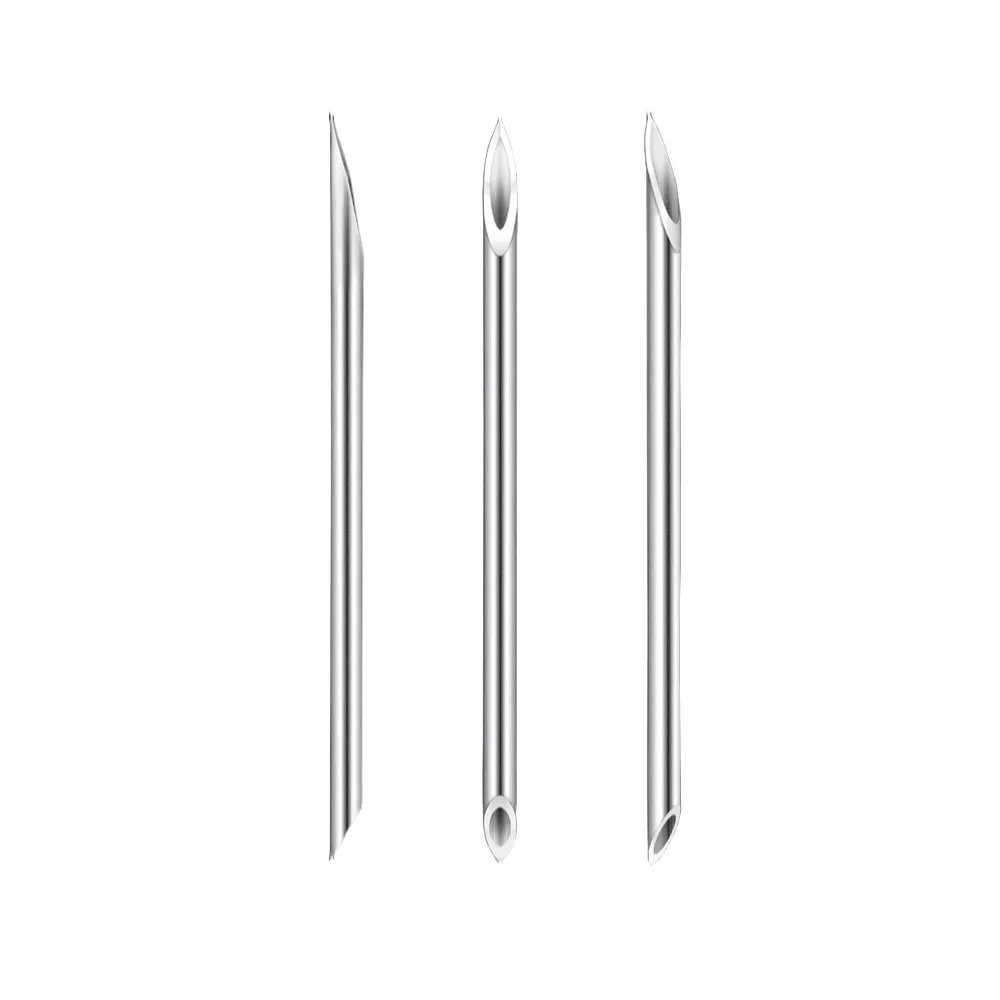
Insulin Needle 30G(0.3mm) ~ 34G(0.18mm)
Insulin Needle Tips Introduction:
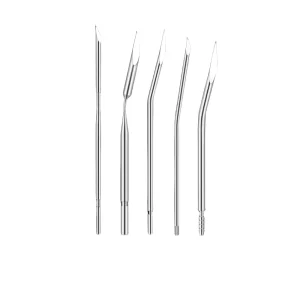
Precise needle-shaped design, precise grinding processing, high-strength, can puncture multiple times without barbs.
Small-angle design, puncture smoothly, and reduce pain.
Product Specification:
Needle type: short blade type, three, five-face type.
SPECIFICATIONS
Technical Parameters
Insulin Needle Tips: Precision Engineered for Painless Diabetes Management
Insulin Needle Tips Clinical Purpose
Our ultra-fine insulin needles deliver uncompromising accuracy in subcutaneous medication administration for patients with diabetes. Designed for daily use with insulin pens, they ensure consistent dosing while minimizing tissue trauma, critical for glycemic control and treatment adherence.
Key Advantages
Pain-Reduced Technology
5-facet micro-bevel tip (12° grind angle) penetrates skin with 40% less force vs. standard 3-bevel needles.
Barb-resistant electropolishing maintains tip integrity through ≥10 punctures.
Enhanced Dosing Precision
Short blade design (1.5–4mm) targets subcutaneous tissue with millimeter accuracy.
Zero-glide plunger activation eliminates dose loss during injection.
Patient Comfort
Ultra-thin walls (OD: 0.23–0.36mm) reduce tissue displacement.
Hydrophilic coating (contact angle: 15°) ensures smooth insertion (VAS pain ≤1.0/10).
Insulin Needle Technical Specifications
| Parameter | Specification |
|---|---|
| Needle Profile | Short Blade, 3-Bevel, 5-Bevel |
| Gauges | 30G(0.3mm) ~ 34G(0.18mm) |
| Lengths | 4mm / 5mm / 6mm / 8mm (±0.1mm) |
| Wall Thickness | RW/TW/ETW/UTW |
Clinical Applications
Daily insulin administration (basal/bolus).
GLP-1 agonist injections (e.g., semaglutide).
Pediatric diabetes care.
Travel medicine kits.
FEATURES
Customization Advantages
Precision engineering for complex medical applications
Geometry Expertise
J-hooks, helical coils, side ports, multi-lumen structures, or patient-specific bends. Micro-barb retention elements, fluid channels (≥50μm ID), or directional drug delivery windows.
Advanced Manufacturing
Laser micromachining precision ±5μm. Electroforming for seamless tapered transitions. Nitinol shape-memory integration for steerable functionality.
Rapid Prototyping
Surgical-grade steel / PEEK 3D-printed prototypes delivered within 72 hours. CFD and structural simulation reports to accelerate product validation.
Ready to Discuss Your Custom Requirements?
RELATED PRODUCTS
Related Products
Related products
FAQs
Q: What needle is used for insulin?
A: Insulin is administered with small, fine needles, typically ranging from 32 to 29 gauge and 4 to 12 mm (or 5/32to 1/2 inch) in length, depending on your body type and the injection site. The specific needle size is chosen based on a doctor’s recommendation to ensure the insulin is injected into the subcutaneous tissue and not the muscle, with 4mm needles being effective for most adults.
Q: Is an insulin needle painful?
A: Insulin needles do not typically hurt, especially with modern pens that use very small, thin needles designed to go into the fatty layer under the skin. While some discomfort is possible, proper technique, using the right needle size, and rotating injection sites can minimize pain.
Q: Can you feel an insulin needle?
A: Using an insulin pen does not usually hurt. The needles are very small as you only inject a small amount into the layer of fat just under your skin.
Q: Where is the least painful place to inject insulin?
A: For many people, the abdomen is the least painful injection site due to its large surface area of fatty tissue, but the upper outer thighs and buttocks are also good options. The best way to minimize pain is to rotate injection sites, use a new needle for each injection, and ensure the insulin is injected into the subcutaneous fat layer, not the muscle. Relaxing the muscle before injecting can also help reduce discomfort.
GET A FREE CONSULTATION