| Parameter |
Specification |
| Product Name |
IV Catheter Cannula |
| Material – Cannula |
Medical-grade SUS304 stainless steel needle with PTFE / PU catheter tube |
| Gauge Range |
14G – 24G (OD: 2.0 mm – 0.6 mm) |
| Catheter Length Options |
19 mm – 45 mm (±1 mm tolerance) |
| Tip Design |
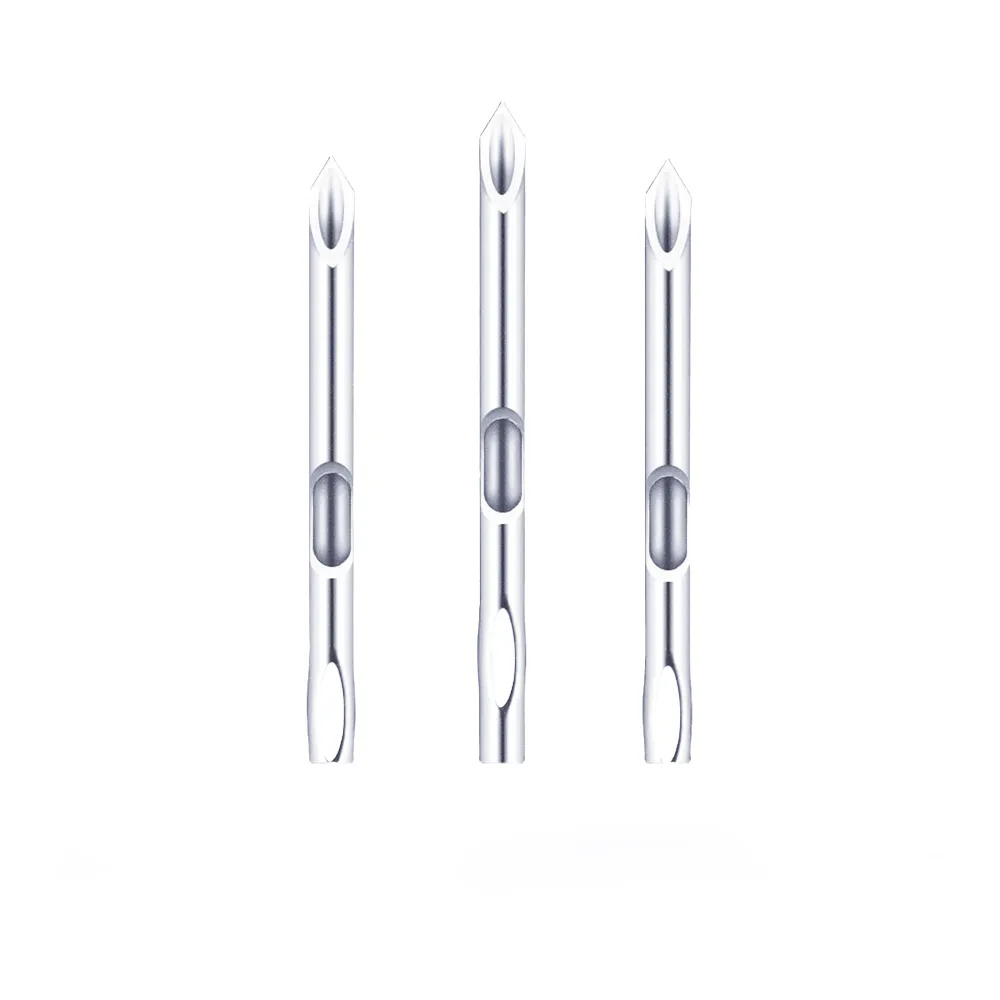
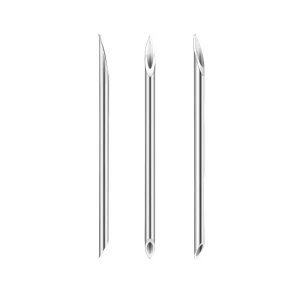
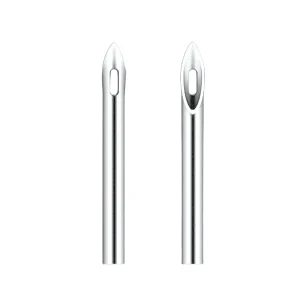
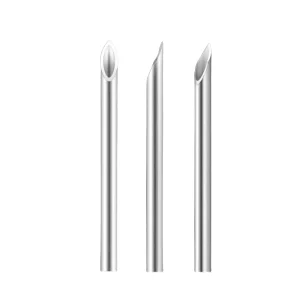
Tri-beveled ultra-sharp tip; smooth puncture with reduced patient pain |
| X-ray Visibility |
Radiopaque catheter strip for fluoroscopic detection |
| Blood Control Feature |
Optional backflow chamber for venous access confirmation |
| Catheter Material |
Biocompatible PTFE / Polyurethane, kink-resistant, DEHP-free |
| Hub Design |
Transparent hub with color-coded gauge indicator |
| Safety Options |
With or without safety mechanism (passive/active needle retraction) |
| Sterilization Method |
Ultraclean Washing & Degreasing |
| Packaging |
Individually sterile blister packs, 50–100 pcs per box |
| Single-Use |
Yes |
| Certifications |
ISO 13485, CE marking, FDA approval (region dependent) |
| Shelf Life |
3–5 years under recommended storage conditions |
IV Catheter Cannula: Advanced Vascular Access for Sustained Therapy Delivery.
IV Catheter Cannula Clinical Purpose
Our indwelling needles provide secure, long-term vascular access for intravenous fluid administration, medication delivery, and blood sampling. Engineered for indwelling durations up to 96 hours, they minimize repeated punctures in critical care, oncology, and pediatric settings.
Product Specification:
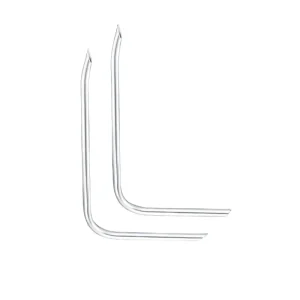
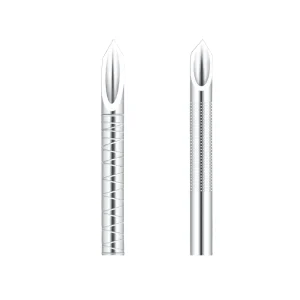
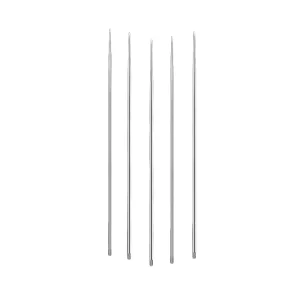
1. Product type: Y-type, straight type, safety type, retraction type, indentation.
2.Specification:10G-28G
3.OD:3.4mm-0.36mm
Key Advantages
Precision Back-Bevel Grinding
Tightly controlled bevel symmetry and edge sharpness between the primary bevel and back-bevels deliver ultra-low penetration resistance, significantly reducing the risk of vessel blowout and tissue trauma.
Ultraclean Washing & Degreasing
Multi-stage ultrasonic cleaning and Water for Injection (WFI) rinsing thoroughly eliminate processing lubricants and metallic microparticles, complying with medical-grade biosafety standards.
Zero-Burr & Non-Flared Tip Control
Micro-edges are clean and uniform, completely free of burrs, roll-overs, or tip eccentricity.
Ultra-Tight Tolerances & Superior Straightness
Strict tolerances for OD, ID, wall thickness, and straightness guarantee seamless, uniform assembly with catheter tubes and needle hubs.
Custom End Chamfering & Cut-to-Length
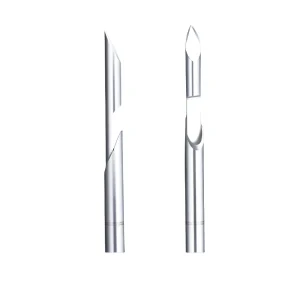
Customizable tube lengths, side slotting, proximal end chamfering, and sandblasting to customer prints.
Clinical Applications
– Continuous chemotherapy infusion
– Emergency fluid resuscitation
– Long-term antibiotic therapy
– Neonatal/Pediatric IV access
Quality Control(ISO 13485 QMS)
100% High-Speed Online Vision Inspection
Real-time automated inspection and rejection for tip geometry, bevel length, eccentricity, fishhooks, and edge burrs.
Micro-Cleanliness & Particulate Monitoring
Regular lot testing for surface residual oils and microscopic particulate levels.
Full-Dimension & Penetration Force Verification
Rigorous verification of OD, wall thickness tolerances, and lot penetration forces to ensure stable product consistency.