
Coaxial Needle

Coaxial Needle

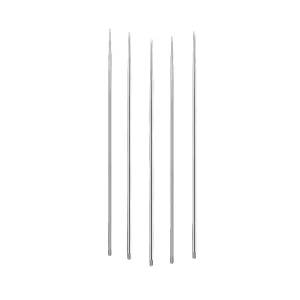
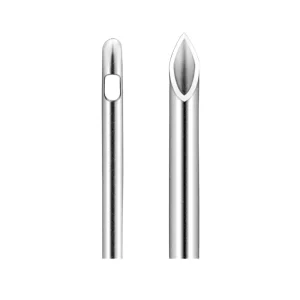
Consisting of an outer guide cannula and an inner trocar stylet made from high-strength medical-grade stainless steel tubing and bar stock, these systems provide single-puncture,multiple-access guidance for interventional radiology, biopsies, and ablations. Manufactured via Japanese precision grinding and cold drawing.

Product Specification:
Specification: 10G-22G 0D:3.4mm-0.7mm

SPECIFICATIONS

Technical Parameters

Parameter Value / Description
Product Name Coaxial Needle
Available Gauges 10G – 22G
Highlighted SKUs 17G, 18G
Outer Diameter (OD) 3.4 mm (10G) – 0.7 mm (22G)
Material – Cannula Medical-grade SUS304 stainless steel
Material – Hub Medical-grade polymer with ergonomic design
Design Outer cannula + inner stylet (coaxial structure)
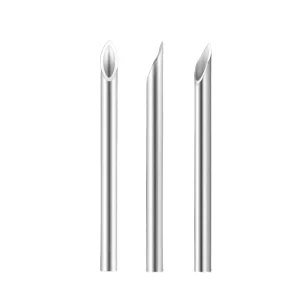
Bevel / Blade Precision-ground, firm and sharp, low insertion resistance
Depth Control Laser-etched or engraved tick marks on cannula surface
Tail Design – Cannula Flared or frosted finish for better grip
Tail Design – Stylet Flattened or marked for orientation
Connection Type Luer-lock compatible
Sterilization Method Ultraclean Washing & Degreasing
Packaging Individually sterile blister packs; 10–50 pcs per box
Single-Use Yes
Certification ISO 13485, CE marking, FDA registration (region dependent)
Shelf Life 3–5 years under recommended storage conditions

Coaxial Needle: Precision Layered Access for Image-Guided Interventions.

Coaxial Needle Clinical Purpose

Engineered for sequential instrument deployment during complex biopsies and ablations, our coaxial system establishes a stable access tract through which multiple devices (biopsy guns, RF probes, cryoapplicators) can be introduced with a single tissue penetration. Eliminates repeated punctures to preserve sample integrity and reduce complications.

Key Advantages

Precision Micro-Clearance Fit
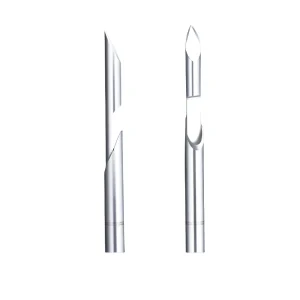
Tight clearance between inner and outer components prevents wobble and binding while providing a flush,step-free tip transition that helps reduce tissue coring.

High Bending Rigidity & Straightness
High-tensile thin-wall tubing prevents deflection during deep-seated lesion punctures, maximizing directional steering control.

Ultraclean Washing & Degreasing
Multi-stage ultrasonic cleaning and WFI rinsing ensure complete removal of grinding oils and metallic fines.

Echogenic Tip Enhancement & Depth Markings
Optional sandblasted or laser-textured echogenic features improve visibility under ultrasound, while laser-etched depth markings support insertion-depth control.

Quality Control (ISO 13485 QMS)

100% High-Speed Online Vision Inspection
Real-time verification and sorting of deflection angles, burrs, bend angles, and tip concentricity.

Micro-Cleanliness & Residue Monitoring
Strict lot-by-lot inspection for particulate contamination and degreasing residues.

Fragmentation & Penetration Force Testing
Validated silicone septum non-coring/fragmentation tests and batch penetration force verification.

Critical Applications

Multi-pass bone tumor biopsies.
Liver/kidney ablation probe placement.
Lung nodule fiducial marker deployment.
Seeding brachytherapy catheters.

FEATURES

Customization Advantages

Precision engineering for complex medical applications

Geometry Expertise

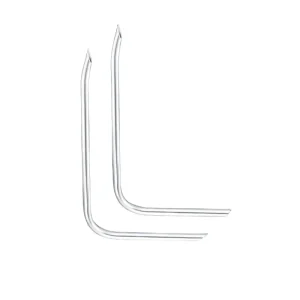
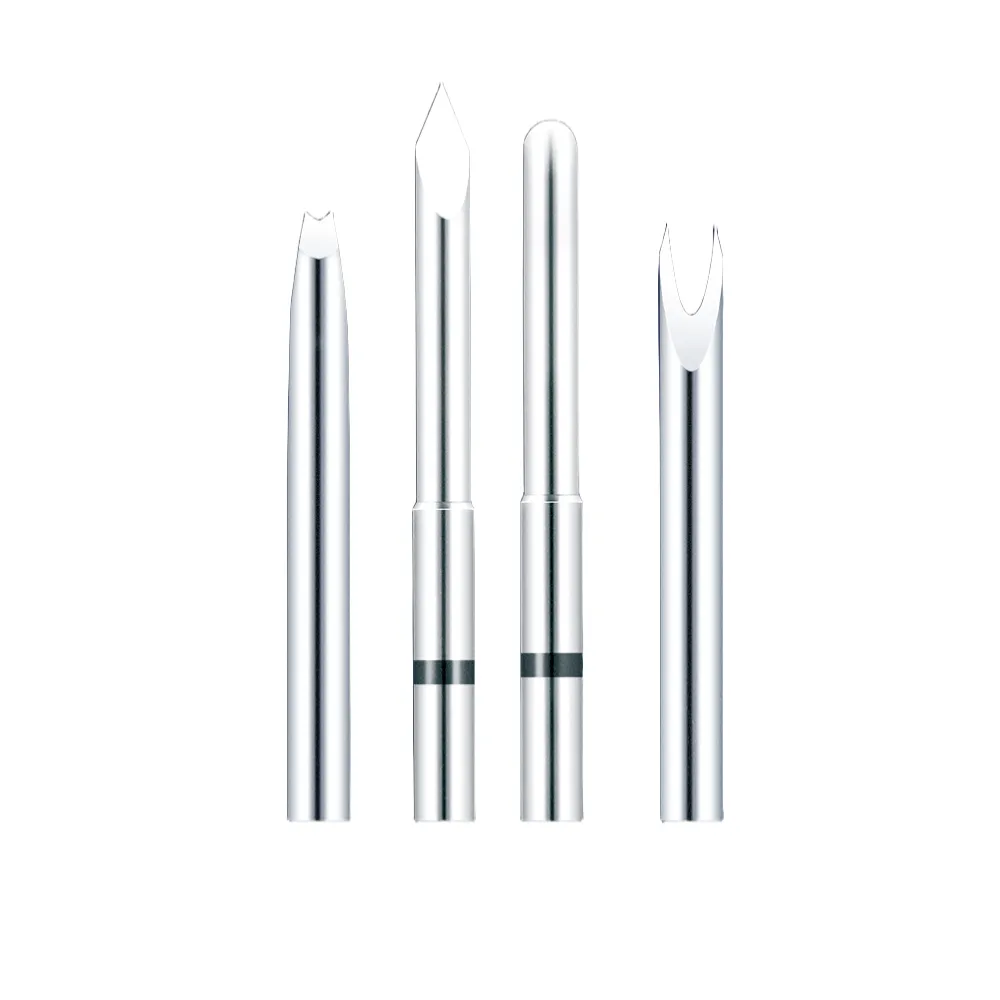
J-hooks, helical coils, side ports, multi-lumen structures, or patient-specific bends. Micro-barb retention elements, fluid channels (≥50μm ID), or directional drug delivery windows.

Advanced Manufacturing

Laser micromachining precision ±5μm. Electroforming for seamless tapered transitions. Nitinol shape-memory integration for steerable functionality.

Rapid Prototyping

Surgical-grade steel / PEEK 3D-printed prototypes delivered within 72 hours. CFD and structural simulation reports to accelerate product validation.
Ready to Discuss Your Custom Requirements?

Our application engineering team is ready to provide expert support at every step.

RELATED PRODUCTS

Related Products

FAQs

Q: What is a coaxial needle?

A: A set of coaxial biopsy needles permits repeated tissue samples through an outer, larger needle that remains in place. The tract can be dilated from 23 to 16 gauge with the use of transfer rods, without loss of the initial position.

Q: What size needle is used for coaxial biopsy?

A: It is usually obtained as a set. For example, it may be a combination of a 17G outer guiding needle that comes with its own stylet and an 18G biopsy needle. The commonly available lengths are 9 and 15 cm.

Q: What is the coaxial technique for renal biopsy?

A: Real-time USG-guided biopsy can be performed using either coaxial or non-coaxial techniques. In the coaxial technique, a guide coaxial needle is inserted into the target organ, and more than 1 tissue sample is collected by passing a biopsy needle through the guide needle without changing its location.

GET A FREE CONSULTATION

Get a Free Consultation!

Contact us anytime — share your goals and let’s start the conversation.
Scroll to Top

Get A Free Consultation!